

Quick Answer: Apartment emergency preparedness means creating a compact, compliant system for survival during power outages, fires, or natural disasters. Using collapsible water containers, portable power stations, and lightweight go-bags, renters can stay self-sufficient for up to two weeks in limited space.
Apartment dwellers face emergency preparedness challenges that homeowner-focused advice ignores. 55-gallon water barrels exceed floor load limits (40 pounds per square foot in most residential buildings), gas generators violate fire codes, and bulk storage bins won’t fit in 600-square-foot apartments.
Traditional preparedness assumes resources apartment renters lack: garages, basements, yards, and the legal right to modify living spaces.
Recent disaster response data shows that less than half of Americans have adequate disaster emergency supplies, while power outages increased 64% since 2020. Apartment-specific constraints make standard prep guidance unusable for the 44 million renter households in multi-family buildings.
Table of Contents
- Key Takeaways
- What Makes Apartment Emergency Prep Different?
- Essential Apartment Emergency Supplies
- Apartment-Friendly Emergency Kits
- Creating Evacuation Plans for Apartments
- Apartment Emergency Scenarios and Solutions
- Traditional vs. Apartment Emergency Prep
- Building Your Apartment Emergency Plan Today
- Apartment Emergency Preparedness: Being Ready at All Times
- Frequently Asked Questions
- Sources
Key Takeaways
- Apartment emergency preparedness focuses on compact, safe, and lease-compliant planning for renters in limited spaces.
- Apartments average just 880 square feet, requiring vertical storage and multi-use furniture for supplies.
- Collapsible 5-gallon containers and stackable bricks safely store up to 28 gallons of water within floor load limits.
- Battery power stations and USB banks replace generators, providing safe, indoor power for essentials during outages.
- Go-bags should weigh under 25 pounds and include lighting, first aid, and communication tools for stairwell evacuations.
- Preparedness builds over time – start with a 72-hour supply and expand to two weeks with food, water, and medical gear.
- Shop Batten’s apartment-friendly emergency kits to create a safe, organized plan that fits your space and lifestyle.
What Makes Apartment Emergency Prep Different?
Emergency preparedness looks very different in an apartment than in a single-family home. Limited space, lease restrictions, and shared infrastructure create unique challenges that renters must plan around. Understanding these limitations helps you prepare effectively without breaking building rules or compromising safety.

Space Constraints
The average U.S. apartment has around 880 square feet – less than half the space of a typical home. Closets are small, and there’s rarely a pantry, garage, or basement for storage. Supplies must fit into everyday living areas.
Smart storage ideas:
- Use under-bed bins or stackable containers
- Add hooks or hanging racks on doors
- Choose furniture with built-in compartments
Lease Restrictions
Most leases prohibit common preparedness measures. You can’t install generators, store fuel, bolt furniture to walls, or collect rainwater. Breaking these rules risks eviction or losing your deposit. Focus on portable, reversible options such as solar chargers, collapsible water containers, and compact emergency kits.
Structural Load Limits
Apartment floors typically support 40 pounds per square foot. A full 55-gallon water barrel exceeds that limit and can cause structural damage. Use smaller containers—like multiple five-gallon jugs – and place them along walls to distribute weight safely.
Shared Infrastructure Risks
Shared utilities mean one problem affects everyone. Power outages stop elevators and darken hallways. A fire in one unit can spread smoke throughout the building.
Key steps:
- Keep a flashlight and headlamp accessible
- Pack a light go-bag you can carry down stairs
- Store important documents in waterproof pouches
Apartment preparedness depends on maximizing space, following building rules, and staying ready for shared risks. With compact supplies and smart planning, renters can stay safe without breaking lease terms or overloading floors.
Essential Apartment Emergency Supplies
Preparing for emergencies in an apartment requires space-efficient, quiet, and fire-safe solutions. The goal is to stay supplied without violating lease terms or overloading your limited storage space.

Water Storage Solutions
Traditional 55-gallon barrels are unsafe and impractical for apartments. Instead, rely on compact options that fit in closets, under furniture, or along walls while distributing weight safely.
Collapsible 5-Gallon Containers
Foldable containers such as GSI Outdoors cubes flatten to just a few inches when empty and weigh less than a pound. Four filled containers provide about 20 gallons of water – enough for one person for 20 days at one gallon per day. Each full container weighs roughly 42 pounds, a manageable load when positioned near supporting walls.
Stackable Water Bricks
Interlocking 3.5-gallon WaterBrick containers save space and stack securely. Eight bricks hold 28 gallons while using only about two square feet of floor space. Their rectangular design makes them suitable for closets, under stairs, or even climate-controlled parking areas.
Portable Water Filters
Compact filters like LifeStraw or Sawyer Mini act as a backup purification method during outages. They work for bathtub water filled before storms or natural sources when municipal systems fail. Keep at least two per household – they weigh just a few ounces but can process thousands of gallons.
Food Storage in Small Spaces
Apartments demand vertical storage and calorie-dense foods that require little cooking. Smart organization helps maintain variety and nutrition without cluttering your living space.
#10 Cans for Vertical Storage
Freeze-dried meals in #10 cans from brands like Mountain House and Augason Farms offer 90–120 servings per case. Three cases supply two weeks of food for two people in under four square feet of closet space.
Under-Bed Food Storage
Low-profile, weather-tight containers fit under beds and protect against moisture or pests. Fill them with calorie-rich staples such as peanut butter, protein bars, jerky, and freeze-dried meals. Rotate every six months to keep contents fresh.
Closet Organization Systems
Use over-door racks and hanging organizers to turn closets into small storage zones. A six-foot closet fitted with shelving can hold enough food for two people for two weeks without limiting clothing access.
Backup Power Without Generators
Gas-powered generators violate most leases and fire codes. Battery-based systems provide safe, quiet power options that comply with apartment rules.
Portable Power Stations
Units like the Goal Zero Yeti 1500X offer 1,516 watt-hours of capacity – enough to power a refrigerator for up to 30 hours, charge laptops for a week, or keep phones running indefinitely. At 45 pounds, it’s portable and safe indoors. Pair it with folding 100-200W solar panels for renewable charging from a balcony or window.
USB Power Banks
High-capacity options such as the Anker 737 PowerCore keep phones, tablets, and medical devices powered for up to a week. Maintain two or three charged units and rotate them quarterly to ensure reliability.
Battery-Powered Lighting
LED lanterns and headlamps offer bright, safe illumination during blackouts. Headlamps are ideal for stairwell evacuations since they free your hands for carrying gear or assisting others. Store spare batteries separately and keep one light per person near exits.
First Aid and Medical Supplies
Compact first aid kits from brands like MyMedic or Adventure Medical Kits suit apartment storage well. Add prescription medications, pain relievers, and allergy medicine. Keep a 30-day supply in a cool, dry area such as a closet shelf.
Communication and Information
Staying informed is vital when power or internet access is down. Keep tools and documents that work without electricity.
Battery-Powered Weather Radio
Models like the Midland ER310 receive NOAA alerts and AM/FM broadcasts. With solar and hand-crank charging, they stay operational throughout long outages.
Printed Emergency Information
Keep laminated copies of essential details:
- Family and emergency contact numbers
- Evacuation routes and alternate paths
- Nearby shelters and medical facilities
- Allergy and prescription details
- Insurance information and policy numbers
Store documents in waterproof pouches with your go-bag so they remain accessible if digital devices fail.
Apartment-Friendly Emergency Kits
Here are some tips on putting together emergency kits for those living in apartments.
Go-Bag for Stairwell Evacuations
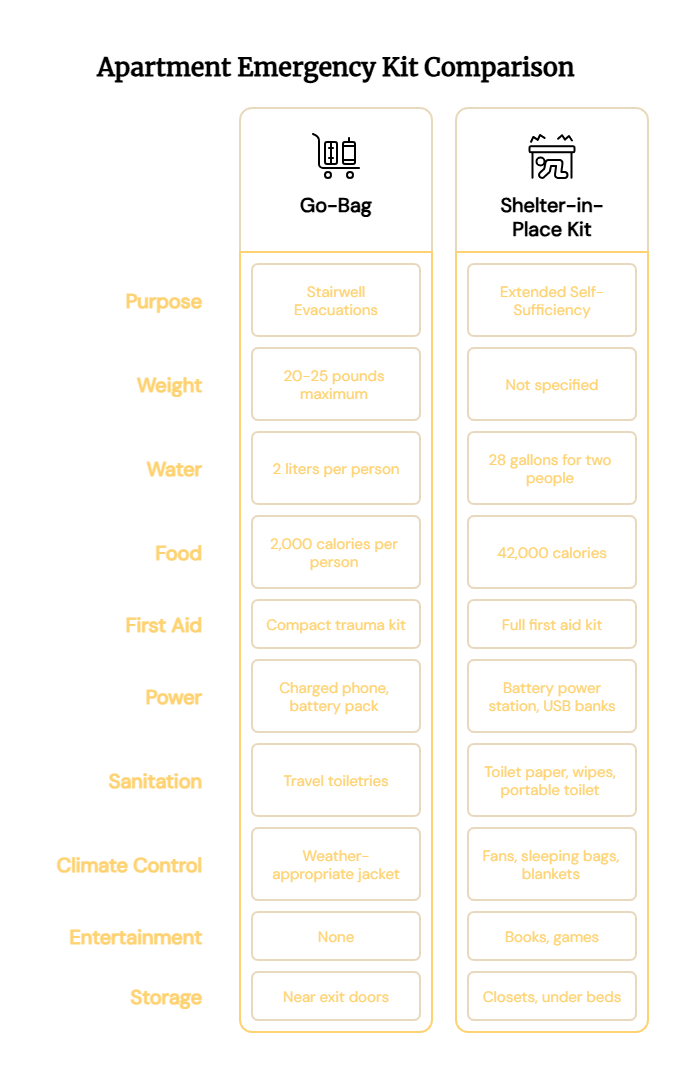
Elevator failures during power outages demand lightweight go-bags. Target 20-25 pounds maximum for multi-floor stairwell descents while assisting children or elderly family members.
Go-Bag Contents
- Water: 2 liters per person (collapsible bottles)
- Food: Energy bars, trail mix (2,000 calories per person for 24 hours)
- First aid: Compact trauma kit with medications
- Lighting: Headlamp plus backup flashlight
- Communication: Charged phone, battery pack, radio
- Documents: Laminated emergency contacts, IDs, insurance
- Clothing: Weather-appropriate jacket, extra socks
- Hygiene: Travel toiletries, medications, glasses/contacts
- Tools: Multi-tool, whistle, duct tape, emergency cash
Store go-bags near exit doors for rapid deployment. Practice carrying loaded bags down stairwells to verify weight tolerance before emergencies force the test.
Shelter-in-Place Kit
Most apartment emergencies require sheltering inside your unit – extended power outages, severe weather, civil disturbances, or pandemics. Your shelter-in-place kit supports 2-week self-sufficiency.
Shelter-in-Place Essentials
- Water: 28 gallons for two people (collapsible containers)
- Food: 84 meals, 42,000 calories (freeze-dried #10 cans and shelf-stable items)
- Cooking: Portable camping stove with butane canisters (use with open windows for ventilation)
- Sanitation: Toilet paper, wet wipes, hand sanitizer, trash bags, portable toilet (for water outages)
- Power: Battery power station, charged USB banks, batteries for devices
- Medical: Full first aid kit, 30-day prescription refills
- Climate control: Battery-powered fans (summer), sleeping bags and blankets (winter)
- Entertainment: Books, games, offline entertainment (morale during extended stays)

Store kit components in closets, under beds, and behind furniture. Use clear plastic bins labeled by category for quick identification during emergencies.
Creating Evacuation Plans for Apartments
Apartment evacuations require planning, speed, and clear communication. Narrow exits, crowded stairwells, and shared infrastructure can turn minor delays into serious risks. A well-rehearsed plan keeps everyone calm and coordinated when time matters most.
Primary Evacuation Routes
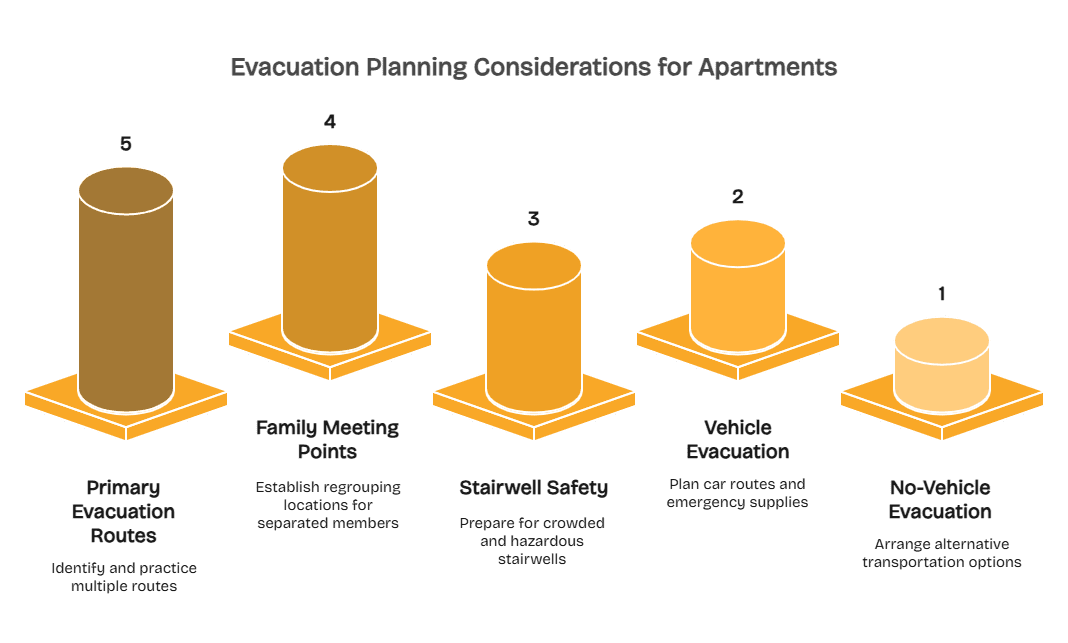
Identify and map at least two evacuation routes from your apartment to outdoor exits. Most buildings have both front and rear stairwells – practice using both.
Time each route while carrying your go-bag and note any hazards such as sticky doors, poor lighting, or uneven stairs. Share this information with everyone in your household, including older children who may need to evacuate independently.
Set two family meeting points
- One near your building, such as a specific tree or parking spot
- One outside your neighborhood, like a park or store
If family members get separated, these points ensure everyone knows where to regroup.
Stairwell Safety
Stairwells can become dangerous during large evacuations. Knowing what to expect and practicing ahead of time can prevent injury or confusion.
Key stairwell safety tips
- Expect crowding, as many residents may use the same stairwell at once
- Carry a flashlight or headlamp in case of power loss
- Stay low to avoid smoke inhalation; cover your mouth and nose with a damp cloth
- Keep your keys with you – some stairwell doors lock behind you
- Plan to assist elderly or disabled neighbors if possible
Practice quarterly drills and adjust your go-bag weight if it slows you down. Building stamina for multi-floor descents improves safety in real emergencies.
Vehicle Evacuation
If you plan to leave by car, preparation is crucial since parking access can disappear quickly during emergencies.
Vehicle evacuation checklist
- Keep the gas tank at least half full (a quarter tank minimum in winter)
- Maintain a small car emergency kit with food, water, and blankets
- Plan three routes out of your area: main highway, secondary road, and backroad
- Save shelter and family destinations in your GPS
- Store your go-bag near your apartment exit for fast loading
If you have secure parking, keep extra supplies in your vehicle so you can leave immediately when needed.
No-Vehicle Evacuation
For residents without cars, plan to leave on foot, by bike, or using public transit.
Key steps for non-drivers
- Know nearby bus, subway, and train routes
- Map walking paths to the closest transit hubs and emergency shelters
- Keep go-bag weight under 20 pounds to stay mobile
- Arrange backup transportation with friends or neighbors who drive
- Consider a bicycle for short-distance evacuations; it’s faster than walking and can navigate traffic
Outfitting your bike with cargo baskets or panniers allows you to carry essential supplies safely.
Apartment Emergency Scenarios and Solutions
Apartment emergencies affect multiple systems at once – power, water, and safety infrastructure are all interconnected. Preparing for common scenarios keeps you safe and reduces panic when problems arise.
Power Outages
Power failures disable elevators, hallway lighting, and HVAC systems. Always take stairs and carry flashlights. Electronic locks may stop working, so keep physical keys on hand.
During an outage
- Use a battery power station to keep food cold for up to two days
- Limit refrigerator access and use coolers with ice for longer outages
- Charge all devices early and conserve battery life
- Reduce phone use to essential calls and updates
- Coordinate with neighbors for stairwell trips during extended outages
Water Service Disruption
A burst main or maintenance shutdown can instantly cut water to your unit.
If warned in advance
- Fill your bathtub and all available containers
- Top off collapsible water cubes or jugs
During the outage
- Ration one gallon per person per day
- Use sanitizer or wipes instead of running water
- Flush toilets only when necessary
- Monitor alerts for municipal water distribution sites
Fire Emergencies
Fires spread quickly in apartments due to shared walls and ventilation.
If an alarm sounds
- Exit immediately – do not investigate
- Close your door to contain flames
- Check door heat before opening
- Crawl under smoke and avoid elevators
- Meet at your designated outdoor location
Keep an ABC-rated fire extinguisher in the kitchen and only use it for small, contained fires.
Severe Weather
Hurricanes, tornadoes, and floods affect apartments differently by floor level.
Hurricane safety
- Move furniture away from windows and fill bathtubs for water backup
- Charge all devices and shelter in an interior room
Tornado safety
- Move to the lowest floor or interior hallway
- Protect yourself with mattresses or cushions
- Wait for the official all-clear signal before leaving
Civil Disturbances
During riots or curfews, apartment residents face unique risks due to proximity to crowded streets.
Stay safe by
- Locking doors and staying away from windows
- Monitoring local news for updates
- Keeping a go-bag ready in case of evacuation
Avoid ground-floor units during unrest when possible. Upper floors provide more safety but require clear exit plans if access is restricted.
Traditional vs. Apartment Emergency Prep
| Prep Need | Traditional Solution | Space Required | Apartment Solution | Space Required | Legal Compliance |
| Water Storage | 55-gal barrel | 8 sq ft floor | 4x 5-gal collapsible containers | 2 sq ft closet | Violates floor load vs. Compliant |
| Backup Power | Gas generator | Garage/outdoor | Battery power station | Under bed | Fire code violation vs. Compliant |
| Food Storage | Bulk grain bins | Basement shelves | #10 cans vertical stacking | 3 sq ft closet | N/A vs. Compliant |
| Cooking | Propane camp stove | Garage storage | Butane stove (windowed ventilation) | Kitchen drawer | Lease violation vs. Compliant |
Don’t wait for disaster to strike – build your apartment emergency kit today with Batten’s preparedness supplies featuring storage, battery power solutions, and compact first aid essentials designed for urban living.
Building Your Apartment Emergency Plan Today
Apartment preparedness works best through steady progress. Start with essentials that cover 72 hours, then build toward a two-week supply as your space and budget allow. The goal is practical readiness, not perfection.
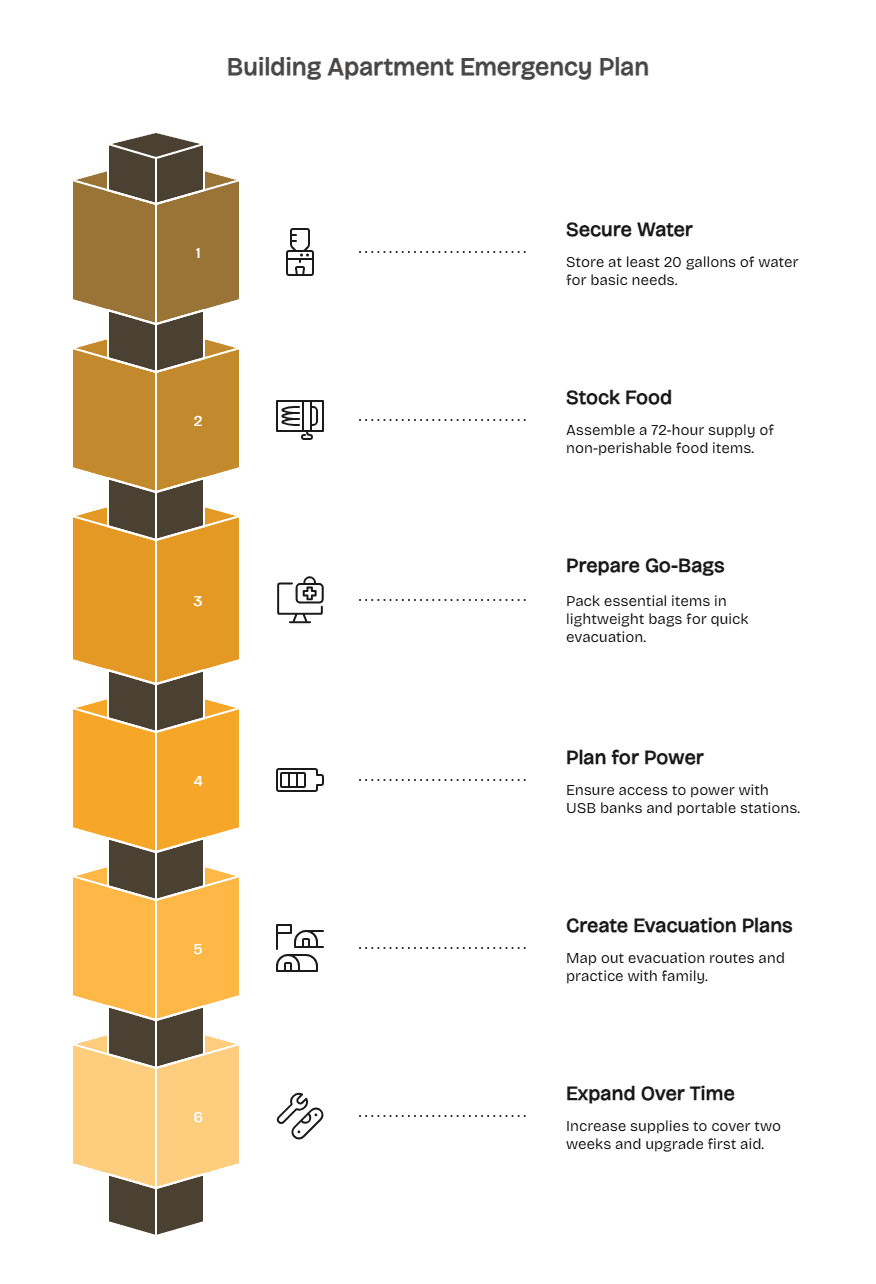
Step 1: Secure Water
Store at least 20 gallons using four collapsible 5-gallon containers. This provides enough for basic drinking, cooking, and hygiene needs. Collapsible cubes fit under beds or in closets and can be refilled as needed.
Step 2: Stock Food
Assemble a 72-hour food supply with shelf-stable items like canned soups, protein bars, nut butter, and dried fruit. Choose foods that don’t require refrigeration or extensive preparation.
Step 3: Prepare Go-Bags
Pack lightweight evacuation bags for each household member. Include essentials such as water, food, flashlights, first aid supplies, backup power, important documents, and extra clothing. Keep these near exits for quick access.
Step 4: Plan for Power
Start with USB power banks to keep phones and small devices charged during short outages. Over time, add a portable power station capable of running key appliances for longer emergencies.
Step 5: Create Evacuation Plans
Map two clear evacuation routes from your apartment to ground level. Identify indoor and outdoor meeting points for your family and practice stairwell evacuations together.
Step 6: Expand Over Time
After establishing your basics, grow your supply to cover two weeks. Add compact food storage such as #10 cans, increase your water supply, and upgrade your first aid kit to include personal medications and additional supplies.
Keep It Current
Complete the first five steps within 30 days for core readiness. Review supplies every few months – rotate food, refresh water, replace batteries, and update evacuation plans.
Apartment preparedness thrives on cooperation. Coordinate with neighbors to share information, divide supply costs, and develop mutual support systems that make your entire building safer.
Apartment Emergency Preparedness: Being Ready at All Times
Emergency preparedness for apartment living comes down to creativity, compact storage, and consistent maintenance. With limited space, lease restrictions, and shared utilities, renters must rely on portable solutions that comply with building rules.
From collapsible water containers and stackable food storage to battery-based power and organized go-bags, readiness starts with small, practical steps.
Mapping evacuation routes and maintaining updated supplies turns preparedness into an ongoing habit rather than a one-time project. By starting with 72-hour basics and expanding to a two-week system, apartment dwellers can protect themselves and their families from unexpected disruptions.
Prepare your apartment with Batten’s urban-ready emergency gear – safe, space-efficient, and built for modern renters.
Frequently Asked Questions
How Often Should I Rotate Stored Water in an Apartment?
Rotate water every six months to prevent bacterial growth and plastic degradation. Label containers with refill dates, store them in cool, dark places, and sanitize them with a small amount of unscented bleach (1 teaspoon per gallon) before refilling.
What’s the Safest Way to Cook During a Power Outage?
Use a portable butane or alcohol stove near an open window for ventilation. Avoid propane stoves indoors since they produce carbon monoxide. Keep extra fuel canisters and always have a fire extinguisher within reach.
How Can I Soundproof or Protect Windows During Civil Disturbances?
Reinforce windows with clear security film or polycarbonate panels if your lease allows. For temporary safety, move furniture or mattresses against windows and keep curtains drawn to reduce visibility from the street.
How Can Renters Prepare Without Violating Lease Agreements?
Focus on portable and reversible solutions like collapsible water containers, solar chargers, and removable shelving. Avoid anything that alters the property structure such as bolting furniture, wiring generators, or installing permanent fixtures.
What Should Be in an Apartment First Aid Kit?
Include adhesive bandages, gauze, medical tape, antiseptic wipes, gloves, pain relievers, antihistamines, and prescription medications. Add a compact trauma kit if space allows. Store everything in a sealed container in a cool, dry place.
How Can I Work With Neighbors to Improve Building Safety?
Form a tenant emergency network. Share contact info, divide responsibilities, and bulk-purchase essential supplies like water containers and batteries. Cooperative planning strengthens building-wide preparedness and improves response coordination during disasters.
Sources
- Surging Power Outages and Climate Change. 2022. Climate Central. 2022PowerOutages.pdf
- Red Cross of Utah Urges Public to Update Family Emergency Plans During National Preparedness Month. 2024. American Red Cross. National Preparedness Month 2024 | Press Release | American Red Cross
- Design Live Loads for Residential Floors. 2014. Boise Cascade EWP Engineering. Microsoft Word – IJ-12_Design_Live_Loads_Residential_Floors_2014_06.doc
- The U.S. Rental Housing Market in 2025. 2025. Black Wall Street Chronicle (BlackWallStreet.org). It’s A Renters Market
- Average Apartment Size in the United States: The Complete Guide. 2021. RENTCafé / Flexible Finance Inc. Average Apartment Size in the United States: the Complete Guide – Flex | Pay Rent On Your Own Schedule