Quick Answer: Best GRAYL alternatives include LifeStraw Personal ($20, ultralight straw filter), Sagan AquaBrick ($149, 3-gallon capacity with 700-gallon filter life), and AQUATABS tablets ($15 for 30, chemical backup). Browse Batten’s water purification collection for complete emergency systems.
GRAYL GeoPress revolutionized portable water purification with its 8-second press-and-drink system removing viruses, bacteria, and heavy metals. However, the $100 price, 65-gallon filter life, and 15.9-ounce weight create barriers for budget preppers, ultralight backpackers, and families needing extended capacity.
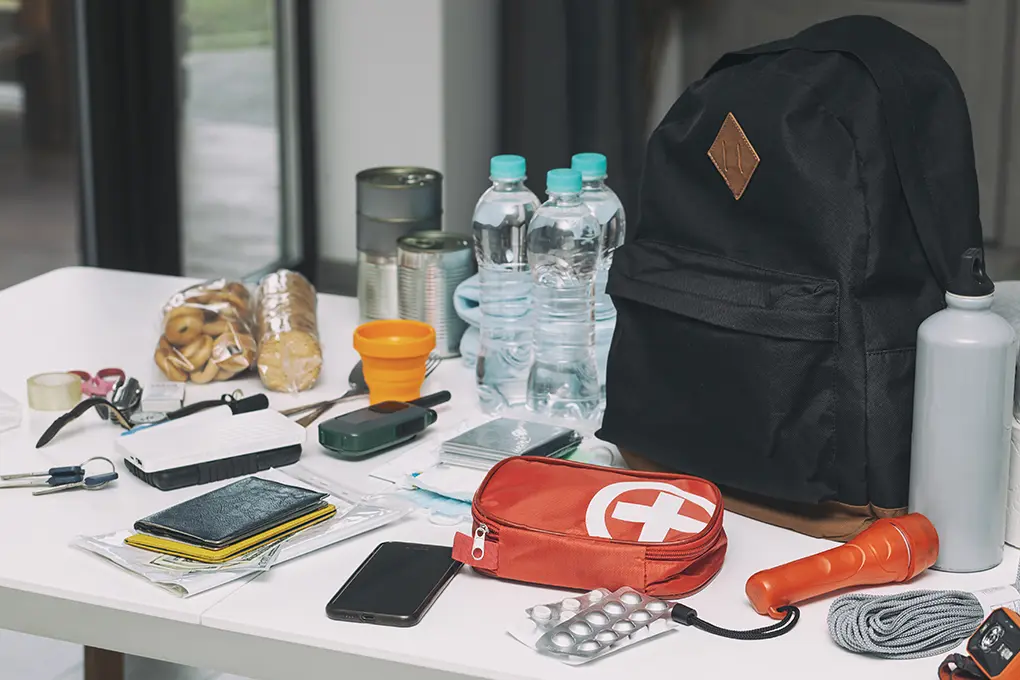
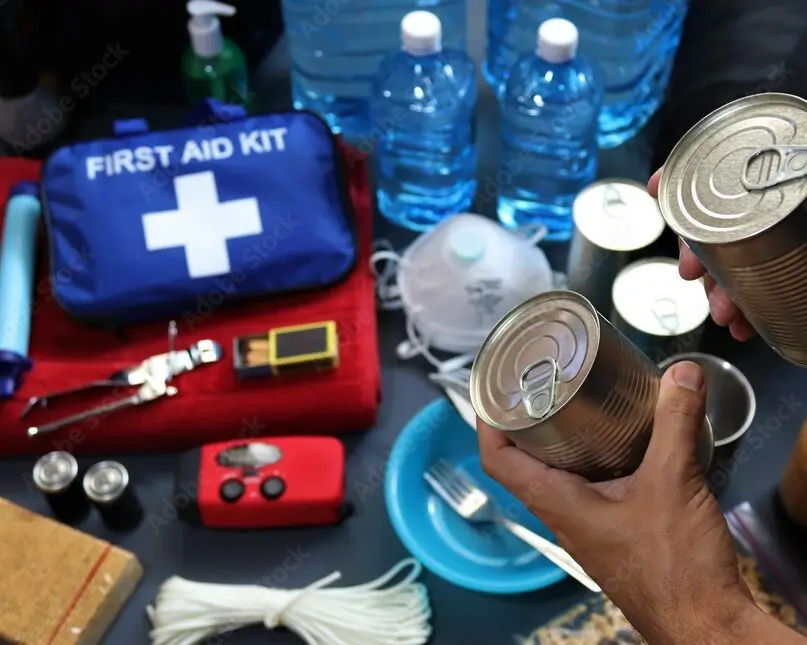
CDC estimates 7.15 million waterborne illnesses annually costing $3.33 billion in healthcare. During the 2021 Texas freeze, 14 million lost safe water access. With 73% of households lacking adequate emergency water storage, diverse purification methods – straw filters, gravity systems, chemical tablets – ensure family hydration when municipal systems fail.
Table of Contents
- Key Takeaways
- What Makes GRAYL Different and Why Look for Alternatives
- LifeStraw Personal Water Purifier: Best Budget Ultralight Alternative
- Sagan AquaBrick Water Purification System: Best Family Capacity Alternative
- AQUATABS Water Tablets: Best Chemical Backup Alternative
- Additional GRAYL Alternatives Worth Considering
- Scenario-Based Selection Guide
- Feature Comparison: GRAYL vs Top Alternatives
- Choosing the Right Alternative for Your Needs
- Frequently Asked Questions
- Sources
Key Takeaways
- LifeStraw Personal at $20 costs 80% less than GRAYL while filtering 1,000 gallons versus 65 gallons per cartridge.
- Sagan AquaBrick stores 3 gallons and purifies 700 gallons including viruses – ideal for families versus GRAYL’s 24-ounce capacity.
- AQUATABS tablets provide ultralight chemical backup removing 99.99% of viruses in 30 minutes without mechanical parts.
- Shop emergency water solutions on Batten to build layered purification systems matching your preparedness priorities.
What Makes GRAYL Different and Why Look for Alternatives
Before talking about the alternatives, let’s talk about the GRAYL water purifier first.

GRAYL’s Technology Advantages
GRAYL’s electroadsorption technology combined with activated carbon removes contaminants other portable filters miss – including viruses (99.99%), heavy metals, pesticides, and pharmaceuticals. The 710ml bottle press mechanism filters in 8 seconds, faster than squeeze filters, straw systems, or chemical tablets requiring 30-minute waits.
Cost and Capacity Constraints
Three constraints drive preppers toward alternatives. First, $30 replacement cartridges every 65 gallons create ongoing costs – roughly $0.46 per gallon versus LifeStraw’s lifetime 1,000-gallon capacity at $0.02 per gallon. Second, multiple GRAYL bottles for families become expensive compared to gravity systems. Third, 15.9 ounces exceeds ultralight tolerance when LifeStraw weighs 2 ounces.
When GRAYL Remains Superior
GRAYL excels for international travel where municipal water contains viruses, or rapid emergency response requiring immediate hydration. Most North American wilderness involves bacteria and protozoa only – threats simpler filters handle while viruses require chemical treatment paired with mechanical filtration.
LifeStraw Personal Water Purifier: Best Budget Ultralight Alternative
LifeStraw Personal pioneered personal straw filtration in 2005 for humanitarian disaster response. At $20 and 2 ounces, it’s the gold standard emergency backup for bug-out bags, car kits, and hiking supplies.

LifeStraw Personal at a Glance
- Price: $20 (as of January 2026)
- Weight: 2 ounces (vs. GRAYL’s 15.9 oz)
- Filter Life: 1,000 gallons (vs. GRAYL’s 65 gallons)
- Removes: 99.999999% bacteria, 99.999% parasites, microplastics
- Does Not Remove: Viruses, chemicals, heavy metals
- Best For: Budget emergency kits, ultralight backpacking, personal backup
- Buy: LifeStraw on Batten Shop
Filtration Technology Comparison
LifeStraw uses 0.2-micron hollow fiber membranes physically blocking bacteria (0.5-3 microns) and protozoa like Giardia (8-15 microns). EPA-tested removal rates match GRAYL for bacteria and parasites, but mechanical filtration cannot capture viruses (0.02-0.3 microns) that slip through larger pores.
GRAYL’s electroadsorption uses positively-charged media attracting negatively-charged pathogens including viruses. For North American backcountry where viruses rarely contaminate streams, LifeStraw’s simpler technology provides identical protection at one-fifth the cost.
Storage and Portability Benefits
Unlimited shelf life when stored dry makes LifeStraw superior for long-term emergency kit storage. GRAYL cartridges last 10 years unopened, but LifeStraw never expires – critical for preppers rotating gear every 5-10 years. At 9 inches long, LifeStraw fits any backpack pocket with carabiner attachment.
Operational Limitations
LifeStraw requires direct mouth-to-water contact – kneeling at streams or filling containers first. GRAYL’s bottle design stores purified water for later consumption or sharing. The narrow straw demands strong suction, especially after 500 gallons. GRAYL’s press mechanism requires arm strength but processes water faster for groups.
Pros and Cons
Pros:
- Costs $20 versus GRAYL’s $100 (80% savings for emergency kits)
- Filters 1,000 gallons versus GRAYL’s 65-gallon cartridge (15x capacity per unit)
- Weighs 2 ounces making it ideal for ultralight bug-out bags
- Unlimited shelf life when stored dry for long-term kit storage
Cons:
- Requires direct contact with water sources (no storage capability)
- Does not remove viruses requiring chemical tablet backup in disasters
- Narrow straw demands sustained suction (difficult for elderly or children)
- Cannot improve water taste or remove chemicals like GRAYL
Sagan AquaBrick Water Purification System: Best Family Capacity Alternative
Sagan AquaBrick transforms water storage and purification for families and basecamp operations. The 3-gallon stackable container with DuraFlo filter handles group hydration needs that would require four GRAYL bottles costing $400 total.

Sagan AquaBrick at a Glance
- Price: $149 complete system (as of January 2026)
- Capacity: 3 gallons water storage plus 700-gallon filter life
- Filter Rate: 0.5 gallons per minute (30 gallons per hour)
- Removes: 99.9999% bacteria, 99.99% viruses, 99.99% protozoa
- Also Removes: Fluoride, chlorine from pool water for emergency use
- Weight: 2.5 pounds empty (27 pounds when full)
- Best For: Family emergency storage, basecamp groups, home disasters
- Buy: AquaBrick on Batten Shop
Family-Oriented Design Features
The 3-gallon container stores purified water for days – critical during power outages when families need drinking, cooking, and hygiene water without constantly refilling 24-ounce GRAYL bottles. Stackable design lets families store 6 units (18 gallons) in closet space while GRAYL bottles require shelf organization.
AquaBrick’s hand pump pressurization and spigot dispense water without physical exertion – elderly family members and children simply turn the tap. GRAYL’s press mechanism requires 30 pounds of downward force. For families with young children or disabled members, AquaBrick’s accessibility proves more practical.
Long-Term Value Analysis
The 700-gallon filter capacity means one $149 system serves a family of four for approximately 175 days at 1 gallon per person daily. Four GRAYL bottles achieving the same capacity would cost $400 plus $120 in replacement cartridges – making AquaBrick 45% cheaper. The DuraFlo filter’s nanofiber technology removes viruses like GRAYL while also eliminating fluoride and heavy metals.
Multi-Purpose Emergency Applications
AquaBrick’s 20-pound dry storage capacity doubles as food-safe container for rice, beans, or flour – turning it into dual-purpose preparedness gear. The BPA-free HDPE construction withstands crushing forces and temperature extremes from freezing to 140°F, while GRAYL’s bottle can crack under pressure.
One unique capability: AquaBrick purifies swimming pool water by removing chlorine and disinfection byproducts. During disasters when municipal water fails, families with pools have 20,000+ gallon emergency reservoirs that AquaBrick converts to drinking water.
Trade-Offs vs GRAYL Portability
AquaBrick’s 2.5-pound empty weight makes it impractical for backpacking – GRAYL’s 15.9-ounce bottle fits hiking needs better. Processing 3 gallons takes 6 minutes versus GRAYL’s 8-second press. When you need one liter immediately, GRAYL wins. When your family needs 12 liters for the day, AquaBrick’s batch processing proves more efficient.
Pros and Cons
Pros:
- Stores 3 gallons versus GRAYL’s 24 ounces (15x capacity for families)
- Filters 700 gallons including viruses at $0.21/gallon versus GRAYL’s $1.54/gallon
- Stackable design maximizes storage space in homes or shelters
- Dual-purpose food storage container extends preparedness value
Cons:
- 2.5 pounds empty makes it too heavy for backpacking versus GRAYL
- $149 upfront cost versus GRAYL’s $100 (though better long-term value)
- Requires two-handed setup with hand pump versus GRAYL’s one-hand operation
- Takes 6 minutes to process 3 gallons versus GRAYL’s 8-second single bottle
AQUATABS Water Tablets: Best Chemical Backup Alternative
AQUATABS water purification tablets provide ultralight virus protection when mechanical filters fail or weight constraints prohibit bottles. At 0.3 ounces for a 30-pack treating 60 gallons, they’re the lightest GRAYL alternative for thru-hikers and emergency kit redundancy.

AQUATABS at a Glance
- Price: $15 for 30 tablets (as of January 2026)
- Weight: 0.3 ounces (30-pack treats 60 gallons)
- Treatment Time: 30 minutes for clear water
- Treats: 2 quarts per 49mg tablet (clear water) or 0.8 quarts (turbid)
- Removes: 99.9999% bacteria, 99.99% viruses, 99.9% Giardia
- Does Not Remove: Cryptosporidium, sediment, or improve taste
- Best For: Ultralight backup, virus protection, mechanical filter supplement
- Buy: AQUATABS on Batten Shop
Chemical Treatment vs Mechanical Filtration
AQUATABS use sodium dichloroisocyanurate (NaDCC) releasing measured chlorine doses that oxidize pathogen cell walls. Unlike LifeStraw’s physical filtration or GRAYL’s electroadsorption, chemical treatment kills viruses throughout water volume. This makes AQUATABS ideal for pairing with straw filters that miss viruses.
The EPA-registered formula meets NSF/ANSI Standard 60 for drinking water treatment. AQUATABS eliminate viruses, bacteria, and Giardia but cannot remove Cryptosporidium requiring either GRAYL’s electroadsorption or pre-filtration through 1-micron absolute filters.
Ultralight Advantages for Thru-Hikers
For international travel where viruses contaminate municipal water, AQUATABS provide the same virus protection as GRAYL at 2% of the weight. A 30-pack treating 60 gallons weighs less than one GRAYL replacement cartridge treating 65 gallons. Thru-hikers covering 2,000+ miles minimize pack weight by carrying tablets versus bottles.
Speed and Batch Processing Trade-Offs
GRAYL’s 8-second purification beats AQUATABS’ 30-minute wait when you need immediate hydration. In emergency bug-outs or treating water for injured persons, GRAYL’s speed becomes critical. AQUATABS require planning ahead – treating water during rest breaks or overnight.
However, AQUATABS treat larger volumes simultaneously. Drop 5 tablets in a 5-gallon collapsible water carrier, wait 30 minutes, and your family has 2 days of drinking water. Achieving the same with GRAYL requires pressing 26 bottles – taking over 3 minutes of continuous arm work.
Taste and Turbidity Limitations
AQUATABS cannot remove sediment, turbidity, or improve taste – water remains cloudy with chemical chlorine flavor. GRAYL’s activated carbon eliminates these issues. In murky floodwater or muddy streams, AQUATABS require pre-filtering through cloth before treatment, while GRAYL’s press mechanism handles light turbidity.
The 30-minute treatment time extends to 3-4 hours for Cryptosporidium removal – impractical for emergencies. GRAYL removes Cryptosporidium in 8 seconds. AQUATABS leave a slight chlorine taste that some find unpleasant. Adding vitamin C powder after treatment neutralizes chlorine taste.
Pros and Cons
Pros:
- Costs $15 for 60 gallons versus GRAYL’s $100 for 65 gallons (90% savings)
- Weighs 0.3 ounces (30 tablets) versus GRAYL’s 15.9 ounces (100x lighter)
- Removes viruses like GRAYL without mechanical parts to fail
- Treats large batches simultaneously versus GRAYL’s per-bottle pressing
Cons:
- Requires 30-minute wait versus GRAYL’s 8-second immediate hydration
- Cannot remove sediment or improve taste like GRAYL’s carbon filter
- Ineffective against Cryptosporidium without extended 3-4 hour treatment
- Leaves chlorine taste unless neutralized with vitamin C powder
Additional GRAYL Alternatives Worth Considering
In case the above alternatives aren’t quite what you’re looking for, here are a few more that might be more suitable to your needs.
MSR Guardian: Military-Grade Heavy Duty Option
MSR Guardian purifies to 0.02 microns – removing viruses mechanically without chemicals. The $350 pump system self-cleans with each stroke, processing 2.5 liters per minute – 19x faster than GRAYL.

The 10,000-liter cartridge life dwarfs GRAYL’s 250-liter capacity. For community emergency response teams needing field hospital capacity, Guardian justifies the premium. For civilian preparedness, it’s overkill unless equipping groups.
Katadyn BeFree: Fastest Flow for Trail Running
Katadyn BeFree‘s 0.1-micron hollow fiber delivers 2 liters per minute – the fastest flow rate among portable filters. The $45 system attaches to soft flasks for on-the-go drinking without GRAYL’s bottle pressing.

However, BeFree’s 1,000-liter capacity and bacteria/protozoa-only removal match LifeStraw’s limitations. For trail runners prioritizing flow speed over virus protection, BeFree edges GRAYL despite lacking chemical removal.
Scenario-Based Selection Guide
| Your Situation | Best Alternative | Why It Wins | Estimated Cost |
| Budget emergency kit (under $50) | LifeStraw + AQUATABS | 80% savings, comprehensive protection | $35 total |
| Family home preparedness | Sagan AquaBrick | 3-gallon capacity, virus removal, storage | $149 |
| Ultralight thru-hiking | AQUATABS only | 0.3 oz, 60-gallon capacity | $15 |
| Group basecamp operations | MSR Guardian | 2.5 L/min, self-cleaning, 10,000L life | $350 |
| Trail running/fastpacking | Katadyn BeFree | 2 L/min, collapsible flask | $45 |
| International travel | Stick with GRAYL | 8-second virus removal, taste improvement | $100 |
Feature Comparison: GRAYL vs Top Alternatives
| Feature | GRAYL GeoPress | LifeStraw Personal | Sagan AquaBrick | AQUATABS Tablets |
| Price | $100 | $20 | $149 | $15 (30-pack) |
| Weight | 15.9 oz | 2 oz | 2.5 lbs empty | 0.3 oz (30 tablets) |
| Capacity Per Unit | 24 oz storage | No storage | 3 gallons storage | Treats 2 qts per tablet |
| Filter Lifespan | 65 gallons | 1,000 gallons | 700 gallons | 60 gallons (30 tablets) |
| Removes Viruses | Yes (99.99%) | No | Yes (99.99%) | Yes (99.99%) |
| Removes Bacteria | Yes (99.9999%) | Yes (99.999999%) | Yes (99.9999%) | Yes (99.9999%) |
| Removes Protozoa | Yes (99.9%) | Yes (99.999%) | Yes (99.99%) | Yes (99.9%) |
| Removes Chemicals | Yes (carbon) | No | Yes (fluoride) | No |
| Treatment Time | 8 seconds | Immediate flow | 6 min (3 gallons) | 30 minutes |
| Best For | International travel | Ultralight kits | Family storage | Chemical backup |
Cost per gallon analysis shows AquaBrick ($0.21) and LifeStraw ($0.02) deliver best long-term value, while GRAYL ($1.54) and AQUATABS ($0.25) cost more per gallon but offer unique virus removal capabilities. Understanding water treatment economics helps preppers allocate budgets effectively across multiple purification methods.
Choosing the Right Alternative for Your Needs
Here are some tips on choosing the right water purification system and method for your needs.

Budget Emergency Kits Under $50
If assembling your first bug-out bag on a $200 budget, LifeStraw Personal offers unbeatable value. The $20 price lets you equip four family members for $80 – leaving $120 for first aid supplies and shelter.
Pair each LifeStraw with $15 AQUATABS for virus backup, creating comprehensive $35-per-person water safety. The unlimited shelf life means your $80 investment never expires – GRAYL cartridges require replacement every 10 years unused.
Family Home Preparedness
Families planning for 2-week power outages need storage capacity GRAYL bottles cannot match. AquaBrick’s 3-gallon containers let you purify and store enough water for cooking, sanitation, and drinking without constant refilling during crisis conditions when water sources may be inaccessible.
Six AquaBricks (18 gallons) occupy 3 cubic feet of closet space – same footprint as water cases providing only 3-4 days of supply. The spigot dispensing serves children and elderly who struggle with GRAYL’s press mechanism. For $149, AquaBrick delivers 700 gallons of virus-free water – equivalent to 11 GRAYL cartridges costing $1,430.
Ultralight Backpacking
Thru-hikers carrying baseweight under 10 pounds reject GRAYL’s 15.9-ounce penalty. AQUATABS’ 0.3-ounce 30-pack treats 60 gallons at 1% of GRAYL’s weight. The negligible pack volume lets ultralight adventurers carry complete virus protection without sacrificing critical gear.
Chemical treatment works while you rest, eliminating physical exertion GRAYL pressing requires after exhausting hiking days. For long-distance trails where resupply towns provide tablet replacement every 300-400 miles, this system minimizes both carried weight and operational effort.
Ready to build comprehensive water safety for any emergency? Explore Batten’s water purification systems and emergency kits featuring LifeStraw, AquaBrick, and complete filtration solutions trusted by preparedness experts.
Frequently Asked Questions
Which GRAYL Alternative Removes Viruses Besides Chemical Tablets?
Sagan AquaBrick and MSR Guardian both remove viruses mechanically without chemicals – AquaBrick uses nanofiber electroadsorption similar to GRAYL’s cartridge design, while Guardian employs ultra-fine 0.02-micron hollow fibers physically blocking virus particles. Both systems cost more than basic filters but eliminate the 30-minute wait chemical treatments require when immediate hydration matters.
Can I Use LifeStraw and AQUATABS Together for Complete Protection?
Yes, combining LifeStraw ($20) with AQUATABS ($15) creates layered protection matching GRAYL’s capabilities for $35 total. LifeStraw removes bacteria, protozoa, and sediment instantly while you drink, then treat collected water with AQUATABS for virus elimination. This redundant approach prevents single-point failures during disasters when one method might fail or become unavailable.
How Do GRAYL Alternatives Perform in Freezing Conditions?
AQUATABS remain effective in frozen water once thawed and dissolved, while hollow fiber filters like LifeStraw permanently fail if frozen while wet – ice crystals rupture delicate membranes. GRAYL cartridges similarly fail if frozen when wet. For winter preparedness, chemical tablets provide the most reliable option, or store mechanical filters inside sleeping bags to prevent freezing overnight.
Are GRAYL Alternatives Effective Against Agricultural Runoff?
No portable filter completely removes dissolved agricultural chemicals like nitrates, though GRAYL’s activated carbon reduces pesticides and herbicides better than basic mechanical filters. For comprehensive chemical removal during contamination events, only reverse osmosis or distillation work reliably. AquaBrick removes fluoride and some heavy metals but not all agricultural chemicals – preppers in farming regions should store bottled water rather than rely solely on filtration.
Which System Works Best for Cloudy Floodwater?
Pre-filter all cloudy water through cloth or coffee filters before treatment, as sediment clogs mechanical systems and reduces chemical tablet effectiveness. After pre-filtering, Sagan AquaBrick handles remaining turbidity better than GRAYL or LifeStraw due to its pressurized system and larger filter surface area. AQUATABS require double-dosing in turbid water with extended treatment time, making them less practical for flood scenarios.
Sources
- Drinking Water Facts and Stats. 2024. Centers for Disease Control and Prevention. https://www.cdc.gov/drinking-water/data-research/facts-stats/index.html
- Chemicals That Can Contaminate Tap Water. 2025. Centers for Disease Control and Prevention. https://www.cdc.gov/drinking-water/causes/chemicals-that-can-contaminate-tap-water.html
- About Drinking Water. 2025. Centers for Disease Control and Prevention. https://www.cdc.gov/drinking-water/about/index.html
- How to Create an Emergency Water Supply. 2025. Centers for Disease Control and Prevention. https://www.cdc.gov/water-emergency/about/how-to-create-and-store-an-emergency-water-supply.html
- Estimate of Waterborne Disease Burden in the United States. 2025. Centers for Disease Control and Prevention. https://www.cdc.gov/healthy-water-data/waterborne-disease-in-us/results.html