Quick Answer: Hero Fire Spray is a $29.99 aim-and-spray aerosol marketed for A, B, C, and K fires, but it lacks the UL rating and NFPA 10 compliance of a traditional home fire extinguisher, so treat it as a backup, not a replacement.
A stovetop grease fire gives you seconds to react before it climbs past the pan and into the cabinets above it. That short window is the entire pitch behind Hero Fire Spray: a lightweight aerosol canister from Prepared Hero built around aim and spray, no pin to pull, no gauge to read, no weight to wrestle off a wall mount.
It’s also a product built largely around convenience marketing, which makes an unbiased Hero Fire Spray review worth doing before it earns a spot in your kitchen drawer. Cooking remains the number one cause of home fires and home injuries in the United States, per the National Fire Protection Association. Below is what the can contains, how it stacks up against a UL-rated extinguisher like the one in our First Alert Fire Extinguisher Review, and where it fits into a broader family disaster plan.
Table of Contents
- Key Takeaways
- What Is Hero Fire Spray? Ingredients and How the Formula Works
- Does Hero Fire Spray Work? What Testing and Reviews Show
- Hero Fire Spray vs. Fire Extinguisher: How the Ratings Compare
- Hero Fire Spray for Kitchen and Grease Fires
- How to Use Hero Fire Spray, Plus Storage and Expiration
- Hero Fire Spray Pros and Cons
- Hero Fire Spray Price and Where to Buy
- Is Hero Fire Spray Worth It? Alternatives to Consider
- Building a Complete Fire Response Plan Today
- Frequently Asked Questions
- Sources
Key Takeaways
- Hero Fire Spray is a $29.99 aerosol extinguisher marketed for A, B, C, and K fires, but it isn’t UL-listed like traditional extinguishers.
- It sells for as low as $16.99 per can in a 12-pack, and carries CE HS&E certification rather than a UL 711 fire-performance listing.
- Fire-safety researchers and outlets including The New York Times‘s Wirecutter have found aerosol sprays less reliable than UL-rated extinguishers in controlled burn tests, recommending them only as a supplement.
- The can has roughly a three-year shelf life and is built for one continuous use, not intermittent bursts across multiple small fires.
- Browse Batten’s Fire Safety collection for the Hero Fire Spray alongside UL-rated extinguishers that can back it up.

What Is Hero Fire Spray? Ingredients and How the Formula Works
Hero Fire Spray is a 20.3-ounce aerosol canister made by Prepared Hero, an emergency-gear brand based in Sheridan, Wyoming. The can measures about 2.6 by 11.4 inches and weighs just over a pound, next to a multi-pound metal extinguisher that has to be mounted, inspected, and wrestled off a wall.
The formula is described by the manufacturer as a proprietary, non-toxic, biodegradable agent rather than a disclosed chemical mixture. Prepared Hero markets it as safe around kids and pets, though the label warns it may cause eye irritation and should only be used as directed. It works by cooling the burning surface and cutting off the fire’s access to oxygen, a mechanism common to water-based suppressants as a category.
Hero Fire Spray at a Glance
- Price: $29.99 per can, down to $16.99 each in a 12-pack (as of August 2026)
- Key Feature: Aim-and-spray design with no pin, hose, or training required
- Coverage Claimed: Class A, B, C, and K fires (wood, paper, grease, electrical, cooking oil)
- Size/Weight: 20.3 oz canister, about 2.6 x 11.4 inches, just over 1 lb.
- Certification: CE HS&E certified; not UL-listed like a traditional home extinguisher
- Shelf Life: About three years per manufacturer guidance
- Best For: Kitchens, cars, campsites, and anyone who wants a lightweight backup tool
- Buy: Available on Batten
Does Hero Fire Spray Work? What Testing and Reviews Show
Hero Fire Spray effectiveness depends on the source you ask. Prepared Hero’s own product page reports 504 reviews with roughly 85% five-star ratings, and its marketing includes a chart claiming a 95% satisfaction score against 70% for a traditional extinguisher. Those numbers come from the manufacturer, not an independent lab, and most Amazon reviewers admit they haven’t needed to use the can on a real fire.
Independent testing tells a more cautious story. A Fire Protection News roundup of experts reacting to a New York Times Wirecutter burn test found consistent agreement that aerosol fire sprays are less reliable than UL-listed extinguishers, with one veteran noting that a spray without UL testing leaves buyers relying on manufacturer claims alone. That coverage also noted the Times could find only one aerosol model tested to any third-party safety standard, and it did not name Hero Fire Spray as that exception.
Hero Fire Spray Customer Reviews and Complaints
Buyer feedback across Amazon and third-party sites skews positive on compact size, quick action, and minimal cleanup compared with dry chemical residue. Complaints tend to focus on price relative to size, and on the honest limitation that a single can only holds enough agent for one sustained spray, not multiple small fires in a busy kitchen. Reviewers who tested it against a real grease or paper fire mostly report it worked as described, though that sample is small next to the millions of units sold.
Hero Fire Spray vs. Fire Extinguisher: How the Ratings Compare
The biggest gap between Hero Fire Spray and a traditional extinguisher isn’t design, it’s certification. UL Solutions tests extinguishers against ANSI/UL 711, a full-scale flammable liquid and wood fire standard, and units that pass carry a UL Mark tied to a specific fire-class rating. Hero Fire Spray carries CE HS&E certification, a European conformity mark, rather than a UL listing, so its A/B/C/K fire-class claims come from the manufacturer rather than third-party fire testing recognized in the U.S.
| Feature | Hero Fire Spray | First Alert HOME1-4 |
| Certification | CE HS&E (manufacturer claim) | UL-listed |
| Fire Rating | A, B, C, K (marketed, not third-party tested) | 1-A:10-B:C (independently tested) |
| Weight | About 1 lb. | About 4 lbs. |
| Pressure Gauge | None | Yes |
| Reusable | No, single continuous use | Yes, professionally rechargeable |
| Governed By | Manufacturer specifications | NFPA 10 |
| Price | $29.99 (single can) | ~$107.92 for a 4-pack |
Is Hero Fire Spray Safe to Use at Home?
Used as directed on a small, contained fire, it’s a reasonable tool to keep within reach. The absence of a pressure gauge means there’s no way to confirm the can is still charged before an emergency, part of why the U.S. Consumer Product Safety Commission’s general guidance on extinguisher-style products recommends buying suppression products that meet UL 299 and UL 711 standards. That guidance targeted a different product category, not Hero Fire Spray by name, but the underlying logic, that third-party testing matters, applies here too.
Hero Fire Spray for Kitchen and Grease Fires
Kitchen fires are the scenario this product is built for. Cooking oil and grease reaching their smoke point remains a leading cause of home fires nationwide, and a can stored within reach of the stove closes the gap for the seconds before a flare-up spreads to nearby cabinets. A few notes matter most here:
- Cut the heat source before spraying if you can reach the burner control safely
- Never pour water on a grease fire; the spray works without that risk, but the instinct to grab water instead still causes injuries
- Keep the can accessible but out of a small child’s reach, since it discharges with light pressure on the nozzle
- Replace the can after any use, even a partial one
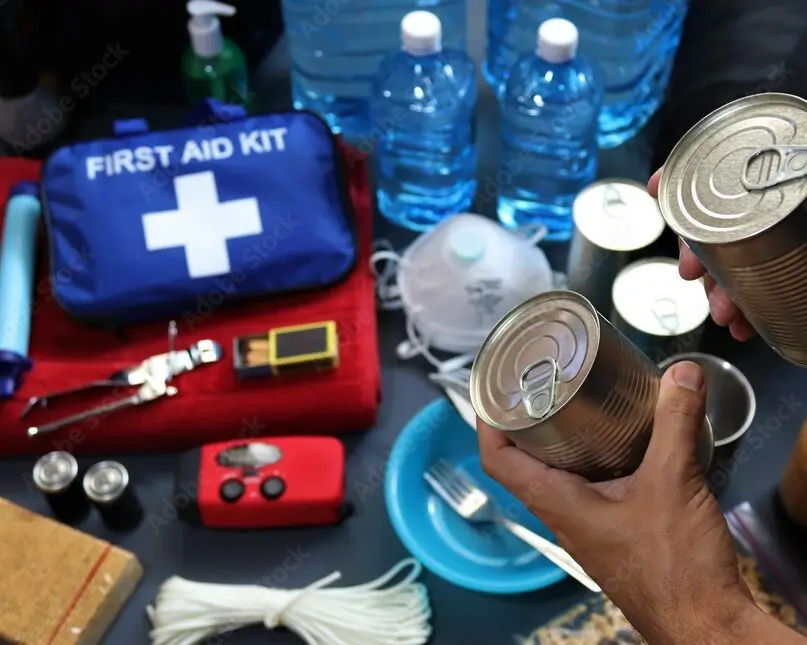
A kitchen-ready spray like this belongs on the same shelf as the rest of a household’s emergency kit for natural disasters, and it pairs well with the ember-defense gear covered in our guide to protecting your home from wildfire smoke.
How to Use Hero Fire Spray, Plus Storage and Expiration
Hero Fire Spray how to use instructions are intentionally simple:
- Pull the safety tab or cap off the nozzle
- Aim at the base of the fire, not at the visible flames
- Spray continuously in a steady stream until the fire is fully out
- Keep an exit path behind you the entire time
- Replace the can afterward, even if only part of it was used
A Worcester Polytechnic Institute and Eastern Kentucky University study of 276 untrained participants found that while 98% could discharge a fire extinguisher on their first attempt, only 65% fully extinguished a simulated fire without prior instruction. After brief training, that jumped to 90%. The lesson carries over to Hero Fire Spray: reading the can once, before an emergency, changes your odds of using it correctly under stress.
On the Hero Fire Spray expiration date question, Prepared Hero recommends swapping out an unused canister roughly every three years to avoid pressure loss or nozzle failure. Store it away from direct heat, like an oven or a hot glovebox, since aerosol propellants degrade faster at high temperatures.
Hero Fire Spray Pros and Cons
Pros:
- Genuinely simple to operate, with no pin, hose, or gauge to interpret under stress
- Lightweight at about a pound, versus four or more pounds for a comparable metal extinguisher
- Minimal cleanup compared with dry chemical residue from a traditional extinguisher
- Marketed as non-toxic and safe around kids and pets, with eye-irritation caution noted on the label
- Compact enough for a kitchen drawer, car glovebox, or camp bag
Cons:
- Not UL-listed, so the A/B/C/K fire-class claims aren’t backed by independent third-party testing in the way a traditional extinguisher’s rating is
- Fire-safety researchers and outlets like the New York Times‘s Wirecutter have found aerosol sprays less reliable than UL-rated extinguishers in controlled testing
- No pressure gauge to confirm the can is charged and ready before an emergency
- Built for one sustained use; a partially discharged can shouldn’t be trusted for a second fire
- Not a substitute for a UL-rated extinguisher for anything beyond a small, contained flame
Hero Fire Spray Price and Where to Buy
Hero Fire Spray price scales down with volume: $29.99 for a single can, dropping to roughly $16.99 per can in a 12-pack, which suits households that want one in the kitchen, one in each car, and one in a camping bag. Prepared Hero sells it directly, and it’s also stocked at Batten alongside the Fire Safety Station bundle for a more consolidated response kit.
Is Hero Fire Spray Worth It? Alternatives to Consider
At $17 to $30 a can, Hero Fire Spray is a reasonable backup for a kitchen drawer, a car, or a camp kit, especially at lower bundle pricing. It shouldn’t be a home’s only fire-response tool, since it lacks the third-party testing, pressure gauge, and rechargeable design of a UL-rated extinguisher. Pairing it with a tested primary extinguisher gives a household both ease-of-use and verified reliability.
Two alternatives worth stocking alongside it, or instead of it if one tool has to cover more ground:
| Product | Price | Certification | Best For |
| Hero Fire Spray | $29.99 | CE HS&E (manufacturer claim) | Lightweight backup for kitchens, cars, camp kits |
| First Alert Fire Extinguisher (4-Pack) | $107.92 | UL-listed, 1-A:10-B:C | Whole-home coverage as the primary extinguisher |
| Fire Safety Station | $79.99 | Manufacturer bundle | Consolidated kitchen or garage response kit |
The First Alert Fire Extinguisher is the stronger single purchase for anyone who wants just one fire-response tool, since its UL 1-A:10-B:C rating is independently verified and it’s professionally rechargeable. The Fire Safety Station suits households that want several response tools staged in one spot. Neither replaces the glovebox-friendly convenience Hero Fire Spray offers, which is why many households keep both categories on hand.
Building a Complete Fire Response Plan Today
Hero Fire Spray does what its marketing promises for the scenario it’s built for: a small, contained fire someone can reach in seconds without hunting for a pin or reading a gauge. What it can’t offer is the independent testing behind a UL-rated extinguisher, and every honest source on aerosol fire sprays, from fire-protection experts to the manufacturer’s own fine print, agrees it works best as a second tool rather than a household’s only line of defense.
A complete plan pairs the convenience of a spray can with the tested reliability of a rated extinguisher, plus a household plan for what happens if a fire outgrows either one, the same layered thinking behind our wildfire preparedness and evacuation guide.
Ready to close the gap in your kitchen fire response? Shop Batten’s Fire Safety collection for the Hero Fire Spray alongside UL-rated extinguishers and fire blankets built to back it up.
Frequently Asked Questions
Does Hero Fire Spray Work?
Manufacturer data and independent Amazon reviews report success on small kitchen and camp fires when sprayed at the base of the flame. It has not been independently UL-tested, so treat it as a fast-response backup rather than a verified primary suppression tool for anything beyond a small, contained fire.
Is Hero Fire Spray Worth It?
At $17-$30 per can, it’s a reasonable backup for kitchens, cars, and camp kits, especially at lower bundle pricing. It shouldn’t replace a UL-rated extinguisher for whole-home coverage; pairing both gives you the ease-of-use of the spray and the tested reliability of a real extinguisher.
Is Hero Fire Spray Safe to Use Around Kids and Pets?
The manufacturer markets the formula as non-toxic and biodegradable, though the label warns it may cause eye irritation. It isn’t a certified food-safe or medical-grade product, so keep it out of reach of children when not in use and rinse any skin or eye contact promptly.
What Is the Hero Fire Spray Expiration Date?
Prepared Hero recommends replacing an unused canister roughly every three years to avoid pressure loss or nozzle malfunction. Check the printed date on the bottom of the can when it arrives, set a reminder, and never rely on a can that has already been partially discharged.
How Do You Use Hero Fire Spray?
Pull the safety tab, aim the nozzle at the base of the fire rather than the flames, and spray continuously until it’s out. Cut the power or fuel source first if it’s safe to do so, and keep a clear exit path behind you the entire time you’re spraying.
Is Hero Fire Spray Better Than a Fire Blanket?
Each tool suits a different situation. A fire blanket smothers small stovetop or clothing fires without chemical residue, while Hero Fire Spray reaches a fire from a short distance without direct contact. Many households keep both, since neither replaces a UL-rated extinguisher for larger flames.
Where Can You Buy Hero Fire Spray?
Hero Fire Spray is sold directly through Prepared Hero and through retail partners including Batten, where it’s stocked alongside other Prepared Hero fire-safety gear. Bundle packs of 4, 8, or 12 lower the per-can price for households that want one in every high-risk room.
What Do Hero Fire Spray Customer Reviews Say?
Reviews on Amazon and the brand’s own site skew positive, with buyers praising the compact size and simple operation; the manufacturer’s site reports roughly 85% five-star ratings. Most reviewers note they haven’t needed to use it in a real fire, so real-world performance data remains largely anecdotal.
Sources
- “Safety With Cooking Equipment,” National Fire Protection Association, https://www.nfpa.org/education-and-research/home-fire-safety/cooking
- “Experts React: Our Burn Tests Proved There’s No Substitute for a Real Fire Extinguisher,” 2025, Fire Protection News, https://fireprotectionnews.com/content/experts-react-our-burn-tests-proved-theres-no-substitute-for-a-real-fire-extinguisher/
- “Fire Extinguisher Testing and Certification and Component Recognition,” UL Solutions, https://www.ul.com/services/fire-extinguisher-testing-and-certification
- “NFPA 10: Standard for Portable Fire Extinguishers,” National Fire Protection Association, https://www.nfpa.org/codes-and-standards/nfpa-10-standard-development/10
- “CPSC Warns Consumers to Immediately Stop Using Fire Extinguisher Balls Due to Failure to Extinguish Fires and Risk of Serious Injury or Death,” 2023, U.S. Consumer Product Safety Commission, https://www.cpsc.gov/Newsroom/News-Releases/2023/CPSC-Warns-Consumers-to-Immediately-Stop-Using-Fire-Extinguisher-Balls-Due-to-Failure-to-Extinguish-Fires-and-Risk-of-Serious-Injury-or-Death-Sold-on-Amazon-com
- “Fire Safety Equipment,” American Red Cross, https://www.redcross.org/get-help/how-to-prepare-for-emergencies/types-of-emergencies/fire/fire-safety-equipment.html
- “Ordinary People and Effective Operation of Fire Extinguishers,” Worcester Polytechnic Institute & Eastern Kentucky University / FEMA Life Safety Foundation, 2012, https://www.femalifesafety.org/wp-content/uploads/2021/02/Effective-Use-of-Portable-Fire-Extinguishers-by-Ordinary-People-%E2%80%93-WPI-EKU-Study.pdf