
Quick Answer: Augason Farms is best for budget-friendly, long-term pantry storage, while Mountain House is best for taste and fast preparation. Most experienced preppers actually use both brands together for a balanced emergency food strategy.
When disaster strikes, the food in your emergency supply has to do more than just keep you alive. It has to keep your family functional – physically and mentally – through days or weeks of stress, disruption, and uncertainty. That’s what makes the Augason Farms vs Mountain House freeze-dried food decision more important than most people realize.
These are the two most recognized names in emergency food storage, but they serve genuinely different needs. Augason Farms is a budget-friendly, ingredient-focused brand built for stocking a long-term pantry. Mountain House is a premium, meal-first brand built around taste, simplicity, and speed. Choosing the wrong one for your situation means either overpaying or under-preparing.
Founded in 1972, Augason Farms has spent over 50 years producing dehydrated and freeze-dried ingredients out of Salt Lake City, Utah. Mountain House, operating since 1969, began as a supplier of freeze-dried meals to the U.S. military and Special Forces – a heritage it still leans on heavily. Both brands offer 25-30 year shelf life on most products. Everything else is where they diverge.
Table of Contents
- Key Takeaways
- Augason Farms Emergency Food: Best Value Pantry Builder
- Mountain House Freeze-Dried Meals: Best Taste and Fastest Prep
- Value Comparison: Augason Farms vs Mountain House Cost Per Serving
- Augason Farms vs Mountain House: Head-to-Head Feature Comparison
- Which Brand Is Right for Which Prepper?
- What About Backpacking and Camping?
- A Note on Shelf Life: 25 Years vs. 30 Years
- Beyond Augason Farms and Mountain House: Worth Knowing
- Final Thoughts: Mountain House vs Augason Farms Survival Food
- Frequently Asked Questions
- Sources
Key Takeaways
- Mountain House wins on taste and convenience; Augason Farms wins on price, variety, and long-term pantry flexibility.
- Mountain House meals are fully freeze-dried and ready in under 10 minutes with just hot water – no pots required.
- Augason Farms costs significantly less per serving, making it the better option for building a weeks- or months-long food supply on a budget.
- Mountain House’s 30-Year Taste Guarantee is backed by independent third-party sensory testing against major competitors including Augason Farms.
- Build your emergency food supply with expert-vetted options at batten.shop – including freeze-dried meals, ingredient buckets, and complete family kits.
Augason Farms Emergency Food: Best Value Pantry Builder
Augason Farms is the go-to brand for preppers who want to build a deep, flexible food supply without breaking the bank. Their product line centers on individual freeze-dried and dehydrated ingredients sold in #10 cans, resealable pouches, and stackable buckets – everything from scrambled egg mix and powdered milk to freeze-dried strawberries and diced chicken.
This ingredient-first model is intentional. You buy components and combine them into meals, giving you far more control over nutrition, calories, and meal variety than pre-made pouch options. It’s the approach favored by serious long-term preppers and families building 30-, 60-, or 90-day supplies.
The tradeoff is preparation time. Most Augason Farms meals require 12-15 minutes of simmering – longer than Mountain House’s pour-and-wait method. During an actual power outage, that requires a camp stove, fuel, and water management. If simplicity under stress is your priority, that matters.
Fact: FEMA’s National Household Survey (NHS) indicates that “emergency supplies” ownership (food, water, etc. as a combined indicator) is common but not universal; in secondary summaries of the 2023-2024 NHS, around 60-70% of respondents report having basic emergency supplies at home.
Augason Farms 2-Week 1-Person Emergency Food Supply Kit at a Glance
- Price: $74.38 (sale from $118.99, as of February 2026)
- Servings: 119 total servings
- Coverage: 2-week emergency food supply for 1 person
- Shelf Life: Up to 25 years
- Prep: Add water and simmer a few minutes
- Packaging: Compact emergency food kit with multiple meal varieties
- Best For: Individuals building a short-term emergency food supply or expanding an existing prep kit
- Buy On: Batten.shop

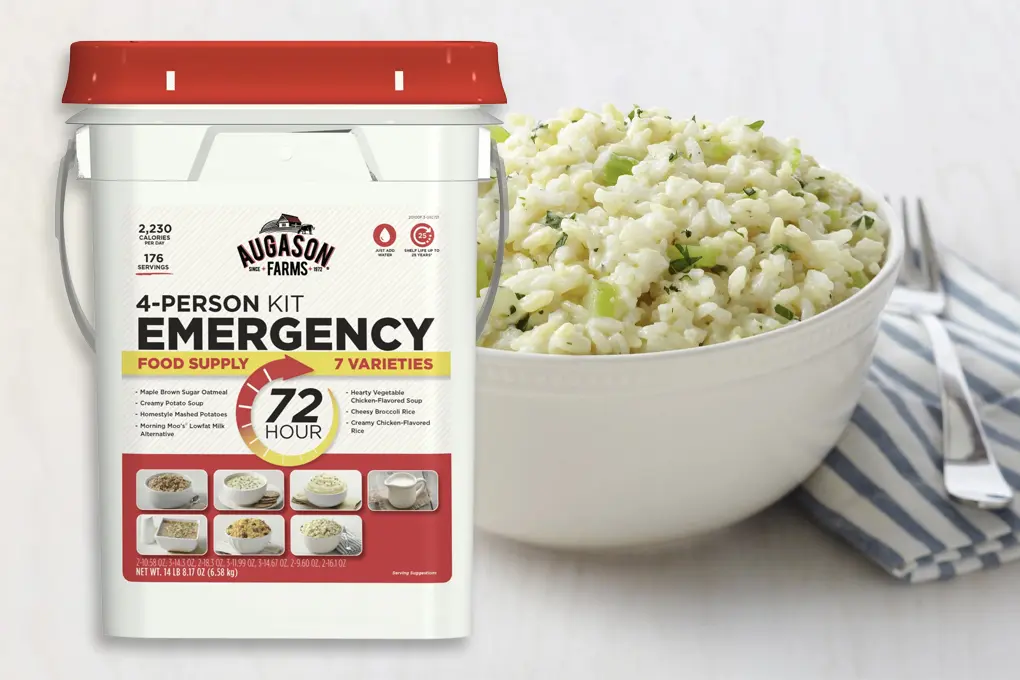
Augason Farms 72-Hour 4-Person Emergency Food Kit at a Glance
- Price: $70.99 (sale from $123.99, as of February 2026)
- Servings: 176 total servings / 2,230 calories per day for four people
- Shelf Life: Up to 25 years
- Prep: Add water and simmer 12-15 minutes
- Packaging: Stackable bucket with grab handle
- Best For: Families building a budget-friendly 72-hour food supply
Augason Farms 30-Day 1-Person Kit at a Glance
- Price: ~$112-$182 (as of February 2026)
- Servings: 194 total servings
- Shelf Life: Up to 25 years
- Best For: Individuals building month-long food security on a budget
Pros and Cons
Pros:
- Significantly lower cost per serving than Mountain House (often $1-$2 vs. $3-$4)
- Massive ingredient variety: fruits, vegetables, dairy, grains, proteins, baking supplies, and more
- Widely available at Walmart, Costco, Sam’s Club, Amazon, and Home Depot
- Ideal for DIY meal prep and customizing your emergency diet
- Strong calorie density per serving (250-300 calories average)
Cons:
- Taste is widely rated below Mountain House in blind testing
- Most meals require 12-15 minutes of cooking, not just add-water
- Many “chicken” or “beef” meals use soy-based TVP rather than real meat
- Lower protein content than Mountain House (around 6g per serving on average)
- Prep complexity increases during actual emergencies when you’re managing stress, children, and limited fuel
Mountain House Freeze-Dried Meals: Best Taste and Fastest Prep
Mountain House built its reputation on a simple premise: survival food should taste good enough that you’d actually eat it. In a third-party consumer taste test conducted by Oregon State University, Mountain House’s Chili Mac with Beef scored a class-leading 6.82 out of 9 on the standard hedonic taste scale – beating Augason Farms and every other major competitor tested by a significant margin. They command more than 70% of the outdoor freeze-dried meal market according to the Outdoor Industry Association.
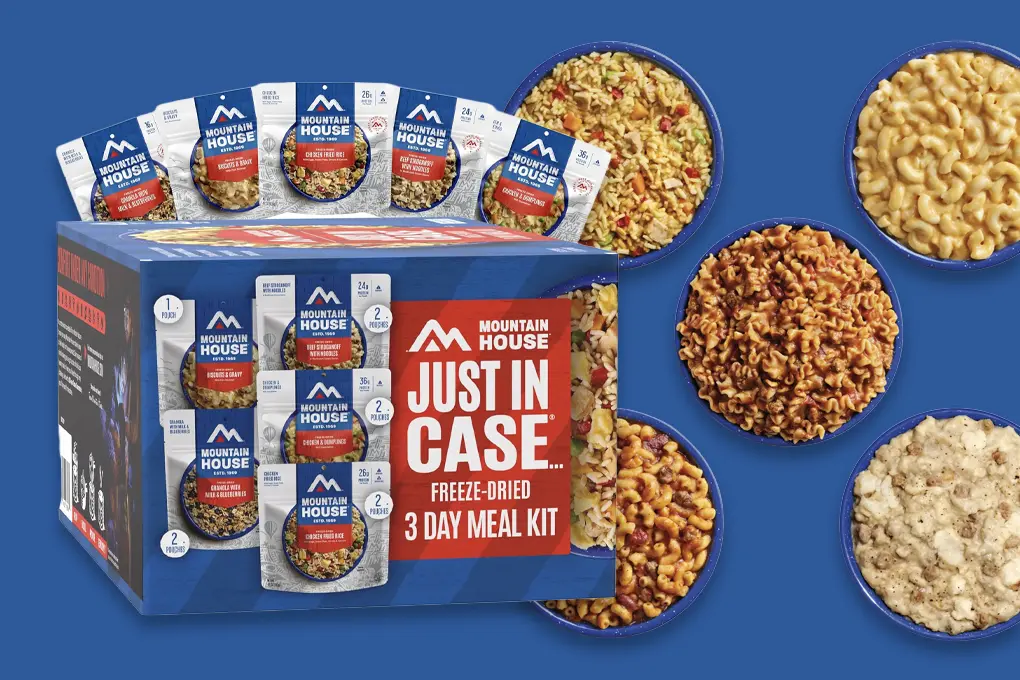
Their product line is structured around complete, ready-to-eat meals: Beef Stroganoff, Chicken Fried Rice, Biscuits & Gravy, Chili Mac with Beef, Pasta Primavera, Chicken & Dumplings, and many more. Every pouch is fully cooked before freeze-drying – meaning you add hot water, wait 8-10 minutes, and eat directly from the pouch. No pots. No stove. Minimal cleanup. If you have room-temperature water, the meals still work – just double the rehydration time. That’s a meaningful advantage during a power outage with no heat source.
Mountain House also offers the longest proven shelf life in the industry, backed by a 30-Year Taste Guarantee and third-party testing that includes 37-year-old meals verified still edible. Their R&D director has personally eaten Mountain House products over 44 years old.
The limitation is cost and bulk. Mountain House individual pouches run $8-$12 each at two servings per pouch – roughly $3-$4 per serving. Multi-day and multi-month kits are substantially more expensive than equivalent Augason Farms supplies.
Fact: An American Housing Survey-based analysis reported that 81% of Americans had enough non-perishable food for everyone in the household for three days; by implication, roughly 19% lacked a 3‑day emergency food supply.
Mountain House 3-Day Emergency Food Supply at a Glance
- Price: ~$35-$45 (as of February 2026)
- Servings: 18 servings / ~1,706 calories per day for 1 person
- Shelf Life: 30 years (Taste Guarantee)
- Prep: Add hot water directly to pouch, eat in under 10 minutes
- Weight: 3.6 lbs
- Best For: 72-hour kits, go-bags, and bug-out bags where taste and speed matter
Mountain House 30-Day Emergency Kit at a Glance
- Price: ~$400-$550 (as of February 2026)
- Servings: 180 servings / ~1,732 calories per day for 1 person
- Shelf Life: 30 years
- Prep: Just add hot water, no pots needed
- Best For: Premium long-term preppers who won’t compromise on taste

Pros and Cons
Pros:
- Consistently rated the best-tasting emergency food in independent consumer tests
- True just-add-water preparation in under 10 minutes – no cooking required
- 30-Year Taste Guarantee backed by university sensory testing
- No artificial flavors or colors in any product
- Higher protein per serving than Augason Farms (typically 10-20g per meal)
- Established military heritage: meals originally developed for U.S. Special Forces
Cons:
- Significantly more expensive per serving ($3-$4 vs. $1-$2 for Augason Farms)
- Limited ingredient variety – Mountain House does not offer bulk single ingredients like dairy, grains, or baking supplies
- Calorie density slightly lower than Augason Farms per serving
- High sodium content: typically 700-900mg+ per serving
- Not sold in mainstream retail stores as widely as Augason Farms
Value Comparison: Augason Farms vs Mountain House Cost Per Serving
| Kit | Brand | Price | Total Servings | Cost Per Serving | Cal/Day | Shelf Life |
| 72-Hr 4-Person Bucket | Augason Farms | ~$71 | 176 | ~$0.40 | 2,230 | 25 years |
| 30-Day 1-Person Kit | Augason Farms | ~$112 | 194 | ~$0.58 | ~1,800 | 25 years |
| 3-Day 1-Person Kit | Mountain House | ~$40 | 18 | ~$2.22 | 1,706 | 30 years |
| 30-Day 1-Person Kit | Mountain House | ~$475 | 180 | ~$2.64 | 1,732 | 30 years |
Prices approximate as of February 2026. See current pricing at brand websites.
Augason Farms delivers roughly 4-5x more servings per dollar than Mountain House. For a family of four building a 30-day emergency supply, that difference can mean $500 vs. $2,000+. At the same time, Mountain House’s price per quality meal is competitive with convenience foods – you’re paying for real ingredients, real taste, and zero-effort preparation.
The right choice depends less on which brand is “better” and more on what you’re building. A 72-hour go-bag optimized for fast, no-fuss meals during evacuation is a very different use case than a basement pantry designed to feed a family for two months if the grid goes down.

Augason Farms vs Mountain House: Head-to-Head Feature Comparison
| Feature | Augason Farms | Mountain House |
| Cost Per Serving | ~$0.40-$0.80 | ~$2.22-$4.00 |
| Shelf Life | Up to 25 years | Up to 30 years (Taste Guarantee) |
| Taste (Independent Test) | Below average vs. peers | #1 rated in OSU sensory study |
| Prep Time | 12-15 min (simmering) | 8-10 min (just add water to pouch) |
| Protein Per Serving | ~6g | ~10-20g |
| Calories Per Serving | ~250-300 | ~250-310 |
| Sodium Per Serving | Lower (varies by item) | Higher (700-900mg+) |
| Packaging Options | #10 cans, buckets, pouches | Pouches, #10 cans, buckets |
| Ingredient Variety | Very high (100+ SKUs) | Moderate (meals only, no bulk ingredients) |
| Retail Availability | Walmart, Costco, Amazon, Home Depot | Online-primary; some Costco |
| Best For | Long-term pantry building, budget preppers | 72-hr kits, go-bags, taste-first preppers |
The table above reinforces what experienced preppers already know: these brands don’t directly compete. Augason Farms dominates on price and variety; Mountain House dominates on taste and ease. The smartest emergency food strategy combines both.
Which Brand Is Right for Which Prepper?
The answer shifts depending on your preparedness goal, family situation, and budget.
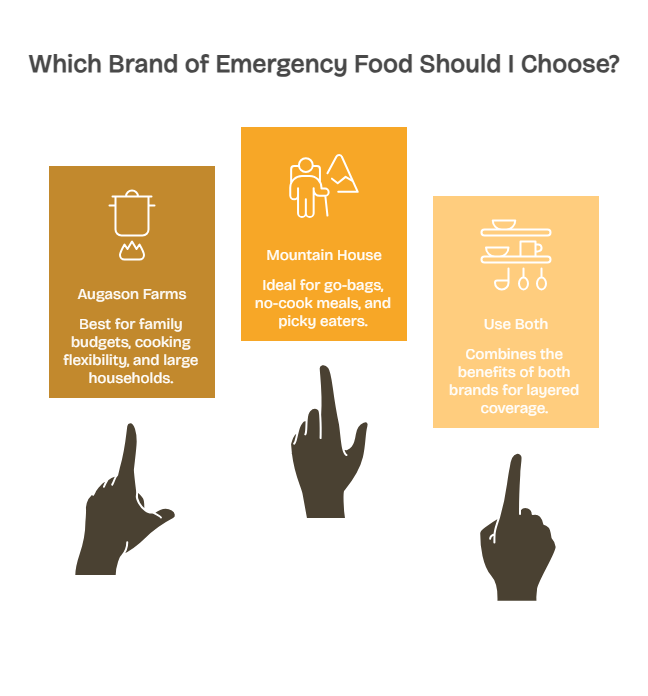
Choose Augason Farms if you:
- Are building a 30-, 60-, or 90-day food supply on a family budget
- Want flexibility to cook real meals using stored ingredients
- Need to stock a large household and can’t spend $3+ per serving
- Have cooking capability (camp stove, fuel, water) during emergencies
- Are new to prepping and want maximum caloric coverage per dollar
Choose Mountain House if you:
- Are stocking a 72-hour go-bag or bug-out bag where weight and speed matter
- Want meals that require no cooking equipment – only hot or room-temperature water
- Have children or picky eaters who won’t tolerate bland emergency food under stress
- Are a backpacker or outdoor enthusiast who uses emergency food regularly
- Can budget $3-$4 per serving for premium quality
Use both if you:
- Are a serious prepper building layered emergency food coverage
- Want Mountain House for your 72-hour kits and grab-and-go supplies, plus Augason Farms for longer-term pantry depth
- Need to balance taste satisfaction (for morale) with budget efficiency (for coverage)
This layered approach is what emergency managers and experienced preppers recommend. As Practical Self Reliance notes, Mountain House is ideal for the immediate post-disaster period when you need fast, reliable calories – while bulk ingredient brands work best once you’ve stabilized and have time to cook.
For a complete look at building a balanced food storage system, see our freeze-dried food emergency prep guide and our breakdown of the best tasting survival food for long-term storage.
What About Backpacking and Camping?
Mountain House was built for backcountry use – and it shows. The lightweight pouch format, zero-cook-pot preparation, and superior flavor make it the dominant brand on the trail. A 3-day Mountain House kit weighs just 3.6 lbs, fits in a pack lid, and requires only a pot of water (or none, if you’re patient).
Augason Farms doesn’t serve this use case well. Their #10 cans and buckets are not trail-compatible. Even their pouched options require extended cooking time and more water per meal – significant liabilities when you’re managing fuel and hydration in the backcountry.
If you’re stocking a 72-hour bug-out bag or planning to keep emergency food in your vehicle, Mountain House is the stronger choice. For your home pantry, Augason Farms’ price advantage makes it a better fit for multi-week or multi-month depth. Check our guide on emergency food to keep in your car for specific recommendations based on vehicle storage constraints.
A Note on Shelf Life: 25 Years vs. 30 Years
Both brands advertise long shelf lives – Augason Farms claims up to 25 years, Mountain House claims up to 30 years with its Taste Guarantee. In practice, actual longevity depends heavily on storage conditions: temperature, moisture, and light exposure matter far more than brand claims.
Both FEMA and food safety researchers recommend storing emergency food in cool, dark conditions between 55-70°F to maximize shelf life. Mountain House has published third-party university studies validating their 30-year claims and has even verified quality in 37-44 year-old products. Augason Farms’ 25-year figures are manufacturer-stated but widely accepted in the industry.
For practical purposes, either brand stored correctly will outlast most emergency planning horizons. If you’re making a decision on shelf life alone, the gap is meaningful only for generational food storage – buying food today for your children to use 25+ years from now.
For more on protecting your food supply long-term, see our food shortage preparation guide and crisis food security strategies.
Beyond Augason Farms and Mountain House: Worth Knowing
While Augason Farms and Mountain House dominate the comparison searches, they’re not the only options worth considering:
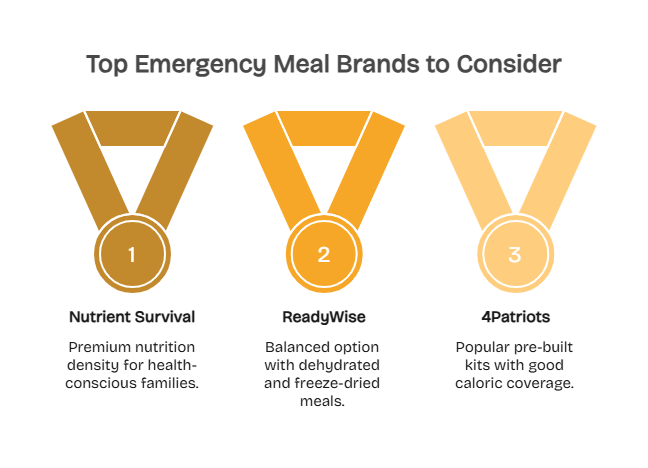
- Nutrient Survival – The premium choice for nutrition density. Their meals are formulated with up to 40 essential nutrients per serving and are particularly strong for families prioritizing health during extended emergencies. Read our Nutrient Survival review for full details.
- ReadyWise – A solid middle-ground option with dehydrated and freeze-dried meals at pricing between Augason Farms and Mountain House.
- 4Patriots – Popular pre-built kits with good caloric coverage and straightforward purchase options.
For families building a comprehensive emergency food system, we recommend starting with an emergency kit checklist. Use our Emergency Kit Builder to size your food supply based on family size, location, and risk factors.
Final Thoughts: Mountain House vs Augason Farms Survival Food
The Augason Farms vs Mountain House decision comes down to priorities. Augason Farms is the smarter choice for affordable, long-term pantry building, while Mountain House delivers better taste and faster preparation. Most experienced preppers combine both: Mountain House for 72-hour kits and quick meals, and Augason Farms for deeper, budget-friendly food storage that can support a household through longer emergencies.
Ready to build a food supply your family will actually eat when it matters? Browse Batten’s emergency food and preparedness collection for expert-vetted options including freeze-dried meals, ingredient buckets, and complete family kits.
Frequently Asked Questions
Is Augason Farms Good Quality for Emergency Food?
Augason Farms is a well-established brand with solid quality for the price. Its ingredient-focused line – freeze-dried chicken, powdered dairy, grains – generally receives better reviews than its pre-made meal options, which some testers find bland or poorly textured. For long-term pantry building on a budget, Augason Farms is reliable and widely used by experienced preppers.
Is Mountain House Worth the Money Compared to Augason Farms?
Yes – if taste and prep simplicity are priorities for your use case. Mountain House costs 4-5x more per serving than Augason Farms, but the food genuinely tastes better and requires no cooking equipment. For 72-hour kits, go-bags, and backpacking, that premium is justified. For a 90-day home pantry, the cost difference is harder to absorb.
Which Emergency Food Tastes Better: Mountain House or Augason Farms?
Mountain House consistently wins taste comparisons. In an independent sensory study conducted by Oregon State University, Mountain House Chili Mac with Beef scored 6.82/9 – the highest in a field that included Augason Farms and four other brands. Real-world user feedback aligns: Mountain House meals are described as comfort food; Augason Farms meals are often described as adequate but bland.
What Lasts Longer: Mountain House or Augason Farms?
Mountain House claims a 30-year shelf life backed by a Taste Guarantee and third-party university testing. Augason Farms claims up to 25 years on most products. In practice, both brands require proper storage (cool, dark, 55-70°F) to reach those timelines. Mountain House’s independent validation of its shelf life claims gives it a slight edge for long-duration storage planning.
Can You Live on Mountain House Meals During an Extended Emergency?
Yes, but with caveats. Mountain House meals average 1,700-1,800 calories per day in their emergency kits, which falls short of the 2,000-2,500 calories most adults need during physically active emergencies. High sodium content (700-900mg per serving) also becomes a concern over extended periods. Supplementing with additional calorie sources – nuts, bars, or Augason Farms ingredients – is strongly recommended for emergencies lasting more than a week.
Does Augason Farms Taste Good?
It depends heavily on which product you’re evaluating. Augason Farms’ single-ingredient items (freeze-dried strawberries, diced chicken, powdered cheddar) generally taste fine because there’s less that can go wrong. Their pre-made entrees – creamy chicken rice, cheese broccoli soup, potato soup – receive mixed reviews. A common complaint is that many “meat” options use TVP (textured vegetable protein) rather than real meat, which affects both flavor and texture.
Which Survival Food Brand Is Best for a 72-Hour Kit?
Mountain House is the better choice for a 72-hour emergency kit or go-bag. The just-add-water preparation, no cooking equipment required, lightweight pouch format, and superior taste make it the right tool for short-duration high-stress emergencies. Stock 3 pouches (6 servings) per person per day and you’re covered. See our 72-hour bug-out bag guide for full kit recommendations.
What Is the Augason Farms vs Mountain House Price Difference?
Augason Farms typically costs $0.40-$0.80 per serving. Mountain House typically costs $2.22-$4.00 per serving. For a 30-day supply for one adult, that’s roughly $30-$50 (Augason Farms) vs. $400-$500 (Mountain House). For a family of four building a 30-day supply, the difference can exceed $1,500-$2,000.
Sources
- Suggested Emergency Food Supplies. 2022. Ready.gov (U.S. Department of Homeland Security). https://www.ready.gov/food
- Agency Information Collection Activities: Proposed Collection, Comment Request; National Household Survey on Disaster Preparedness. 2024. Federal Register. https://www.federalregister.gov/documents/2024/10/04/2024-22897/agency-information-collection-activities-proposed-collection-comment-request-national-household
- Comparison of Emergency Preparedness Practices between Food Assistance Program Participants and Non-Participants in the United States. 2021. International Journal of Environmental Research and Public Health. https://pmc.ncbi.nlm.nih.gov/articles/PMC8702057/