
Quick Answer: Stock a bomb shelter with a minimum two-week supply of water (one gallon per person per day), calorie-dense shelf-stable food, a first aid kit, backup power, emergency communication gear, sanitation supplies, and radiation protection items including potassium iodide tablets.
When most people picture bomb shelter supplies, they think canned soup and a flashlight. That mental image undersells how serious this planning really is – and how quickly a poorly stocked shelter can become its own crisis.
The most common mistake families make is focusing on one category at the expense of others. They stock six months of food but forget sanitation. They buy a generator but have no way to receive emergency broadcasts. They store water in milk jugs that can leach bacteria and compromise the supply. The individual items matter, but getting the categories right – and covering all of them – matters more.
FEMA and the American Red Cross recommend at least one gallon of water per person per day, with a two-week minimum as the baseline for serious sheltering. A family of four needs 56 gallons of water alone. Add shelf-stable food, power, medical supplies, and sanitation, and you are looking at a deliberate, category-by-category build that takes planning to get right.
This guide breaks down every essential supply category, explains the reasoning behind each, and identifies specific gear so families can stop guessing and start building with confidence.
Table of Contents
- Key Takeaways
- Water Storage and Purification for Your Bomb Shelter
- Long-Term Food Supply: What to Stock in a Bomb Shelter
- Backup Power for a Bomb Shelter
- Emergency Communication: Staying Informed Underground
- First Aid and Medical Supplies for Your Shelter
- Sanitation, Tools, and Everyday Gear
- Complete Bomb Shelter Supply Checklist
- Your Shelter Is Only as Good as What’s Inside It
- Frequently Asked Questions
- Sources Used for This Article
Key Takeaways
- A properly stocked bomb shelter requires a minimum two-week supply of water (one gallon per person per day), calorie-dense shelf-stable food, first aid gear, backup power, and communication tools.
- FEMA guidelines recommend 2,000 calories per person per day; prioritize food with a long shelf life and minimal water or cooking requirements.
- Radiation protection in a nuclear fallout scenario requires sheltering for at least 24-48 hours while initial radiation levels decay – the CDC confirms that potassium iodide (KI) protects only the thyroid from radioactive iodine and should only be taken on the advice of public health officials.
- Power, lighting, and communication are the most commonly overlooked categories – without them, a shelter becomes a dark, isolated box with no way to know when it is safe to leave.
- Build your shelter supply kit from Batten’s emergency preparedness collection – expert-selected gear covering every category in this guide.
Fact: Nuclear Famine by the International Physicians for the Prevention of Nuclear War* makes one thing clear: even a “limited” nuclear conflict could trigger global climate collapse and widespread food shortages. In practical terms, that means supply chains would fail fast, and access to basic necessities would become unpredictable. When you’re stocking a bomb shelter, this is exactly the scenario you’re preparing for – extended disruptions where self-sufficiency is no longer optional.
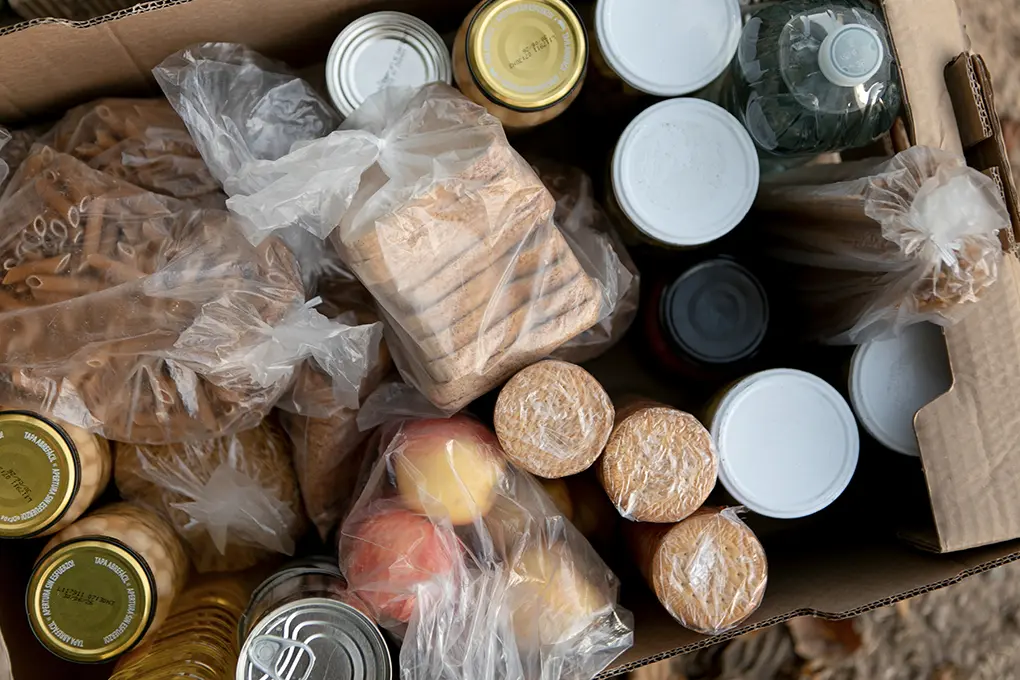
Water Storage and Purification for Your Bomb Shelter
You can survive weeks without food. Without water, you have days – and that window shrinks fast under physical or psychological stress, elevated temperatures, or medical strain. No other supply category is more time-critical, and no other supply failure is harder to improvise around once you are sealed inside.
The math is unforgiving. According to the CDC, a person needs at least one gallon per day for drinking, food preparation, and basic hygiene. Nursing mothers, children, and anyone with a medical condition will need more. In a warm or stressful environment, needs can double. For a family of four over 30 days, the baseline target is 120 gallons – a number that surprises most people the first time they calculate it.
How to Store Water Correctly
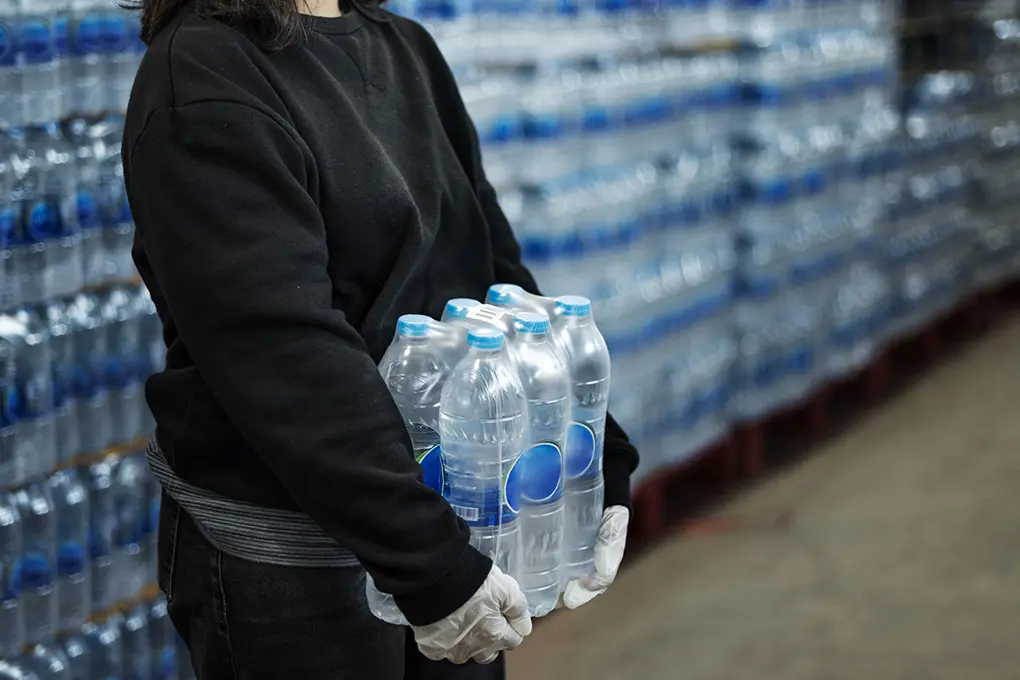
Storage method matters as much as volume. Water should be kept in food-grade sealed containers – never in used milk jugs, glass, or cardboard, all of which can leach contaminants or break down over time. Tap water stored in proper containers should be rotated every six months. Commercially bottled water should be stored per its “use by” date.
The AquaBrick Container 6-Pack is one of the most practical shelter storage solutions available. The containers are food-grade, stackable, and designed specifically for long-term storage – making them far more space-efficient than bulky barrels or cases of single-use bottles.

Backup Water Purification
Stored water will eventually run low in an extended scenario. Purification capability is your safety net for when that happens. Not all filters are equal: most standard camping filters handle bacteria and protozoa but fail against viruses, which are a genuine concern in disaster conditions involving compromised sanitation or flooding.
The MSR Guardian Water Purifier is one of the few portable filters that removes viruses, bacteria, and protozoa simultaneously – the same standard used by military units operating in contaminated environments. Pairing stored water with a filter of this quality means your supply is genuinely resilient, not just nominally covered.

Water Storage Quick Rules
- Minimum Daily Amount: One gallon per person for drinking, food prep, and hygiene – more in heat or stress
- Storage Containers: Food-grade plastic only; never repurposed milk jugs, glass, or cardboard
- Rotation Schedule: Replace tap water every six months; respect “use by” dates on commercial bottles
- Purification Backup: Always have a filter rated for viruses, not just bacteria, as a secondary option
Long-Term Food Supply: What to Stock in a Bomb Shelter
After water, food is your next critical category – and it requires more thought than grabbing whatever is on sale at the grocery store. In a sealed shelter environment where activity is reduced, FEMA estimates healthy adults can function on approximately 2,000 calories per day. Children, pregnant women, and anyone doing physical work will need more.
The key characteristics of good shelter food are: long shelf life, minimal preparation requirements (especially minimal water use), caloric density, and nutritional completeness.
Canned goods satisfy shelf life but are heavy, bulky, and often sodium-heavy in a way that increases thirst – which puts pressure on water supplies. Freeze-dried and dehydrated meals address all of these problems more effectively for extended stays.
Freeze-Dried Meals: The Shelter Food Standard
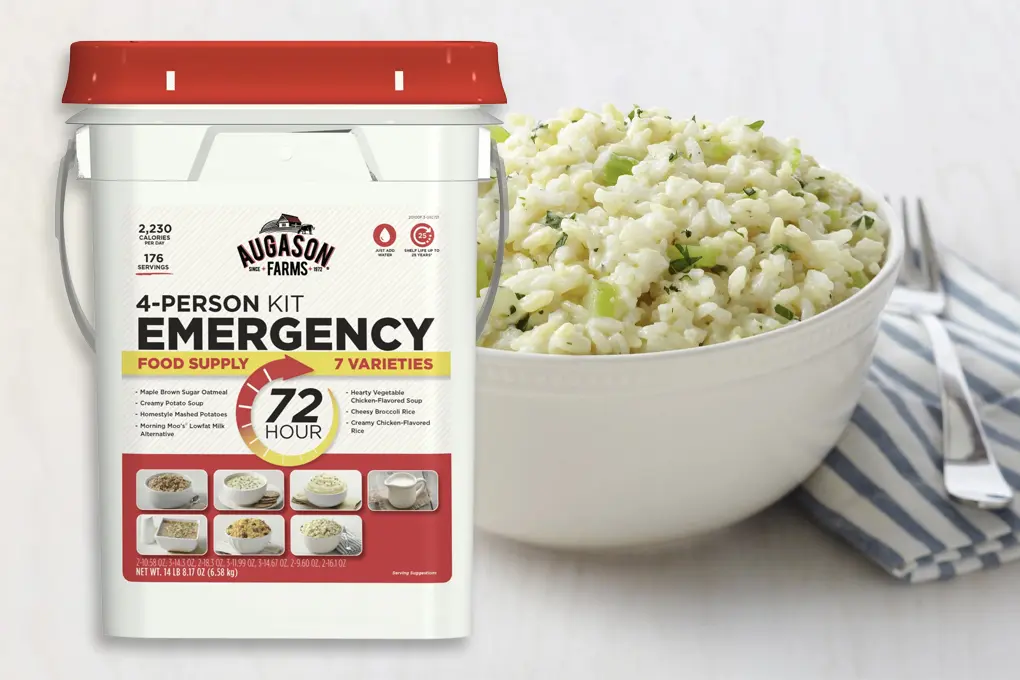
Freeze-dried emergency food has a shelf life measured in decades, not years. It is lightweight relative to calories, requires only water to prepare, and high-quality options deliver complete macro and micronutrient profiles – not just caloric filler.
This matters enormously over a two-week or longer shelter stay, when nutritional deficiencies begin compounding and morale depends in part on eating food that actually tastes like something.
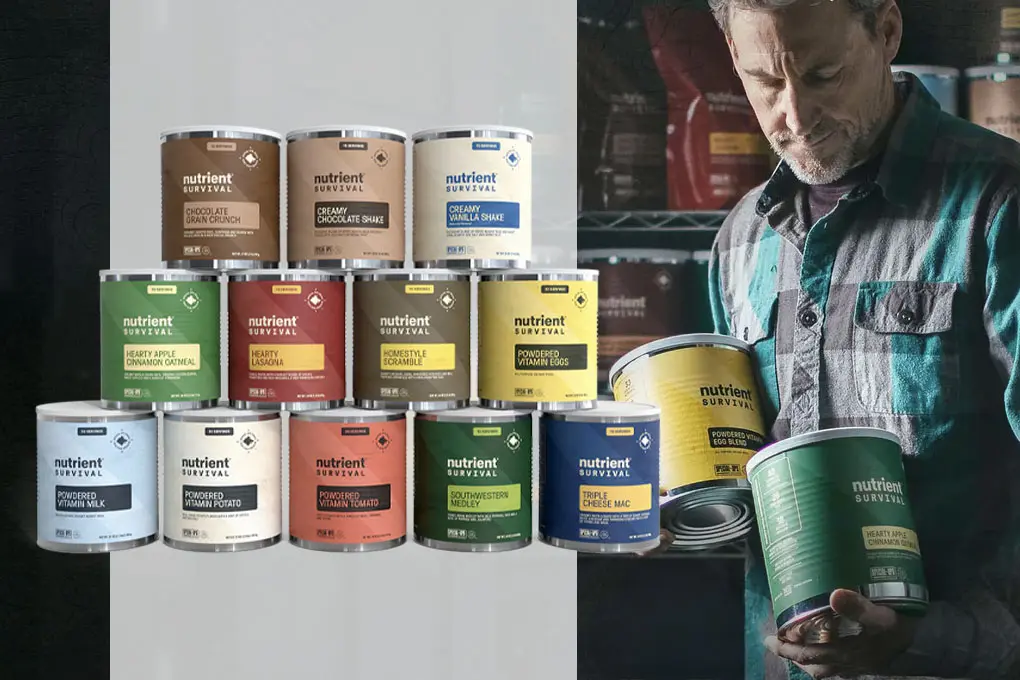
The 30 Day Emergency Food Kit by Nutrient Survival (220 Servings, 25-Year Shelf Life) is a serious long-term option. 220 servings across 30 days covers a single adult comprehensively and is engineered for nutritional completeness, not just calorie count. For smaller households or as a component of a larger supply build, the 2-Week 1-Person Emergency Food Supply Kit (119 Servings) offers compact, grab-ready coverage.

Plugging Nutritional Gaps
An underground shelter cuts off sunlight, fresh food, and refrigeration. Over days and weeks, nutritional gaps develop – particularly in calcium, vitamin D, and protein – that canned food and freeze-dried meals alone don’t always address. These deficiencies affect immune function, bone health, and cognitive performance.
Shelter Food Storage: Supply Comparison
| Supply Option | Shelf Life | Servings | Best For |
| 30-Day Food Kit – Nutrient Survival | 25 years | 220 | Families, long-term prep |
| 2-Week 1-Person Food Supply | 25 years | 119 | Individuals, starter kits |
| Canned goods (standard) | 2-5 years | Varies | Short-term supplementing |
Food Planning Rules
- Caloric Target: 2,000+ calories per person per day (per FEMA); more for children and active adults
- Prep Requirements: Minimize water and cooking needs – boiling water consumes fuel that has other uses
- Dietary Needs: Account for children, seniors, allergies, and medical diets before you stock; emergencies are not the time to discover a gap
- Rotation Plan: Label everything with purchase dates and consume oldest stock first to prevent waste
Backup Power for a Bomb Shelter
It is tempting to think of backup power as a convenience – something that makes the shelter more comfortable. In practice, losing power in a sealed shelter is a safety problem. No lighting means an inability to move safely, treat injuries, or locate supplies.
No power means communication devices go dark and medical equipment fails. The difference between a well-powered shelter and a powerless one is the difference between a manageable situation and a dangerous one.
The right power strategy has three layers: a primary high-capacity station for sustained use, a smaller portable unit or solar charger for device-level charging, and a fuel-based generator for extended scenarios where stored electricity runs out.
Primary Power Stations
For families, the Jackery Explorer 1500 v2 Portable Power Station is the workhorse option – 1,500Wh of capacity that can simultaneously run LED lighting, a radio, medical devices, and small appliances. For smaller households or as a backup unit, the Jackery Explorer 1000 Portable Power Station covers the essentials at a lower cost and smaller footprint.

Solar and Portable Charging
For keeping phones, radios, and small devices charged without drawing from your primary station, the Hiluckey Solar Charger provides renewable charging that works as long as any sunlight is accessible during recovery periods. The Zeus Pro Jump Starter doubles as a portable power bank and serves the additional function of restarting a vehicle after an extended shelter stay – a practical dual-use item that earns its space.

Fuel-Based Backup Generation
For extended scenarios where stored electricity has been depleted, a fuel-based generator provides sustained power output for essential systems. The Honda 2200-Watt 120-Volt Generator is a reliable, fuel-efficient option well-suited to post-shelter recovery conditions. Note that generators must always be run outdoors – carbon monoxide buildup in an enclosed shelter is lethal.
Shelter Lighting
The UCO Original Candle Lantern provides low-tech, reliable ambient lighting with zero battery dependency – candles are easy to store in large quantities and cast enough light for navigating a small shelter space. For personal task lighting and navigation in dark conditions, the EDC Mini Flashlight is a compact, high-output option that belongs in every shelter kit and on every person’s person.

Fact: A 2019 study found on ICAN says that “The risk of nuclear war has increased dramatically in the past two years as the United States and Russia have abandoned long-standing nuclear arms control”.
Emergency Communication: Staying Informed Underground
The single most dangerous aspect of sheltering is not the external threat – it is not knowing when that threat has passed. Without communication, you cannot know when radiation levels have dropped to safe levels, whether emergency services are operating, whether evacuation routes are open, or whether your family members outside the shelter are safe. Sheltering without communication is navigating blind.
A layered communication plan covers two needs: receiving official emergency broadcasts (so you know what is happening and when it is safe to leave), and sending messages to family members or emergency services when cell networks are down.
NOAA Emergency Radio
The minimum baseline for any shelter communication plan is a hand-crank NOAA weather radio. The Esky Emergency Hand Crank Radio and Charger covers AM/FM and NOAA weather bands, charges via hand crank with no battery dependency, and also functions as a device charger in a pinch. NOAA’s Emergency Alert System broadcasts real-time official guidance on exactly the kind of events a bomb shelter is designed for.
Satellite Communication
When cell networks are compromised – which they consistently are during and after major disasters – a satellite communicator bypasses the problem entirely. The Garmin inReach Mini 2 Satellite Communicator transmits and receives two-way text messages via satellite from anywhere on Earth, requiring no cell tower or internet connection.
For families with members in different locations, or for any situation where you may need to coordinate a post-shelter response, this device provides a communication capability that no other technology in a shelter kit can replicate.

First Aid and Medical Supplies for Your Shelter
A standard household first aid kit is designed for minor injuries when emergency services are a phone call away. In a sealed shelter scenario, emergency services may not be accessible for days or weeks. Injuries that would normally be treated in an emergency room – lacerations requiring sutures, fractures, burns, infections – must be managed with whatever you have on hand. The gap between a basic kit and a genuinely useful one is significant.
Core First Aid Coverage
The First Aid Pro covers the core needs – wound care, trauma supplies, splints, and OTC medications – and is a strong baseline for most families. For a broader setup that combines medical supplies with survival tools, the Ultimate Survival Kit is a well-organized option. For families specifically planning a shelter-in-place scenario at home rather than an underground structure, the purpose-built Shelter In Place kit is assembled with exactly that use case in mind.
For a complete all-in-one system that bundles survival essentials, medical gear, and emergency tools in a single professional-grade package, the SEVENTY2 Pro Survival System is one of the most comprehensive pre-built kits available on the market.

Prescription Medications and Supplements
Beyond a standard first aid kit, medical preparedness requires planning for the specific needs of everyone in your household. A 30-day minimum supply of all prescription medications should be maintained – this is one of the hardest categories to stock, because prescriptions require advance planning and physician coordination that can’t be done in a hurry.
Supplement coverage matters too. Without sunlight, vitamin D levels drop significantly over weeks underground, weakening immune function. Stock vitamins D, C, and E alongside any prescription medications, along with antidiarrheal medication, pain relievers, antihistamines, and electrolyte packets.
Radiation Protection: What You Need to Know
For nuclear fallout scenarios, potassium iodide (KI) tablets are a standard item in shelter medical supplies. However, it is important to understand what KI does and does not do. According to the CDC, KI protects only the thyroid gland from radioactive iodine – one specific type of radiation exposure.
It does nothing against other radioactive materials or external radiation exposure. The FDA recommends taking KI only on the guidance of public health or emergency management officials, as incorrect use can cause serious health problems. Stock FDA-approved tablets, check expiration dates annually, and understand the proper use guidelines before you need them.
Sanitation, Tools, and Everyday Gear
Disease from poor sanitation spreads faster than almost any other threat in a confined shelter environment. Fecal-oral contamination – the mechanism behind dysentery, typhoid, and cholera – thrives exactly in the conditions an improperly sanitized shelter creates: limited water, shared space, and no ability to leave. Planning for sanitation is not a comfort consideration; it is a health and survival priority.
A complete sanitation plan covers waste management (a portable toilet or 5-gallon drum with bags), hygiene supplies (soap, hand sanitizer, wet wipes), and the consumables that make those systems functional over weeks, not days.
Emerge Survival Toilet Paper is a compact, long-lasting option purpose-built for emergency storage, and stocks well in large quantities without taking up disproportionate space. Plan for more than you think you need – running out is a serious problem with no good workaround.

Essential Tools
The right small tools handle an outsized range of shelter problems. Repairs, medical tasks, food preparation, and improvised fixes all require cutting, fastening, or prying capability that a standard household toolbox doesn’t provide in a compact, grab-ready form.
The Multitool Pro handles the majority of cutting, wiring, and emergency repair tasks in a single pocketable unit. The Black Beard Arc Lighter provides windproof, reliable flame for candles, camp stoves, and fire-starting without the disposable fuel canisters that run out at the worst moments. For personal protection in an unstable post-shelter environment, the SABRE 2-in-1 Stun Gun provides a non-lethal defensive option in a compact form.

Complete Bomb Shelter Supply Checklist
| Category | Minimum Requirement | Recommended Product |
| Water Storage | 1 gal/person/day × 14-30 days | AquaBrick Container 6-Pack |
| Water Purification | Virus-rated filter + backup tablets | MSR Guardian Water Purifier |
| Food (30 days) | 2,000 cal/person/day, 25-yr shelf life | 30-Day Nutrient Survival Kit – 220 Servings |
| Food (14 days) | 2,000 cal/person/day, 25-yr shelf life | 2-Week 1-Person Food Supply – 119 Servings |
| Primary Power | 1,000-1,500Wh capacity | Jackery Explorer 1500 v2 or Jackery Explorer 1000 |
| Solar/Portable Charging | Device-level solar charging | Hiluckey Solar Charger |
| Jump Starter / Power Bank | Vehicle restart + device power | Zeus Pro Jump Starter |
| Fuel Generator | 2,000W+ for extended recovery | Honda 2200-Watt Generator |
| Ambient Lighting | No-battery candle lantern | UCO Original Candle Lantern |
| Task Lighting | Compact high-output flashlight | EDC Mini Flashlight |
| NOAA Communication | Hand-crank AM/FM/NOAA radio | Esky Emergency Hand Crank Radio |
| Satellite Communication | Two-way satellite messaging | Garmin inReach Mini 2 |
| First Aid | Trauma kit + OTC medications | First Aid Pro |
| Sanitation | Toilet paper, soap, waste bags | Emerge Survival Toilet Paper |
| Tools | Multitool + windproof lighter | Multitool Pro + Black Beard Arc Lighter |
| Personal Protection | Non-lethal defensive option | SABRE 2-in-1 Stun Gun |
| All-in-One Survival System | Complete bundled kit | THE SEVENTY2 Pro Survival System |
| Shelter-in-Place Kit | Home sheltering scenario | Shelter In Place |
Your Shelter Is Only as Good as What’s Inside It
Building a bomb shelter – or designating a shelter space in your home – is only half the equation. The other half is stocking it correctly, across every category, before you need it. That means water storage and purification first, followed by calorie-dense food with genuine shelf stability, then backup power and communication, and finally medical gear and sanitation.
The families who fare best in extended shelter scenarios are the ones who treated preparedness as a project to complete over time, not a shopping trip to do under pressure. Use this checklist as your framework. Start with water. Build category by category. Check expiration dates each year. And know that every item you stock now is one less problem to solve when conditions outside make solving problems much harder.
Ready to build a fully stocked shelter supply kit? Browse Batten’s complete emergency preparedness collection for expert-selected food, water, power, and survival gear -organized for real-world scenarios and tested by security professionals.
Frequently Asked Questions
How Much Water Should I Stock in a Bomb Shelter for a Family of Four?
Store a minimum of 56 gallons for a two-week supply for a family of four – based on FEMA’s guideline of one gallon per person per day. In hot environments or with nursing mothers, plan for more. Store in food-grade sealed containers, rotate tap water every six months, and keep a virus-rated purification filter like the MSR Guardian as a backup when stored water runs low.
How Long Can You Stay in a Bomb Shelter?
For a nuclear fallout scenario, Wikipedia’s fallout shelter reference draws on Swiss Civil Defense guidelines recommending at least two weeks underground, with brief, limited outdoor exposure beginning in week three as radiation decays. Your supplies should cover the full two-week minimum comfortably, with a buffer. For non-nuclear emergencies, duration depends entirely on the external threat.
What Is the Best Long-Term Survival Food for a Bomb Shelter?
Freeze-dried and dehydrated meals with 25-year shelf lives are the best long-term option. The 30-Day Nutrient Survival Kit covers complete nutrition across 220 servings without refrigeration. Per FEMA guidance, target 2,000+ calories per person per day and choose meals with minimal water-prep requirements to protect your water supply.
Should I Stock Potassium Iodide (KI) Tablets in My Bomb Shelter?
Yes – but understand their limits and only take them on official guidance. According to the CDC, KI protects only the thyroid from radioactive iodine – one specific component of nuclear fallout. The FDA recommends taking KI only when directed by emergency management officials. Stock FDA-approved tablets and check expiration dates annually.
What Backup Power Do I Need for a Bomb Shelter?
A 1,000-1,500Wh portable power station handles shelter lighting, communication devices, and small medical equipment. The Jackery Explorer 1500 v2 is a strong primary option. Add a hand-crank NOAA radio like the Esky Emergency Hand Crank Radio for communication that requires zero stored electricity, and a fuel-based generator for extended recovery periods.
How Do I Stay Informed About What’s Happening Outside My Shelter?
A hand-crank NOAA weather radio is the minimum baseline – the Esky Hand Crank Radio requires no batteries and receives FEMA’s Emergency Alert System broadcasts. For two-way communication when cell towers are down, the Garmin inReach Mini 2 provides satellite messaging from anywhere on Earth. Never exit a shelter without confirmed safe conditions from an authoritative source.
What Is a Budget Bomb Shelter Supply List?
Start with water storage containers, a basic first aid kit, a hand-crank radio, and a 14-day food supply. The 2-Week Food Supply Kit and Shelter In Place kit offer solid coverage at accessible price points. Water and food come first; power and communication second; tools and sanitation third. Build incrementally – having something in every category beats having everything in one.
Sources Used for This Article
- “Water,” 2021, FEMA Ready.gov, https://www.ready.gov/water
- “Build A Kit,” 2021, FEMA Ready.gov, https://www.ready.gov/kit
- “How to Create an Emergency Water Supply,” 2025, Centers for Disease Control and Prevention, https://www.cdc.gov/water-emergency/about/how-to-create-and-store-an-emergency-water-supply.html
- “Potassium Iodide (KI),” 2025, Centers for Disease Control and Prevention, https://www.cdc.gov/radiation-emergencies/treatment/potassium-iodide.html
- “Frequently Asked Questions on Potassium Iodide (KI),” n.d., U.S. Food and Drug Administration, https://www.fda.gov/drugs/bioterrorism-and-drug-preparedness/frequently-asked-questions-potassium-iodide-ki
- “Use of Potassium Iodide,” n.d., U.S. Nuclear Regulatory Commission, https://www.nrc.gov/about-nrc/emerg-preparedness/about-emerg-preparedness/potassium-iodide-use
- “Integrated Public Alert and Warning System,” n.d., FEMA, https://www.fema.gov/emergency-managers/practitioners/integrated-public-alert-warning-system
- “Fallout Shelter,” 2025, Wikipedia, https://en.wikipedia.org/wiki/Fallout_shelter
- “What Should Be in Your Survival Bunker?,” 2025, Parcil Safety, https://parcilsafety.com/blogs/news/what-should-be-in-your-survival-bunker
- “Shelters for the Population,” 2024, Swiss Federal Authority. https://www.babs.admin.ch/en/shelters-for-the-population
- “Nuclear Famine,” 2022. IPPNW. https://www.ippnw.org/wp-content/uploads/2022/09/ENGLISH-Nuclear-Famine-Report-Final-bleed-marks.pdf
- “New Study on US-Russia Nuclear War,” 2019, ICAN. https://www.icanw.org/new_study_on_us_russia_nuclear_war