
Quick Answer: LifeStraw is better for emergency kits because it is affordable, simple, and reliable with no moving parts. Katadyn BeFree is better for hiking and regular outdoor use because it filters faster, carries water, and cleans easily in the field. Your choice depends on whether you need long-term storage or active hydration.
Choosing between LifeStraw Personal and Katadyn BeFree depends on whether you need budget emergency backup or active outdoor hydration.
Both use hollow fiber technology to remove bacteria and protozoa, but their designs solve different problems. LifeStraw’s $20 straw works for bug-out bags and survival kits, while Katadyn’s $45 squeeze system fits hikers who need fast refills on the trail.
Water contamination kills over three million people annually. During domestic disasters like the 2021 Texas freeze, roughly 14 million Americans lost access to safe tap water for weeks. Both filters address these threats, but your choice depends on use case and budget.
Table of Contents
- Key Takeaways
- What Makes LifeStraw and Katadyn Different?
- LifeStraw Personal Water Purifier: Best for Budget Emergency Kits
- Katadyn BeFree Water Filtration System: Best for Active Outdoor Use
- LifeStraw vs Katadyn BeFree: Head-to-Head Comparison
- Which Water Filter Wins for Different Scenarios
- Maintenance and Longevity Comparison
- Limitations Both Filters Share
- Building Your Complete Water Filtration Strategy
- Frequently Asked Questions
- Sources
Key Takeaways
- LifeStraw and Katadyn BeFree use hollow fiber membranes but serve different roles, with LifeStraw better for emergency storage and Katadyn better for active hydration.
- LifeStraw costs about $20, weighs 1.6 ounces, and lasts around 700 to 900 gallons in real conditions
- Katadyn BeFree filters up to 2 liters per minute when new and stores up to 1 liter, which suits fast refills during hiking.
- LifeStraw offers long storage life for bug out bags, while BeFree requires regular cleaning and gradually slows after 400 to 600 liters.
- Both filters remove bacteria and protozoa but do not remove viruses or chemical contaminants
- Real lifespan depends on water clarity, with heavy sediment lowering flow speed in both systems.
- For a complete emergency kit, choose the right filter and round out your plan with trusted gear from Batten.
What Makes LifeStraw and Katadyn Different?
Both filters use hollow fiber membranes to remove bacteria and protozoa, but serve different purposes. LifeStraw pioneered personal straw filters in 2005 for disaster response – an ultralight tool requiring zero setup. Katadyn’s BeFree (2016) evolved this into a squeeze system for active users.
The $25 price gap reflects design priorities. LifeStraw’s $20 straw serves as emergency backup gear – stash it in a bug-out bag and forget it until needed. Katadyn’s $45 system targets hikers needing regular hydration without stopping at streams.
Design Philosophy Differences
LifeStraw prioritizes simplicity and affordability for emergency kits. Katadyn emphasizes speed and convenience for active outdoor use. For preparedness, this distinction matters more than technical specs.
LifeStraw Personal Water Purifier: Best for Budget Emergency Kits
The LifeStraw Personal remains the gold standard for affordable emergency water filtration since its 2005 introduction. This 9-inch hollow tube weighs just 2 ounces and requires zero maintenance beyond occasional backflushing – making it the simplest survival filter on the market.
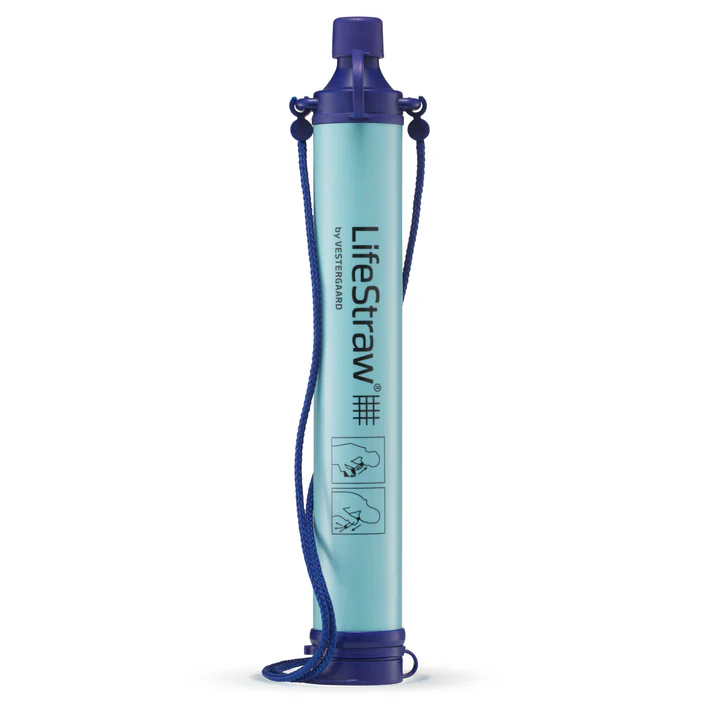
LifeStraw Personal at a Glance
- Price: $20 (as of November 2025)
- Weight: 1.6 ounces
- Lifespan: 1,000 gallons / 4,000 liters
- Flow Rate: 0.5L per minute (requires suction)
- Filtration: 0.2 micron (bacteria, protozoa, microplastics)
- Best For: Budget-conscious preppers needing bug-out bag backup
- Buy: LifeStraw Personal on Batten Shop

How LifeStraw Filtration Works
LifeStraw uses hollow fiber membranes with thousands of 0.2-micron pores. When you suck water through, contaminants physically cannot pass – bacteria (0.5-3 microns) and protozoa like Giardia (8-15 microns) get trapped while clean water flows through.
This mechanical filtration removes 99.999999% of bacteria (E. coli, Salmonella) and 99.999% of parasites (Giardia, Cryptosporidium) per EPA standards. It also captures microplastics down to 1 micron.
Built-In Safety Features
The device stops flowing at 1,000 gallons – preventing contaminated water breakthrough. For one person drinking 2 liters daily from questionable sources, that’s roughly 5 years of emergency use. Unlimited shelf life when stored dry makes it ideal for long-term kit storage.
LifeStraw Design and Portability
At 1.6 ounces and 9 inches long, LifeStraw fits in any pocket or pack without bulk. The tube design with carabiner clip allows attachment to backpack straps. No assembly, priming, or setup required.
Usability Tradeoffs
You must position your mouth directly over water sources – kneeling at streams or filling a container first. The straw prevents water storage or sharing between people. During active hiking, stopping to drink interrupts pace.
The narrow diameter requires strong suction, especially as the filter accumulates particles. Flow rates drop from 0.5L/minute initially to roughly half after 500 gallons. For emergency survival this works, but daily trail use becomes tedious.
LifeStraw Pros and Cons
Pros
- $20 price makes equipping multiple family members affordable
- 2-ounce weight adds negligible bulk to emergency bags
- Unlimited shelf life means decades of reliable backup
- Zero maintenance beyond occasional backflushing
- Proven track record with 20+ million units distributed globally
Cons
- Direct water contact forces awkward positions and prevents transport
- Slow flow demands strong suction and becomes exhausting
- No virus removal requires chemical treatment for comprehensive protection
- Clogs faster in silty or algae-heavy water
- Single-person design prevents sharing without multiple units
Katadyn BeFree Water Filtration System: Best for Active Outdoor Use
Katadyn’s BeFree combines a collapsible HydraPak flask with EZ-Clean hollow fiber filter. The 2025 AC version adds optional activated carbon for taste improvement, though most users skip it for maximum flow.
Katadyn BeFree 1.0L at a Glance
- Price: $45 (as of November 2025)
- Weight: 2.3 ounces filter + bottle (67-73 grams depending on size)
- Capacity: 0.6L or 1.0L collapsible bottle options
- Lifespan: 1,000 liters (filter membrane)
- Flow Rate: 2 liters per minute initially (degrades with use)
- Filtration: 0.1 micron (bacteria, protozoa, microplastics) + optional activated carbon
- Best For: Hikers, trail runners, backpackers needing hands-free hydration
How Katadyn BeFree Technology Works
BeFree uses 0.1-micron hollow fiber technology – half LifeStraw’s pore size – filtering 99.9999% of bacteria and 99.9% of protozoa while removing 100% of microplastics per lab testing.
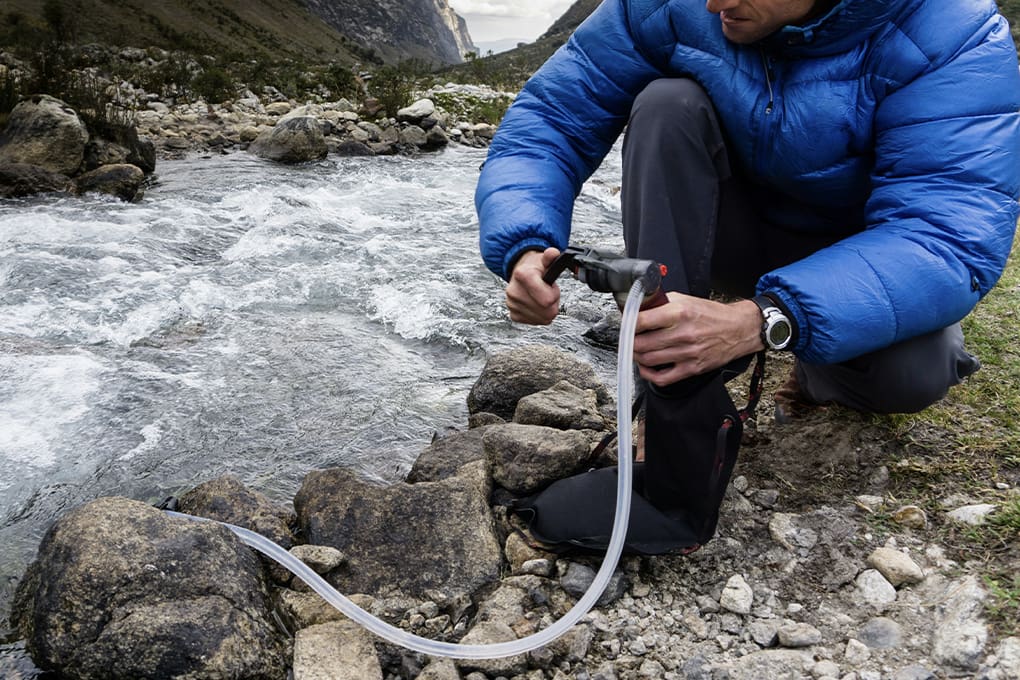
EZ-Clean Maintenance System
The exposed membrane allows field cleaning by swishing in water or shaking the filled flask. This dislodges trapped particles that would clog sealed filters. Users report flow degradation after 400-600 liters despite cleaning – fine particles pack into pores that swishing cannot remove.
Activated Carbon Option
The 2025 AC model includes removable activated carbon that reduces chlorine and improves taste. This helps with treated municipal water or algae-heavy sources but cuts flow rate by 30%. Most wilderness users skip it for speed.
Versatile Design Features
The soft TPU bottle collapses as you drink, reducing pack bulk. The 42mm threading fits standard Nalgene bottles and hydration bladders, allowing both squeeze filtering (direct drinking) and gravity filtering (hang filled bladder, let gravity push water through).
Katadyn BeFree Design and Field Performance
The squeeze-bottle design solves LifeStraw’s biggest limitation – you can fill the flask, filter while walking, and carry filtered water. The soft-flask shape fits running vest pockets and backpack compartments better than rigid bottles.
Flow Rate Performance
Fresh filters deliver 2 liters per minute – fill a 1L bottle in 30 seconds with modest squeezing. This makes group filtering practical. Compare this to LifeStraw’s laborious sucking and the efficiency gap becomes clear.
The flip-cap allows one-handed operation while moving. Pop open, squeeze, drink, clip to pack strap, continue. This convenience makes BeFree feel like regular hiking gear rather than emergency equipment.
Durability
The TPU bottle can puncture on sharp rocks if over-filled and dropped. The flip-cap’s silicone gasket occasionally leaks after extended use. The exposed membrane, while enabling cleaning, is vulnerable to freezing damage if stored wet.
Flow degrades noticeably over the filter’s life. Initial 2L/minute drops to roughly 1L/minute by 500 liters, continuing to slow.
Testers reported near-unusable flow by 800-900 liters despite regular cleaning. The filter still removes pathogens but becomes too slow for practical field use before reaching 1,000L capacity.
Katadyn BeFree Pros and Cons
Pros
- 2L/minute flow (when new) allows fast hydration without stopping
- Collapsible bottle enables water transport and storage
- EZ-Clean membrane extends life through field maintenance
- 0.6L version fits running vest front pockets
- 42mm threading fits Nalgene bottles and hydration bladders
Cons
- $45 costs double LifeStraw while matching 1,000L lifespan
- Flow degrades significantly before stated capacity
- TPU bottle vulnerable to punctures on sharp objects
- Cannot store wet in freezing temps without membrane damage
- Flip-cap gasket leaks after 6-12 months frequent use
LifeStraw vs Katadyn BeFree: Head-to-Head Comparison
Both remove identical pathogens using similar technology, so the decision comes down to design, use frequency, and budget.
Value Comparison: Cost Per 1000 Liters
| Filter System | Upfront Cost | Replacement Filters | Lifespan (Liters) | Cost Per 1000L | Best Value For |
| LifeStraw Personal | $20 | None (disposable) | 1,000 | $20 | Emergency backup, budget kits |
| Katadyn BeFree 1.0L | $45 | $30-35 | 1,000 | $45 | Active outdoor use, frequent filtering |
LifeStraw wins pure cost-per-liter at $20 versus Katadyn’s $45. For emergency kits where filters sit unused for years, LifeStraw’s lower cost makes equipping multiple family members affordable.
A family of four gets complete backup filtration for $80 with LifeStraws versus $180 with Katadyn.
For active users who filter water weekly, Katadyn’s speed justifies the premium. Filling a liter in 30 seconds versus 3+ minutes of sucking saves hours over a season.
Feature Comparison: LifeStraw vs Katadyn BeFree
| Feature | LifeStraw Personal | Katadyn BeFree 1.0L | Winner |
| Price | $20 | $45 | LifeStraw |
| Weight | 2 oz (57g) | 2.3 oz (67g) | LifeStraw |
| Flow Rate (New) | 0.5 L/min | 2 L/min | Katadyn |
| Filtration | 0.2 micron | 0.1 micron | Katadyn |
| Water Storage | None | 1L collapsible | Katadyn |
| Maintenance | Backflush only | Swish/shake clean | Katadyn |
| Durability | No moving parts | Puncture risk | LifeStraw |
| Shelf Life | Unlimited | Unlimited (if dry) | Tie |
| Best For | Emergency backup | Active outdoor use | Context-dependent |
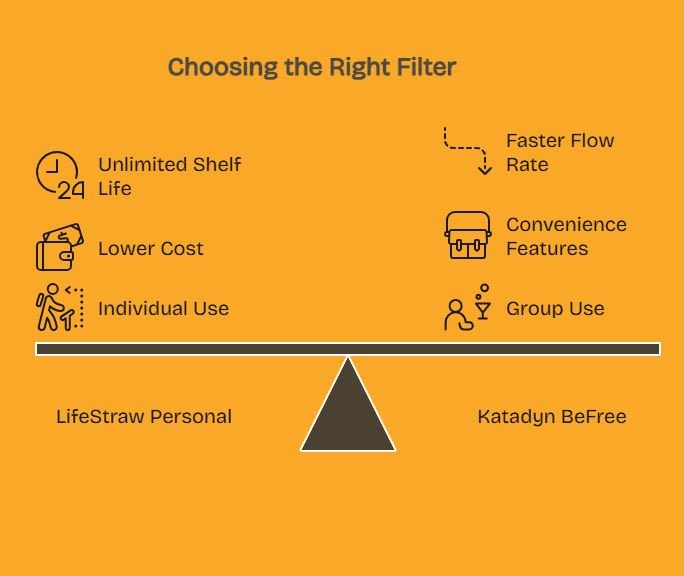
Katadyn dominates active use categories – flow rate, storage, and field cleaning. LifeStraw wins emergency prep metrics – price, simplicity, and durability matter more when filters sit unused for years.
The filtration difference (0.1 vs 0.2 micron) matters little since both exceed EPA standards.
Neither removes viruses (0.01-0.1 micron), requiring chemical treatment for sewage-contaminated disasters or international travel.
Which Water Filter Wins for Different Scenarios
Here are some tips on when to choose which of these water filters.
Best for Bug-Out Bags and Emergency Kits
Winner: LifeStraw Personal
Emergency kits demand set-and-forget reliability. LifeStraw’s unlimited shelf life, zero moving parts, and $20 price make it ideal for cars, desks, and go-bags sitting untouched for years. The straw works for emergency survival where you’re drinking directly from streams during evacuation.
Equip each family member for $80 total versus $180 for Katadyn units. That $100 difference buys additional supplies or removes budget barriers. For families starting emergency prep, LifeStraw gets safe filtration into everyone’s hands affordably.
Lack of water storage matters less during emergencies than daily hiking. When evacuating on foot, you’re following waterways rather than carrying gallons. The straw’s simplicity reduces failure points – no bottles to puncture, no caps to lose, no gaskets to dry-rot.
Best for Weekend Camping and Backpacking
Winner: Katadyn BeFree
Weekend trips demand convenience over minimalism. BeFree’s 2L/minute flow means 30 seconds filtering versus 3 minutes sucking – time better spent setting up camp. The collapsible bottle lets you filter at streams then carry water back to camp for cooking.
Hands-free drinking shines during active hiking. Clip BeFree to your pack strap, sip while moving, refill at crossings without breaking stride.
Group camping heavily favors Katadyn. One person can quickly fill multiple bottles while LifeStraw requires each person visiting the source individually. With 5 people, that’s 15+ minutes versus 5 minutes.
Best for Trail Running and Endurance Sports
Winner: Katadyn BeFree 0.6L
The 0.6L BeFree fits front vest pockets for accessible hydration without stopping. Fill at aid stations or sources, squeeze while running, collapse as you drink. This eliminates heavy rigid bottles on long runs.
Trail running demands instant access – you can’t stop to kneel at streams during races.
BeFree’s squeeze-and-drink maintains momentum while LifeStraw forces complete stops. Over a 50K race with 6 refills, that saves 15-20 minutes.
Faster flow matters more when dehydrated. Sucking through LifeStraw while fatigued and breathless becomes miserable, while BeFree’s squeeze requires less lung capacity.
Best Value for Preppers on Tight Budgets
Winner: LifeStraw Personal
Preppers face a calculation: protect more people with budget filters or fewer with premium systems? LifeStraw’s $20 price means stocking kits for extended family, vehicles, and multiple locations for the cost of three Katadyn units.
Unlimited shelf life benefits preppers viewing emergency gear as insurance – pay once for potential use decades away. LifeStraw’s lack of perishable components means bulk buying during sales without replacement schedules.
Family packs (4 units for $65) drop per-unit cost to $16.25. Equipping 12 family members costs $195 – less than five Katadyn systems.
Maintenance and Longevity Comparison
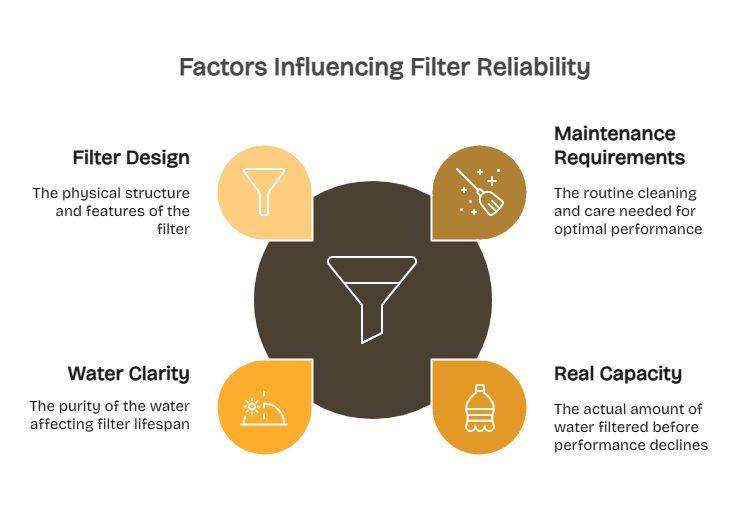
Maintenance and lifespan shape how reliable a filter is in daily use and during emergencies. LifeStraw and Katadyn BeFree both work well, but their upkeep routines and real capacity differ in meaningful ways.
LifeStraw Maintenance Requirements
LifeStraw needs only simple backflushing. After each use, blow air through the mouthpiece to clear trapped water. This prevents bacterial growth and takes just a few seconds. The filter cannot be cleaned in the field, so its flow rate gradually drops over its rated 1,000 gallons.
Most users experience slower flow by 500 gallons and reach a practical limit around 700 to 900 gallons. Once water stops moving through the filter, the unit is finished and should be replaced.
Katadyn BeFree Maintenance Requirements
BeFree requires more frequent cleaning but allows you to restore flow in the field. After use in silty or algae-heavy water, swish the filter in clean water or shake it inside the bottle for about 30 seconds. This dislodges debris from the membrane.
Katadyn also recommends a monthly soak in warm water for deeper cleaning. BeFree must dry completely before storage to avoid damage. Real capacity usually ranges from 500 to 800 liters before flow becomes too slow, which is less than the rated 1,000 liters.
Lifespan Reality Check
Both filters have similar rated capacities, yet real results depend on water clarity. Cold, clear streams extend filter life, while algae or sediment shorten it. LifeStraw’s sealed design gives a clear end point because flow eventually stops.
BeFree can be cleaned repeatedly, but performance declines over time and deciding when to replace it becomes subjective.
For emergency kits, LifeStraw’s simple maintenance and clear end-of-life signal make it easier to manage. BeFree works well for active trips where you can clean the membrane often, but it requires more attention as the filter ages.
Both filters perform well for basic backcountry use, but they share several limitations that matter in real-world and emergency situations. The points below outline the areas where both systems fall short.
No Virus Removal
LifeStraw and BeFree block bacteria and protozoa but cannot remove viruses due to their larger pore size. Virus risk is usually low in North American backcountry but rises near human waste, during disasters, or while traveling abroad. To stay protected, pair either filter with chemical tablets or UV treatment. Chlorine dioxide tablets are a simple option and treat one liter in about thirty minutes.
Chemical And Heavy Metal Limitations
Both filters remove physical contaminants but cannot remove dissolved chemicals or heavy metals. Runoff, industrial spills, and damaged infrastructure create risks these filters cannot address. BeFree AC offers basic carbon reduction, but it is not designed for pesticides, fuel residue, or metals. Contaminated sources require advanced systems such as Grayl or Sawyer Select.
Flow Rate Degradation
Both filters lose flow speed well before reaching their rated lifespan. LifeStraw’s flow often drops by half with regular use, while BeFree slows noticeably even with careful cleaning. In realistic conditions, expect roughly two thirds of the advertised capacity. The filters remain safe as they slow down, but they eventually become too slow for practical field use.
Building Your Complete Water Filtration Strategy
LifeStraw and Katadyn BeFree both deliver dependable filtration, but their strengths support very different needs. LifeStraw stands out for emergency preparedness because it stores indefinitely, demands almost no upkeep, and offers one of the lowest cost per unit capacities.
Katadyn BeFree performs better for hiking and regular outdoor activity, since its fast flow rate and collapsible bottle make water collection efficient on the move.
Both systems remove bacteria and protozoa, yet neither protects against viruses or chemical contaminants, which reinforces the importance of pairing filtration with chemical tablets during disasters. By understanding how each filter works, how long it lasts, and what maintenance it requires, you can equip your home, car, or pack with the right tool for real-world conditions.
For complete readiness, stock reliable filters and build a full water plan with support from Batten.
Frequently Asked Questions
How Often Should You Replace Water Filters in Emergency Kits?
Most emergency planners recommend checking stored gear once a year. LifeStraw lasts indefinitely when stored dry, so you only replace it once the flow stops. Katadyn BeFree also stores well when fully dry, but its membrane ages faster with field use. If you rely on filters during regular trips, replace them every one to two years so you never end up with a slow or worn membrane during an emergency.
Can Either Filter Be Used Indoors During a Boil-Water Advisory?
Both filters help during boil-water advisories by removing bacteria and protozoa, but they cannot remove viruses or chemical contaminants. For indoor use during advisories, filter water first, then treat it with chlorine dioxide tablets. This two-step method gives complete biological protection until municipal testing confirms tap water is safe again. It is also useful when power outages limit boiling options.
Are LifeStraw and BeFree Safe to Use in Freezing Temperatures?
A frozen hollow fiber filter can crack internally and fail without obvious signs of damage. LifeStraw and BeFree must stay warm once they are wet. Store them inside your jacket or sleeping bag overnight. If either filter freezes after use, retire it immediately. Dry, unused filters can be stored in cold environments safely, which makes LifeStraw ideal for long-term winter kits.
Can You Use These Filters With Cooking Systems While Camping?
Yes. Many campers filter water first, then pour it into pots or hydration bladders for cooking. Katadyn’s faster flow is helpful when collecting water for meals. Keep in mind that sediment-heavy sources shorten lifespan for both filters. If water looks cloudy, let it settle before filtering. This eases pressure on the membrane and maintains more consistent performance over time.
Is There a Difference in Safety Between 0.1 and 0.2 Micron Filters?
Both pore sizes exceed EPA standards for removing bacteria and protozoa. Katadyn’s 0.1 micron membrane captures slightly smaller particles, but the difference does not change safety in most wilderness settings. Flow speed, water clarity, and maintenance routines have a greater impact on real-world performance. Virus protection still requires chemical treatment, since viruses remain far smaller than either pore size.
Can These Filters Support Multi-Day Group Camping Trips?
LifeStraw works best for one-person emergency situations and does not scale well for group use. Katadyn BeFree can support small groups because it fills bottles quickly and allows filtered water to be stored and shared. For multi-day trips, many groups use one BeFree for fast refills and a secondary gravity filter for cooking and camp storage. This combination keeps refills efficient and reduces wear on individual filters.
Sources
- Dirty Water Causes the Death of a Human Being Every 10 Seconds. 2025. The World Counts.Deaths from Dirty Water
- Texas Weather: Residents Told to Boil Tap Water Amid Power Blackouts. 2021. BBC News.Texas weather: Residents told to boil tap water amid power blackouts
- Home Drinking Water Filtration Fact Sheet. 2025. United States Environmental Protection Agency. Home Drinking Water Filtration Fact Sheet | US EPA
- Our Story of Breakthrough Innovations. 2025. LifeStraw. https://lifestraw.com/pages/our-story