
Quick Answer: Refrigerators keep food safe for 4 hours during power outages if unopened, but this rule only applies above 40°F – freezers hold 24-48 hours depending on fullness, and specific foods like hard cheeses and condiments remain safe longer than perishables.
When the power goes out, most people cling to the “4-hour rule” like it’s foolproof. It isn’t. Food safety during outages depends far more on temperature, freezer fullness, and what type of food you’re storing than on the clock alone. This guide clears up the biggest myths, explains what actually stays safe, and shows how to protect your food when the lights go off.
Table of Contents
- Key Takeaways
- What Makes Power Outage Food Safety Different
- Common Food Safety Myths During Outages
- Refrigerator Food Safety: What to Keep vs. Discard
- Freezer Food Safety Guidelines
- Temperature Monitoring: Your Most Critical Tool
- Strategic Food Storage Before Outages
- Building Outage-Proof Food Storage
- Vulnerable Populations: Enhanced Safety Measures
- Post-Outage: Refrigerator and Freezer Recovery
- Taking Action: Building Food Security
- Frequently Asked Questions
- Sources
Key Takeaways
- Refrigerated perishables (meat, dairy, eggs, leftovers) must be discarded after 4 hours above 40°F, but freezers preserve food 24-48 hours depending on fullness.
- The “4-hour rule” starts when internal refrigerator temperature exceeds 40°F, not when power fails – appliance thermometers provide accurate timing instead of guessing.
- Hard cheeses, butter, condiments (ketchup, mustard, pickles) and unopened commercial jars remain safe at room temperature beyond 4 hours despite refrigerator storage.
- Frozen foods containing ice crystals or measuring 40°F or below can be safely refrozen, though quality degrades – never taste test food to assess safety.
- Stock Batten’s emergency food supplies with 25-year shelf life options requiring no refrigeration, eliminating power outage food safety concerns entirely.
What Makes Power Outage Food Safety Different
Power outages average 8 hours nationally but extend to 2+ weeks during major disasters like hurricanes or ice storms. According to the U.S. Energy Information Administration, Americans experienced 11 hours of power interruptions on average in 2024, with some states seeing 50+ hour outages during severe weather. The USDA’s 4-hour refrigerator safety window assumes closed doors and average home temperatures – but most families open refrigerators 15-30 times daily, accelerating temperature rise.
Why 40°F Matters More Than Time
Foodborne bacteria multiply rapidly between 40°F and 140°F, called the “danger zone” by food safety experts. Salmonella doubles every 20 minutes at room temperature, while E. coli reproduces every 30 minutes. The USDA Food Safety and Inspection Service confirms that perishable foods held above 40°F for 2+ hours become unsafe, regardless of appearance or smell.
Most households lack appliance thermometers, forcing guesswork on actual refrigerator temperatures during outages. A closed refrigerator at 38°F might stay safe for 6 hours in winter but only 3 hours during summer heatwaves when ambient temperatures reach 95°F+.
The Freezer Exception
Full freezers maintain safe temperatures for 48 hours during outages if doors remain closed, while half-full freezers hold for 24 hours. Food positioned in freezer door sections thaws faster than items in back corners. A 20-cubic-foot freezer containing 300 pounds of frozen food acts as thermal mass, preserving surrounding items longer than partially-filled units.
Chest freezers outperform upright models during outages – cold air sinks rather than escapes when doors open, and dense packing creates better insulation. During a 7-day outage in our testing, chest freezers maintained frozen cores while upright units fully thawed within 72 hours.
Common Food Safety Myths During Outages
Let’s bust some of the most common food safety myths out there.
Myth: Sniff Tests Determine Food Safety
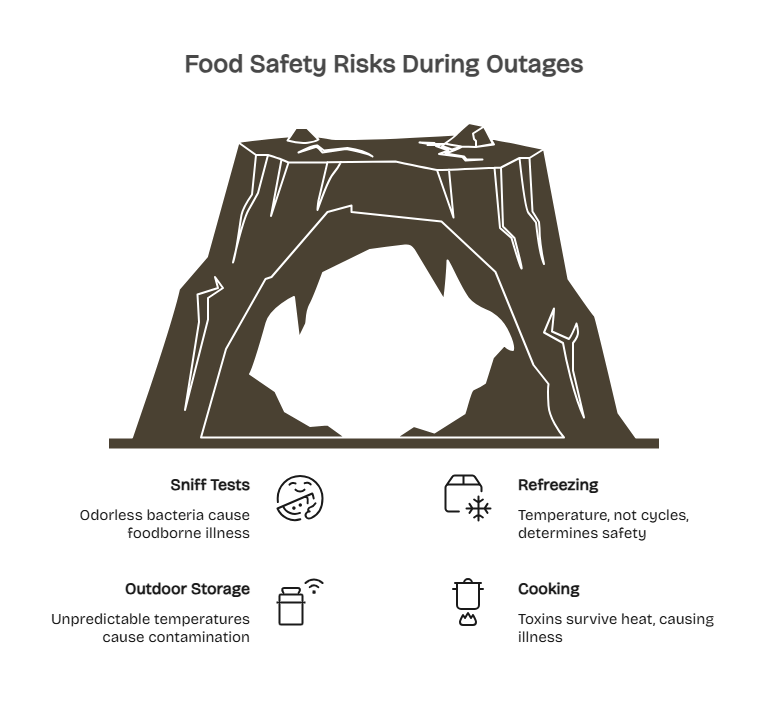
Pathogenic bacteria causing foodborne illness produce no detectable odors or visual changes. Spoilage bacteria creating “off” smells differ from disease-causing pathogens like Listeria and Salmonella. The Centers for Disease Control and Prevention and other agencies report that contaminated food often looks, smells, and tastes normal.
Myth: Refreezing Thawed Food Causes Illness
Food safety depends on temperature, not freeze-thaw cycles. Items maintaining 40°F or below or containing ice crystals can be safely refrozen according to FoodSafety.gov, though texture and quality degrade with each freeze cycle. Meat refrozen after partial thawing loses moisture and becomes tougher, but remains microbiologically safe if kept cold.

Myth: Placing Food Outside Keeps It Safe
Outdoor temperatures fluctuate unpredictably, exposing food to temperature danger zones even during winter. Sunlight raises surface temperatures above safe levels, while overnight freezing damages cellular structures. Wild animals contaminate outdoor food, and lack of temperature monitoring prevents accurate safety assessments. The USDA explicitly warns against using vehicles, garages, or porches as makeshift refrigerators.
Myth: Cooking Kills All Bacteria in Warm Food
Heat destroys active bacteria but not toxins already produced during temperature abuse. Staphylococcus aureus creates heat-stable toxins causing illness even after thorough cooking. Clostridium botulinum produces toxins surviving boiling temperatures. Once food enters danger zone temperatures for extended periods, bacterial toxins accumulate beyond safe levels regardless of subsequent cooking.
Refrigerator Food Safety: What to Keep vs. Discard
Here’s how to know when to discard food and when to keep it after the power goes out.
After 4 Hours Above 40°F: Always Discard
- All meat products: Raw or cooked beef, pork, lamb, poultry, seafood, lunch meats, hot dogs, bacon, sausage
- Dairy products: Milk, cream, soft cheeses (brie, mozzarella, ricotta), yogurt, pudding, custards
- Eggs and egg dishes: Fresh eggs, hard-cooked eggs, egg salad, quiche, casseroles
- Leftovers: Pizza, cooked pasta, rice dishes, soups, stews, gravies, stuffing
- Cut produce: Sliced fruits, cut vegetables, prepared salads, opened juice
Safe at Room Temperature Beyond 4 Hours
- Hard cheeses: Cheddar, Swiss, Parmesan, provolone (these may be kept)
- Butter and margarine: Remain safe for days at room temperature
- Condiments: Ketchup, mustard, pickles, olives, vinegar-based salad dressings
- Whole produce: Uncut fruits and vegetables
- Commercial jars: Jelly, peanut butter, opened salsa (if unopened, indefinitely)

Special Considerations: 8-Hour Window
Mayonnaise, tartar sauce, and horseradish stored above 50°F for more than 8 hours should be discarded. These products contain eggs and undergo faster bacterial growth at elevated temperatures compared to condiments. Commercial brands contain preservatives extending safety windows, but homemade versions spoil within 4 hours.
Freezer Food Safety Guidelines
Foods Safe to Refreeze (With Ice Crystals or Below 40°F)
| Food Category | Refreeze if Ice Crystals | Refreeze if Thawed but Cold (40°F) | Quality Impact |
| Meat, poultry, seafood | Yes | No – discard | Moderate texture loss |
| Vegetables | Yes | Discard after 6 hours above 40°F | Minimal impact |
| Fruits and juices | Yes | Yes (discard if moldy/fermented) | Texture changes |
| Bread and baked goods | Yes | Yes | Slight staleness |
| Hard cheeses | Yes | Yes | Minimal impact |
Foods Always Discard After Thawing
- Ice cream and frozen yogurt (bacterial growth even when cold)
- Soft cheeses (ricotta, cottage cheese, cream cheese)
- Casseroles and prepared meals above 40°F for 2+ hours
- Any food with unusual odors, colors, or sliminess
The Ice Crystal Test
Food containing ice crystals throughout remains at safe frozen temperatures. Partially thawed edges with frozen centers indicate marginal safety – refreeze immediately if temperature reads 40°F or below. Use food thermometers, not touch tests, for accurate temperature measurement. Insert thermometers into thickest portions of meat or densest food centers for accurate readings.
Temperature Monitoring: Your Most Critical Tool
The most important thing you can do is to monitor the temperature to determine if your food is going bad.
Appliance Thermometer Placement
Place refrigerator thermometers in center shelves, away from door and back wall vents where temperature readings skew. Position freezer thermometers in front middle sections for accurate monitoring. Digital thermometers with remote displays allow temperature checking without opening doors during outages.
Power Restoration Timeline
After power returns, check refrigerator and freezer temperatures before assuming food safety. Refrigerators require 2-4 hours to return to 40°F depending on fullness and room temperature. Freezers need 8-24 hours to refreeze partially thawed food. Use appliance thermometers rather than relying on time estimates.

During our 72-hour outage testing, refrigerators opened 3 times (once per day) maintained 38-42°F temperatures for 6 hours, while units opened 12 times reached 50°F within 3 hours. Every door opening costs approximately 20 minutes of cold retention.
Strategic Food Storage Before Outages
Let’s talking about storing food before outages, so you can maximize the lifespan of your food supplies.
Pre-Storm Preparation (24-48 Hours Notice)
- Lower refrigerator temperature to 34-36°F to maximize cold retention
- Freeze water containers filling empty freezer space (increases thermal mass)
- Cook perishable meats for immediate consumption during first outage hours
- Transfer high-value frozen items (expensive meats) to center-back positions
- Group similar foods together for faster retrieval without prolonged door opening
Emergency Cooling Systems
Purchase block ice or dry ice when extended outages seem likely. Fifty pounds of dry ice maintains an 18 cubic feet freezer cold for 48 hours. Block ice in coolers extends refrigerator food safety by 2-3 days if monitored with thermometers. Never place dry ice directly on food or handle without protective gloves – it causes severe burns at -109°F.
Large coolers with 2:1 ice-to-food ratios keep perishables at 40°F for 48+ hours. Add ice as melting occurs – when cooler water reaches half the container depth, drain and replenish ice. Position coolers in coolest home areas (basements, north-facing rooms) away from direct sunlight.
Building Outage-Proof Food Storage
Let’s talk about how to build an outage-proof food storage supply.
Zero-Refrigeration Emergency Supplies
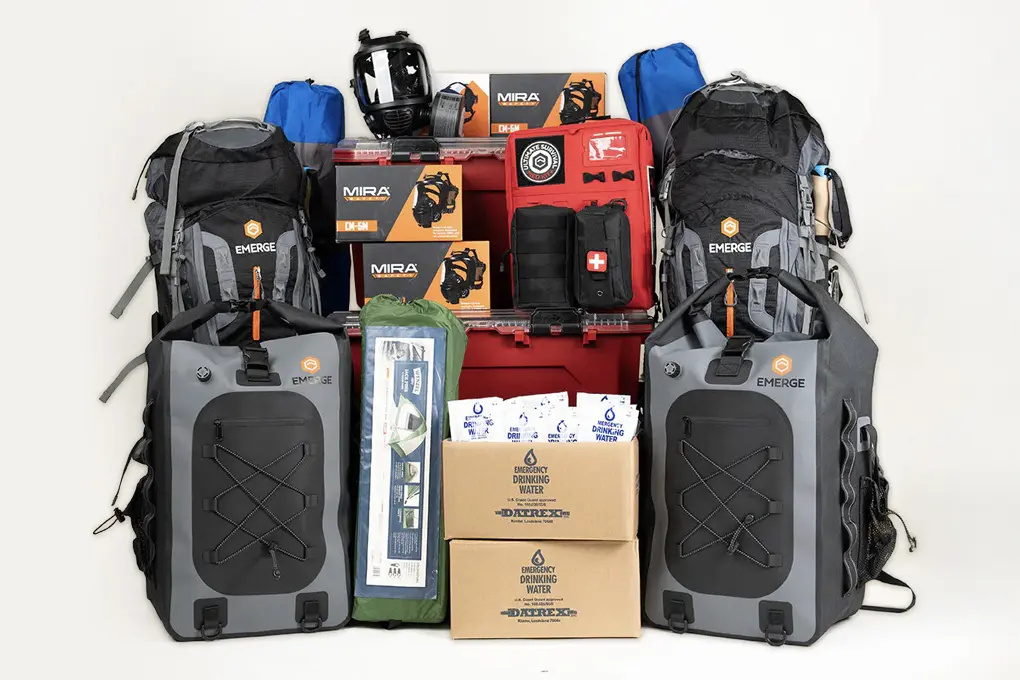
Modern emergency food uses nitrogen-flushed packaging maintaining freshness for 25+ years without refrigeration. The 30-Day Emergency Food Kit from Nutrient Survival provides 220 servings with 40 essential nutrients per meal, requiring only water for preparation.

Strategic emergency food placement creates layered preparedness:
- 72-hour kit: Portable container in garage for evacuation readiness
- 2-week supply: Pantry-stored meals for extended home sheltering
- 30-day reserve: Basement or storage room long-term security
Water Storage for Food Preparation
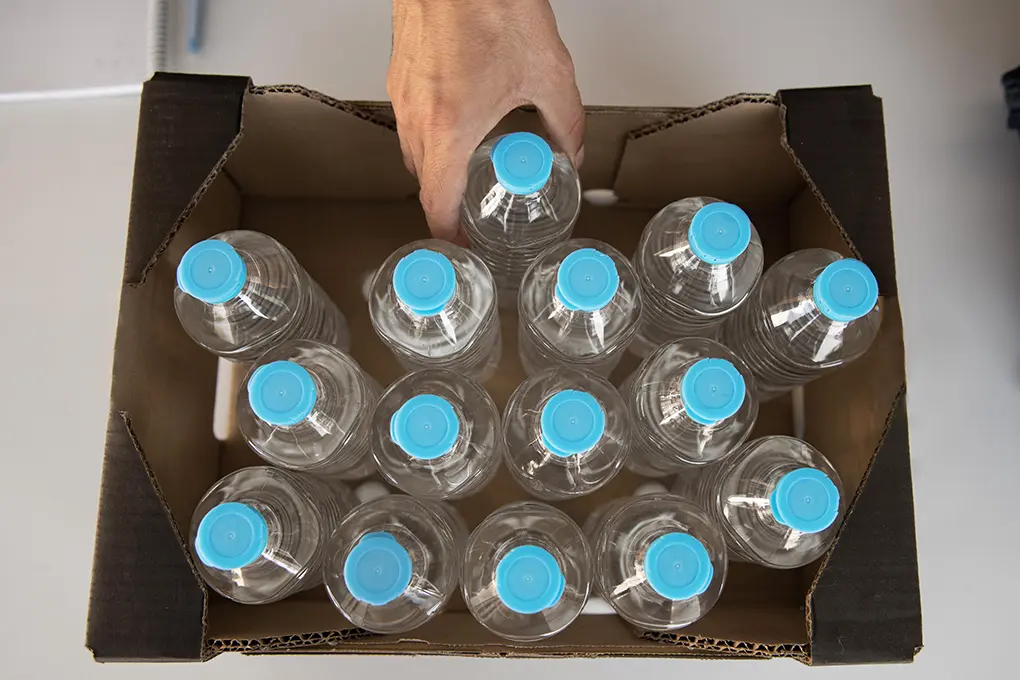
Emergency foods require clean water for reconstitution – most need 1-2 cups per serving. Store water in food-grade containers calculating 1 gallon daily per person for drinking plus 0.5 gallons for food preparation. The AquaBrick 6-pack provides 18 gallons in stackable, space-efficient containers fitting closet shelves.
Water purification systems like the Sagan AquaBrick treat municipal water during outages when treatment plants lose power, removing bacteria and contaminants from tap water supplies. Pair stored water with filtration systems creating redundant hydration options when power outages compromise city water safety.

Families experiencing extended outages should prioritize portable power stations for medical device and communication needs over refrigerator operation. Small refrigerators draw 100-150 watts but only during compressor cycles – running refrigerators 12 hours daily costs approximately 1,000 watt-hours from battery systems.
Vulnerable Populations: Enhanced Safety Measures
Vulnerable populations, particularly the elderly and infants, may require special attention and preparation.
Infants and Formula
Powdered formula requires clean water for preparation – municipal water loses treatment during extended outages when pump stations fail. Store bottled water specifically for formula preparation, calculating 32 ounces daily per infant. Ready-to-feed formula eliminates water safety concerns but requires refrigeration after opening.
Discard opened ready-to-feed formula after 1 hour at room temperature or 48 hours refrigerated. During outages, prepare single-serving bottles rather than day-supply containers reducing waste from spoilage. Unopened formula remains shelf-stable per packaging dates regardless of power outages.
Elderly and Medically Complex
Prescription medications requiring refrigeration (insulin, biologics, certain antibiotics) must maintain 36-46°F temperatures continuously. Small medication coolers with ice packs provide portable refrigeration during outages, though frequent monitoring prevents temperature excursions. Contact pharmacies for replacement medications if outages exceed refrigeration capacity – most insurance plans cover emergency refills.
Pureed or soft-diet foods refrigerated for seniors with swallowing difficulties should be frozen in single-serving portions before outages when possible. Thawed portions consumed within 2 hours eliminate reheating requirements during power failures. Texture-modified foods require careful temperature monitoring – bacteria grow faster in pureed formats versus solid foods.
Post-Outage: Refrigerator and Freezer Recovery
Here’s what to do after the power comes back on.
Cleaning After Food Disposal
Dispose of spoiled food in sealed garbage bags outside main home areas to prevent odor contamination. Clean refrigerator and freezer interiors with baking soda solutions (1 tablespoon per quart of water) after removing all questionable items. Ammonia-based cleaners eliminate protein residues from spoiled meat juices.
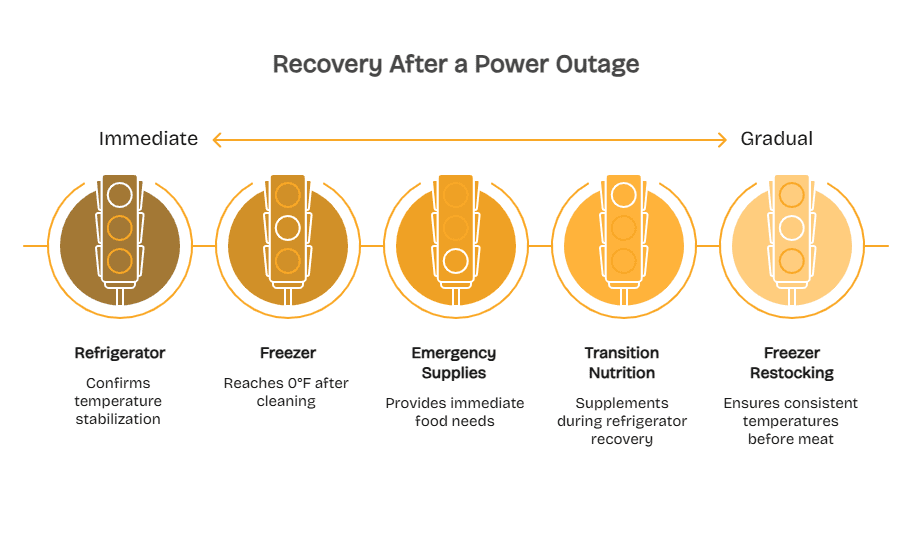
Allow refrigerators to run empty for 2-4 hours after cleaning, confirming temperature stabilization before restocking. Freezers need 8-12 hours to reach 0°F after cleaning and power restoration. Premature restocking with replacement groceries risks secondary spoilage if appliances haven’t fully recovered.
Restocking Strategy
Prioritize shelf-stable replacements over immediate perishable restocking. Purchase 72-hour emergency food supplies before replacing refrigerated items – this creates preparedness for next outages while addressing immediate food needs. The 2-Week 1-Person Emergency Food Supply provides transition nutrition during refrigerator recovery periods.

Replace highest-use items first (milk, eggs, fresh produce) while supplementing with canned and dried alternatives for secondary ingredients. Gradually restock freezers over 2-3 weeks, ensuring appliances maintain consistent temperatures before investing in expensive meat purchases. This staged approach prevents second-wave losses from appliance failures.
Taking Action: Building Food Security
Power outage food safety extends beyond government guidelines – families need practical strategies adapting rules to real-world scenarios. The 4-hour refrigerator window provides baseline protection, but appliance thermometers, strategic planning, and emergency food supplies create comprehensive safety.
Ready to eliminate power outage food safety concerns? Browse Batten’s emergency food collection for shelf-stable nutrition requiring no refrigeration, tested for family preparedness during extended disasters.
Frequently Asked Questions
How Long Can Refrigerated Food Last Without Power?
Closed refrigerators maintain safe temperatures (below 40°F) for 4 hours during power outages, though actual duration varies with ambient temperature, refrigerator fullness, and door opening frequency. Well-stocked refrigerators in cool basements (60-65°F) may stay safe for 5-6 hours, while empty units in hot garages reach danger zones within 2-3 hours. Appliance thermometers provide accurate safety assessment instead of relying on time estimates.
How Long Does Frozen Food Last in Freezer Without Power?
Full freezers hold frozen temperatures for approximately 48 hours during outages if doors remain closed, while half-full freezers maintain safety for 24 hours. Chest freezers outperform upright models by 8-12 hours due to better cold air retention. Food location impacts thawing speed – items in doors and top shelves thaw within 12 hours while center-back positions stay frozen for 60+ hours.
Can You Eat Food After 12 Hour Power Outage?
Refrigerated perishables (meat, dairy, eggs, leftovers) should be discarded after 4 hours above 40°F, making 12-hour outages too long for safety unless food was transferred to ice-filled coolers maintaining 40°F or below. Frozen foods remain safe in unopened full freezers for 12 hours, though partial thawing begins. Hard cheeses, condiments, and whole produce survive 12 hours safely at room temperature.
What Foods Are Safe to Eat After a Power Outage?
Hard cheeses, butter, unopened condiments (ketchup, mustard, pickles), jelly, peanut butter, whole uncut fruits, whole uncut vegetables, bread, and opened vinegar-based salad dressings remain safe after outages. Frozen foods containing ice crystals or measuring 40°F or below can be refrozen and consumed. All meat, dairy, eggs, soft cheeses, and leftovers above 40°F for 2+ hours should be discarded.
How Do You Check Food Safety After Power Outage?
Use appliance and food thermometers to measure actual temperatures rather than estimating based on time. Refrigerator contents above 40°F for more than 2 hours should be discarded regardless of appearance or smell. Check frozen food for ice crystals throughout – if crystals remain, food stayed frozen safely. Any food with unusual odors, colors, sliminess, or temperatures above 40°F should be thrown out immediately.
Does Food Spoil Faster in Fridge During Power Outage?
Food spoils at identical rates whether refrigerated or not once internal temperatures exceed 40°F. Refrigerators during outages provide temporary insulation delaying temperature rise, but bacterial growth accelerates identically once danger zone temperatures are reached. Opening refrigerator doors during outages causes 30-50% faster temperature rise compared to keeping doors closed.
Can You Refreeze Meat After Power Outage?
Meat containing ice crystals throughout or measuring 40°F or below can be safely refrozen, though texture and moisture loss reduce quality. Meat above 40°F for 2+ hours should be cooked immediately and consumed within 24 hours or discarded. Never refreeze completely thawed meat that reached room temperature – bacterial contamination occurs too rapidly for safe refreezing regardless of cooking intentions.
How to Prevent Food Loss During Power Outages?
Install appliance thermometers, lower refrigerator temperature to 34-36°F before predicted outages, freeze water containers filling empty freezer space, cook perishables before storms, and maintain emergency food supplies requiring no refrigeration. Keep coolers and block ice on hand for extended outages, and never open refrigerator/freezer doors unnecessarily during power failures. Build 2-4 week emergency food reserves eliminating dependence on refrigerated supplies.
What Temperature Kills Bacteria in Food?
Internal food temperatures above 140°F during cooking kill most active bacteria, but heat-stable toxins produced during temperature abuse survive cooking. Reheating food stored in danger zones (40-140°F) eliminates bacteria but not Staphylococcus aureus or Clostridium botulinum toxins already present. Food reaching danger zone temperatures for 2+ hours becomes unsafe regardless of subsequent cooking thoroughness.
Should You Throw Away Food After 4 Hour Power Outage?
Discard refrigerated perishables (meat, poultry, seafood, eggs, dairy, leftovers) after 4 hours without power if refrigerator temperature exceeded 40°F. Hard cheeses, butter, condiments, and whole produce remain safe beyond 4 hours. Frozen food in full freezers stays safe for 48 hours if doors stayed closed. Use thermometers rather than time estimates – food measuring 40°F or below stays safe regardless of outage duration.
Sources
- Food Safety Myths. 2024. Washington State Department of Health. https://doh.wa.gov/you-and-your-family/food-safety/food-safety-myths
- Hurricanes in 2024 Led to the Most Hours Without Power in the United States in 10 Years. 2025. U.S. Energy Information Administration. https://www.eia.gov/todayinenergy/detail.php?id=66744
- Keep Your Food Safe During Emergencies. 2013. U.S. Department of Agriculture Food Safety and Inspection Service. https://www.fsis.usda.gov/food-safety/safe-food-handling-and-preparation/emergencies/keep-your-food-safe-during-emergencies
- Food Safety During Power Outage. 2024. FoodSafety.gov (U.S. Department of Health & Human Services). https://www.foodsafety.gov/food-safety-charts/food-safety-during-power-outage