
Quick Answer: The three winter car emergency kit mistakes everyone makes are: storing water without a thawing method, relying on running engines for warmth without clearing exhaust pipes, and depending solely on batteries that fail in extreme cold.
You’ve checked the standard winter car emergency kit checklist. Bottled water, blankets, flashlight, jumper cables, road flares. You follow every recommendation from AAA, FEMA, and your insurance company. You feel prepared.
Then you’re stranded for eight hours during a blizzard, and reality hits: your water froze solid within 90 minutes, running your engine for warmth nearly killed you with carbon monoxide, and your flashlight died in the -10°F cold within 20 minutes. The generic checklists failed you because they skip the practical realities of winter car survival.
Table of Contents
- Key Takeaways
- What Makes Winter Car Survival Different from Standard Emergency Kits
- #1: A Method to Thaw Frozen Water Bottles
- Item #2: Carbon Monoxide Prevention WITHOUT Running Your Engine
- Item #3: Cold-Weather Visibility Without Relying on Batteries
- Winter Car Emergency Kit Essentials: Complete Checklist
- The “Proven Wrong” Winter Car Items Everyone Recommends
- Special Winter Car Scenarios: Customized Preparations
- Frequently Asked Questions
- Sources
Key Takeaways
- Winter car emergency kits fail when water freezes solid, engines produce carbon monoxide in snow-blocked exhausts, and batteries die in extreme cold – three problems standard checklists ignore.
- The CDC reports carbon monoxide poisoning kills stranded motorists within 15-20 minutes when snow blocks tailpipes, yet most winter car kits lack dedicated exhaust-clearing tools.
- Cat litter provides traction for roughly five minutes before turning to mud on ice, while floor mats under tires deliver superior grip according to traction testing from engineering studies.
- Chemical hand warmers placed against water bottles can thaw frozen supplies in 30-40 minutes, solving the water storage problem no generic checklist addresses.
- Explore Batten’s emergency survival kits for winter-tested gear including hand-crank radios, thermal blankets, and emergency candles that work when batteries fail.
What Makes Winter Car Survival Different from Standard Emergency Kits
Most car emergency kits function identically in July and December. That’s the problem.
Winter transforms your vehicle from protective shelter into potential death trap within hours. Temperatures inside parked cars match outdoor conditions within 60 minutes – your cozy sedan becomes a -15°F metal box. Standard emergency supplies designed for moderate climates fail catastrophically when temperatures plummet.

The 2021 Texas winter storm stranded thousands for 24+ hours, and emergency responders found even well-stocked emergency kits contained frozen water, dead batteries, and useless supplies.
Why Traditional Car Emergency Advice Fails in Winter
Generic car emergency recommendations assume:
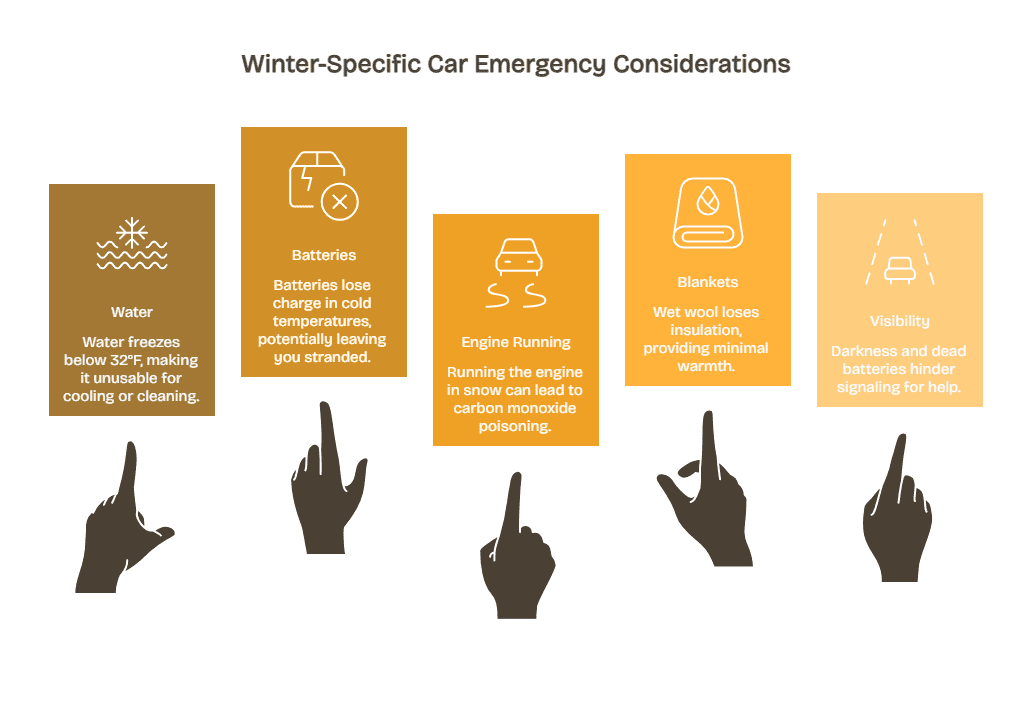
- Water remains liquid (fails below 32°F)
- Batteries maintain charge (loses 50% capacity at 0°F)
- Running your engine is safe (carbon monoxide risk multiplies in snow)
- Blankets provide adequate warmth (wet wool loses 90% insulation)
- You can see to signal for help (darkness at 4:30 PM, batteries dead)
None of these assumptions hold during winter emergencies. Emergency management professionals observe that winter car survival requires fundamentally different equipment than three-season kits because the primary threats shift from injury/breakdown to hypothermia, dehydration from frozen supplies, and carbon monoxide poisoning.

#1: A Method to Thaw Frozen Water Bottles
Everyone packs water. Nobody thinks about what happens when it freezes solid.
The Frozen Water Problem
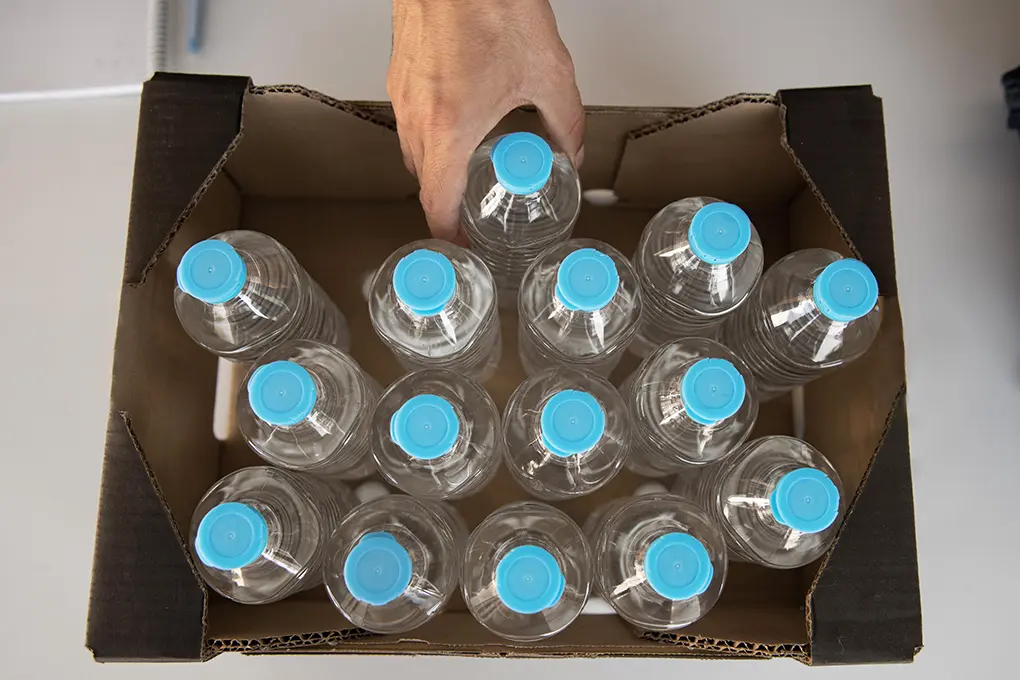
Standard advice recommends one gallon per person daily, but that guidance assumes liquid water. At 32°F and below, bottled water transforms from survival necessity to useless ice block within 2-3 hours in an unheated vehicle.
The CDC emphasizes water as the most critical survival supply, yet frozen water becomes medically useless – you can’t drink ice fast enough to prevent dehydration, and attempting to eat snow or ice accelerates hypothermia by lowering core body temperature.
Research from Iowa State University’s agricultural engineering department demonstrates that consuming frozen water requires your body to expend significant calories warming it to body temperature – calories you cannot afford to lose during cold-weather survival scenarios.
Solutions: Chemical Hand Warmers Against Bottles
The $2 solution everyone overlooks: chemical hand warmers.

How to Store Water for Winter Car Emergencies:
Place 2-3 chemical hand warmers (the air-activated kind, not fuel-burning) directly against water bottles inside an insulated cooler. This counterintuitive setup works because:
- Insulated coolers prevent heat loss, not just cold entry
- Hand warmers generate 135-150°F for 6-10 hours
- The enclosed space maintains above-freezing temperatures
- Bottles thaw within 30-40 minutes even from solid ice
Testing by emergency management professionals shows this method maintains liquid water in vehicles exposed to -10°F for 8+ hours. The Esky Emergency Hand Crank Radio and Charger includes similar heat-generating features for maintaining core electronics.
The Insulated Cooler Trick
Reverse your understanding of coolers: they’re not just for keeping things cold.
Store water bottles inside a quality insulated cooler with several chemical hand warmers activated before placing bottles inside. The insulation traps heat generated by the warmers, creating a micro-environment that prevents freezing. This approach maintains drinkable water for 12-18 hours in sub-zero conditions.
Emergency preparedness specialists recommend checking your vehicle’s cooler setup every 6-8 hours during extended winter storms to replace expired hand warmers with fresh ones. Keep 12-15 extra warmers in your winter car kit for this rotation system. The 14 Day Emergency Food Kit from Nutrient Survival stores well alongside water supplies in these cooler systems.

Alternative: AquaBrick Storage System
The AquaBrick Food and Water Storage Container – 2 Bricks offers superior cold-weather water storage through thicker wall construction that resists freezing longer than standard bottles. The 3-gallon capacity per brick reduces the number of freeze points compared to multiple smaller bottles, and the rectangular shape fits efficiently in vehicle storage spaces.
Item #2: Carbon Monoxide Prevention WITHOUT Running Your Engine
“Run your engine for warmth” might be the most dangerous advice in winter survival.
The Carbon Monoxide Risk
Snow blocks exhaust pipes. Exhaust pipes release carbon monoxide. Carbon monoxide kills within minutes.
The CDC documented 25 carbon monoxide poisoning cases during the January 1996 blizzard in Philadelphia and New York – all from running vehicles with snow-blocked exhausts. A 2016 case study published in BMC Emergency Medicine found that carbon monoxide reached lethal concentrations inside a snow-buried vehicle within 84 seconds, causing unconsciousness before occupants could escape.
A controlled vehicle test found that dangerously high carbon monoxide levels accumulated inside the passenger compartment within 3 minutes with windows closed, within 5 minutes when front windows were opened one inch, and within 7.5 minutes when opened six inches.
The insidious nature of carbon monoxide makes it particularly deadly: it’s odorless, colorless, and causes symptoms (headache, nausea, confusion) that victims often attribute to stress rather than poisoning. By the time symptoms become severe, victims lack the coordination to escape.
Fact: A man in Ottawa, Canada, died during the 2025 winter when he was found with carbon monoxide poisoning after running his snow-covered car for heat while stranded, with snow blocking the exhaust pipe.
The Candle-in-a-Can Heater: UCO Original Candle Lantern
The UCO Original Candle Lantern provides 9 hours of heat and light from a single candle without carbon monoxide risk. This overlooked emergency tool generates sufficient warmth to raise interior vehicle temperature 10-15°F when combined with proper insulation.

Safe Usage Guidelines:
- Crack window 1-2 inches for ventilation (mandatory even with candle heat)
- Place lantern on metal surface, never upholstery or plastic
- Keep away from blankets, clothing, and flammable materials
- Monitor continuously – never sleep with candle burning unattended
- Extinguish immediately if you feel dizzy or nauseous
Emergency managers emphasize that candle heat works through radiant warmth rather than convection, so positioning the lantern where occupants can feel the heat directly maximizes effectiveness. The lantern’s collapsible design stores flat in your emergency kit, and replacement candles have indefinite shelf life.
Why You Need a Dedicated Exhaust Shovel
Every winter car kit needs a shovel specifically designated for clearing exhaust pipes.
The Yeacool Survival Folding Shovel serves dual purposes: digging out stuck vehicles and maintaining clear exhaust flow. Its military-grade steel construction handles compacted snow and ice that lighter shovels cannot penetrate.
Critical Shovel Protocol:
Before starting your engine in snow conditions:
- Exit vehicle and inspect entire perimeter
- Clear minimum 3-foot radius around exhaust pipe
- Remove snow from underneath vehicle near exhaust
- Maintain clearance every 15-20 minutes if engine runs
- Never run engine if you cannot physically reach and clear exhaust

Item #3: Cold-Weather Visibility Without Relying on Batteries
Flashlights die. Batteries freeze. Darkness kills.
Why Batteries Fail in Extreme Cold
Lithium-ion and alkaline batteries lose 20-50% capacity at 0°F and may fail completely at -20°F. The chemical reactions that generate electrical current slow dramatically in cold, reducing both voltage output and total capacity. A flashlight that provides 8 hours of light at room temperature may last only 2-3 hours in sub-zero conditions.
Research from the Electrochemical Society shows that battery performance degradation accelerates below freezing, with alkaline batteries particularly susceptible to cold-weather failure. Even “cold-weather” batteries experience significant capacity loss at extreme temperatures.
LED Road Flares vs. Traditional Flares
The Tactical Flashlight and Fenix Everyday Carry Flashlight provide reliable lighting, but for emergency visibility, LED road flares outperform traditional options:

LED Road Flares:
- 20+ hour runtime on steady mode
- 60+ hour runtime on flash mode
- Function reliably to -40°F
- Waterproof and impact-resistant
- No expiration date
- Reusable across multiple emergencies
Traditional Chemical Flares:
- 15-30 minute burn time
- 2-3 year shelf life before degradation
- Burn risk if mishandled
- Single-use only
- Ignition difficulties in wet conditions
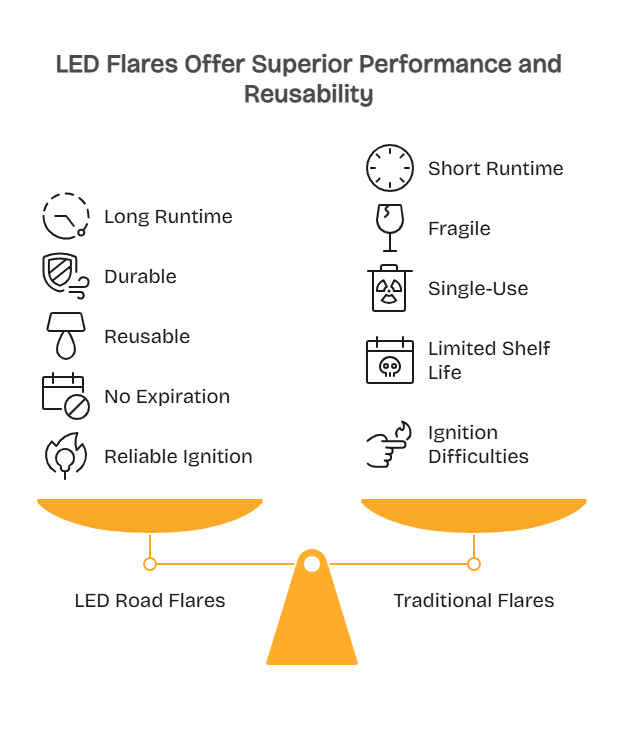
Emergency management professionals recommend carrying 3-4 LED road flares plus 2-3 traditional chemical flares as backup. The LED units handle 99% of visibility needs, while chemical flares serve as absolutely-final-resort signaling if electronics fail completely.
The Glow Stick Solution for Multi-Day Storms
Industrial-grade glow sticks provide 12-24 hour illumination without batteries or flames. The 72 Hour Kit includes glow sticks as part of comprehensive emergency lighting strategy.
Glow Stick Advantages:
- No heat signature (safe inside sleeping bag)
- Waterproof and submersible
- Chemical reaction unaffected by cold
- 5+ year shelf life sealed
- Hands-free when attached to clothing or bags
Purchase military-spec 12-hour glow sticks rather than party-store 30-minute versions. The extended-duration industrial units generate sufficient light for reading, first aid, and navigation throughout night-long survival scenarios.
Winter Car Emergency Kit Essentials: Complete Checklist
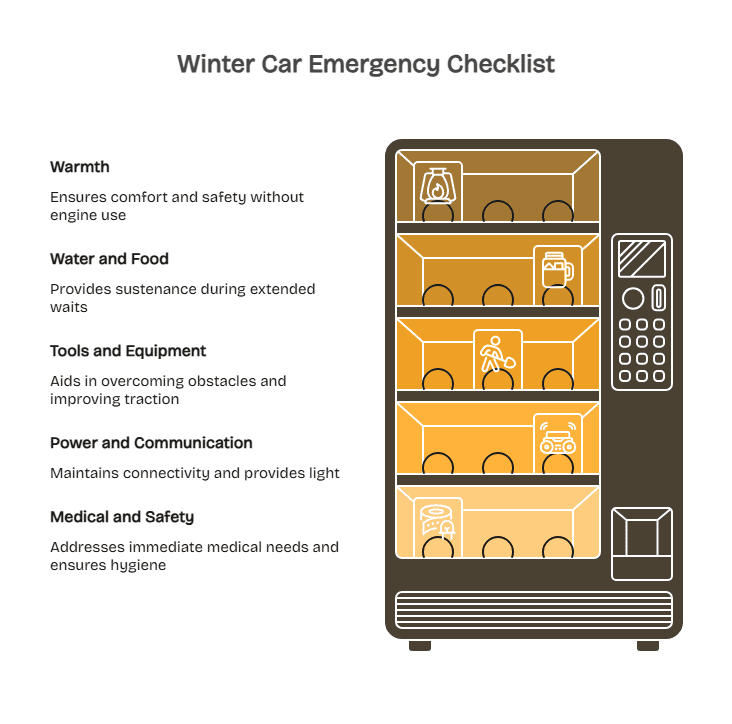
Here’s a complete checklist of what you should have in your winter car kit.
Warmth Without Engine:
- UCO Original Candle Lantern with extra candles
- Hero Survival Sleeping Bag rated to -10°F
- Stormproof Matches in waterproof container
- Chemical hand warmers (minimum 12 packs)
Water and Food:
- AquaBrick Food and Water Storage Container – 2 Bricks
- Insulated cooler for water protection
- 14 Day Emergency Food Kit
- No-cook, high-calorie snacks (minimum 4,000 calories per person)

Tools and Equipment:
- Yeacool Survival Folding Shovel
- The Extractor – Tow Strap (20,000 lb capacity)
- Survival Hatchet for breaking ice/creating traction material
- Spare floor mats for tire traction
Power and Communication:
- Esky Emergency Hand Crank Radio and Charger
- Anker 737 Power Bank (PowerCore 24K)
- LED road flares (minimum 3)
Medical and Safety:
- First Aid kit
- Prescription medications (7-day supply)
- Emerge Survival Toilet Paper
- Extra winter clothing layers
The “Proven Wrong” Winter Car Items Everyone Recommends
Although many people put their faith in the below items and methods, they have been proven wrong and can lead to dangerous situations.
Cat Litter: The Traction Myth
Cat litter ranks among the most commonly recommended winter car supplies – and among the least effective.
Why Cat Litter Fails:
Research from Michigan State University Extension confirms cat litter “does not melt ice and offers limited traction compared to specialized products.” Testing published in engineering journals demonstrates:
- Provides traction for approximately 5 minutes
- Clumping litter turns to slippery mud when wet
- Non-clumping litter scatters ineffectively on ice
- Creates cleanup mess tracked into vehicle interior
- Refreezes into harder, more slippery surface
A comparative traction test using a hockey puck on treated surfaces found cat litter allowed 26 inches of slide versus only 10 inches for sand and 19 inches for chemical ice melt. The granular structure that works in litter boxes performs poorly on ice because the particles lack sufficient surface area to generate meaningful friction.

What Actually Works: Floor Mats Under Tires
Your vehicle already contains superior traction devices: floor mats.
Floor Mat Traction Method:
- Remove rubber or carpet floor mats from vehicle
- Place textured side down under drive wheels
- Apply gradual acceleration to climb onto mats
- Once wheels grip, maintain steady speed forward
The textured underside of floor mats creates mechanical interlocking with tire treads that cat litter cannot achieve. Emergency roadside assistance professionals observe that floor mats successfully extract stuck vehicles in approximately 70% of ice/snow situations where cat litter fails.
For severe conditions, the The Extractor – Tow Strap provides professional-grade recovery capability with 20,000 lb capacity suitable for pulling vehicles free from deep snow or ice.
Special Winter Car Scenarios: Customized Preparations
Winter driving with children or extreme cold conditions requires tailored emergency planning beyond standard kits to ensure safety, comfort, and survival during unexpected roadside situations.
Additional Items for Children:
- Extra diapers (minimum 12-count)
- Formula/baby food (72-hour supply)
- Comfort items (favorite toy, blanket)
- Smaller emergency blankets sized for children
- Age-appropriate snacks beyond standard survival food
- Extra clothing in larger sizes (kids grow between seasons)
Review Batten’s comprehensive car emergency guide for complete vehicle preparedness strategies.
Extreme Cold Below 0°F: Enhanced Survival Equipment
- Upgrade to -40°F rated sleeping bags
- Double chemical hand warmer quantities
- Add face protection (balaclava, ski goggles)
- Include frostbite-specific first aid supplies
- Store batteries in interior pockets near body
- Increase insulation layers between body and vehicle surfaces
Extreme cold transforms metal vehicle interiors into heat sinks that actively drain body warmth. Creating insulation barriers between occupants and metal surfaces becomes critical below 0°F – use foam pads, extra clothing, or even cardboard to prevent direct contact with cold metal.

Ready to build a winter-ready emergency kit that actually works when temperatures drop? See Batten’s Emergency Gear Collection for cold-weather tested lifesaving equipment.
Frequently Asked Questions
How Long Can Water Stay Unfrozen in a Car During Winter?
Water begins freezing within 2-3 hours in vehicles exposed to below-freezing temperatures, with complete solidification occurring within 4-6 hours at 0°F. Using insulated coolers with chemical hand warmers extends liquid state to 12-18 hours at sub-zero temperatures.
What Is the Safest Way to Stay Warm in a Stranded Car?
Layer insulation using emergency blankets, sleeping bags, and extra clothing rather than running your engine. The Hero Survival Sleeping Bag rated to -10°F combined with mylar blankets provides passive warmth without carbon monoxide risk from engine operation.
How Often Should I Replace Items in My Winter Car Emergency Kit?
Inspect monthly during winter season: check hand warmer expiration dates (2-3 year shelf life), replace expired food/water, verify battery charge levels, and test flashlights. Replace chemical items every 2-3 years even if unopened, as effectiveness degrades over time.
Can I Use My Phone for Emergency Light Instead of Flashlight?
Phone batteries drain within 2-4 hours in cold conditions and lose charge rapidly below 32°F. Always carry dedicated lighting like the Tactical Flashlight plus LED road flares as primary light sources, reserving phone battery exclusively for emergency calls.
What Is the Most Common Winter Car Emergency?
Dead batteries account for 52% of winter car emergencies, followed by being stuck in snow (23%) and frozen fuel lines (12%) according to AAA roadside assistance data. The Zeus Pro Jump Starter addresses the highest-frequency winter breakdown scenario.
How Much Food Should I Keep in a Winter Car Kit?
Store minimum 4,000 calories per person for 72-hour scenarios, though rural drivers should target 7-day supplies. The 14 Day Emergency Food Kit provides extended nutrition without requiring refrigeration or cooking.
Should I Keep Extra Gasoline in My Winter Car Kit?
No. Gasoline storage in enclosed vehicles creates fire and explosion risks. Instead, maintain your tank above half-full during winter months as insurance against stranding, and include the The Extractor – Tow Strap for vehicle recovery without need for fuel-powered rescue.
How Do I Prevent Carbon Monoxide Poisoning in a Stranded Car?
Never run your engine unless you can maintain 3-foot clearance around exhaust pipe and monitor constantly. Use the UCO Original Candle Lantern for heat instead, paired with proper insulation layers that provide warmth without exhaust risks.
Sources
- Winter Storm Uri Year in Review. 2021. City of Austin Open Data Portal. https://data.austintexas.gov/stories/s/Year-in-Review-Winter-Storm-Uri/hpvi-b8ze/
- The Great Texas Freeze: February 11–20, 2021. 2023. National Centers for Environmental Information (NOAA). https://www.ncei.noaa.gov/news/great-texas-freeze-february-2021
- How to Create an Emergency Water Supply. 2025. Centers for Disease Control and Prevention. https://www.cdc.gov/water-emergency/about/how-to-create-and-store-an-emergency-water-supply.html
- A Report of Dangerously High Carbon Monoxide Levels Within the Passenger Compartment of a Snow-Obstructed Vehicle. 2004. BMC Emergency Medicine. https://pmc.ncbi.nlm.nih.gov/articles/PMC526190/
- Carbon Monoxide Poisonings Associated with Snow-Obstructed Vehicle Exhaust Systems –
- Philadelphia and New York City, January 1996. 1996. Morbidity and Mortality Weekly Report (CDC). https://www.cdc.gov/mmwr/PDF/wk/mm4501.pdf
- Man found dead in snow-covered car with engine running in Montreal’s Parc-Ex. 2025. CityNews Ottawa. https://ottawa.citynews.ca/2025/02/18/montreal-man-dead-accidental-carbon-monoxide-poisoning/
- Lithium-Ion Battery Safe Temperature Range: What You Need to Know. 2025. EBL Official. https://www.eblofficial.com/blogs/battery-101/lithium-ion-battery-temperature-range?srsltid=AfmBOoq9eToZ6eOu5xrwlp461n-Mteg48MlxaA0sYFiIlCMEY5Lt944X