
Quick Answer: A survival bunker needs water (1 gallon per person daily), 3-12 months of non-perishable food, backup power, air filtration, first aid supplies, communications gear, sanitation tools, and lighting to sustain occupants through extended emergencies.
A survival bunker is only as useful as what’s inside it. Whether you’re stocking a purpose-built underground shelter or reinforcing a safe room, the wrong supplies – or too few of them – turn a potential refuge into a liability.
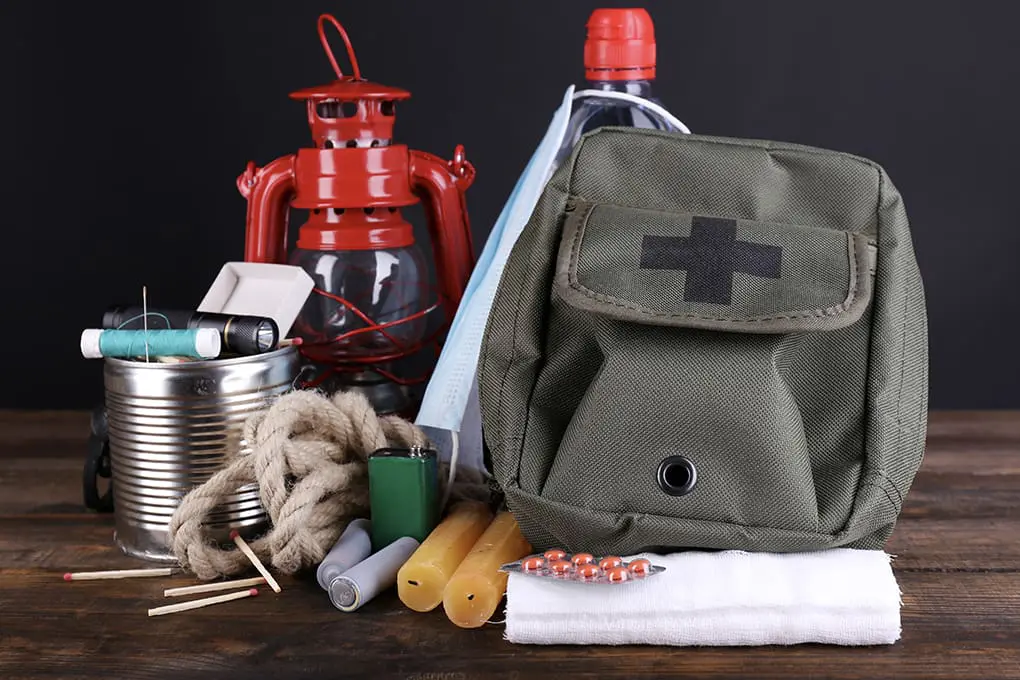
FEMA recommends that Americans prepare for self-sufficiency lasting at minimum 72 hours, but bunker scenarios often demand weeks or months of readiness. The difference between a well-stocked bunker and a dangerous one comes down to planning across six core categories: water, food, power, air, medical, and communication.
This bunker essentials checklist covers each category with specific quantities, gear recommendations, and setup guidance for families.
Table of Contents
- Key Takeaways
- Emergency Water Supply: The First Priority for Bunker Essentials
- Emergency Food Storage: Fueling Long-Term Survival
- Backup Power for a Survival Bunker
- Bunker Air Filtration Systems
- Emergency Medical Supplies for a Survival Bunker
- Bunker Communication Equipment
- Sanitation Supplies for a Survival Bunker
- Emergency Lighting and Tools for a Bunker
- Complete Survival Bunker Checklist
- Building Your Bunker Supply System Today
- Frequently Asked Questions
- Sources
Key Takeaways
- A properly stocked survival bunker requires 1 gallon of water per person per day, 2,000-2,500 daily calories of non-perishable food, backup power, air filtration, first aid, and communication devices.
- Water is your most critical survival bunker supply – store a minimum 2-week supply, ideally 30+ days for extended shelter-in-place scenarios.
- Bunker air filtration systems (HEPA + activated carbon) protect against nuclear fallout, chemical agents, and biological contaminants that make outdoor air unsafe.
- Backup power for a bunker should combine a solar generator or battery station for essentials with a hand-crank fallback for extended outages.
- Stock your bunker with emergency preparedness essentials from Batten tested for real-world survival scenarios.
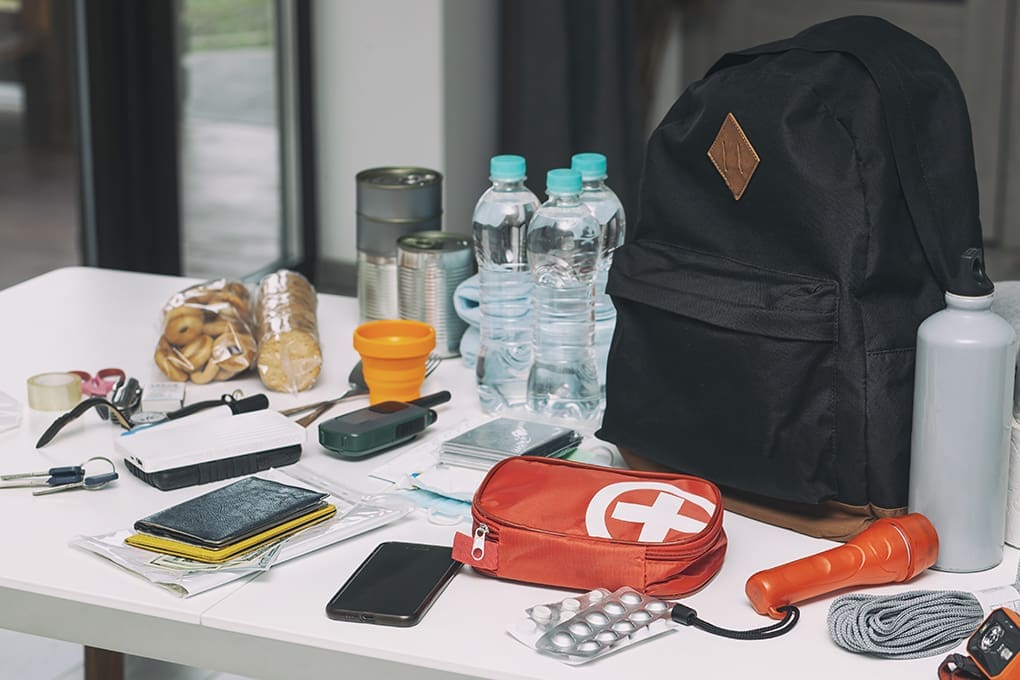
Emergency Water Supply: The First Priority for Bunker Essentials
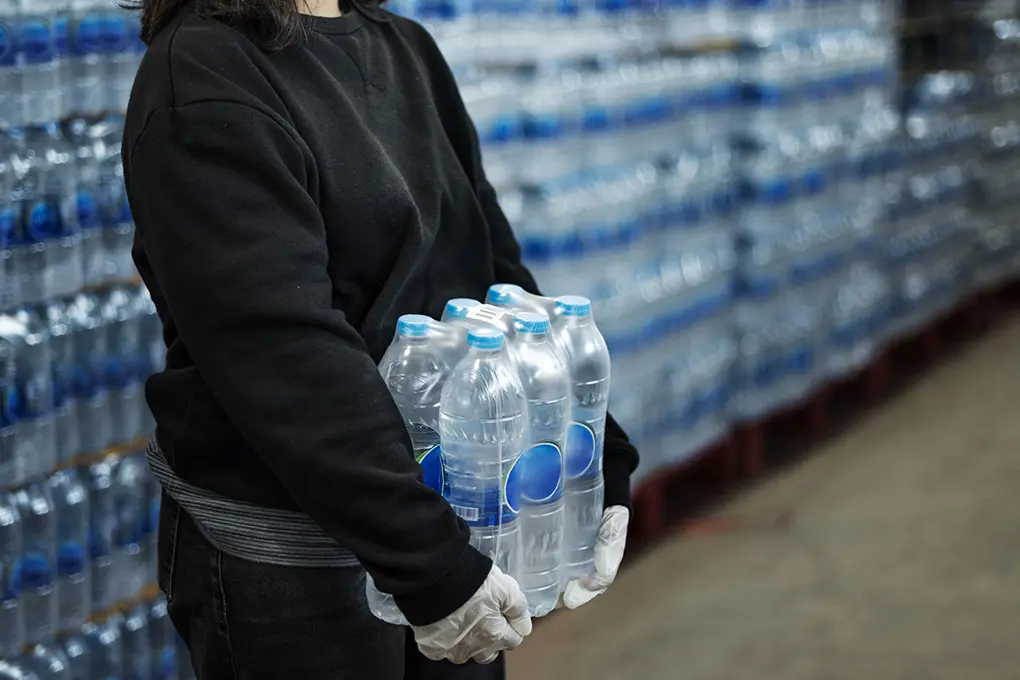
Water outranks everything else in a survival bunker. Without it, you have 3 days. With a reliable supply, your timeline extends to weeks or months.
How much water to store:
- 1 gallon per person per day minimum for drinking and basic sanitation
- 1.5-2 gallons per person per day if space allows (accounts for cooking and hygiene)
- A family of four needs 56 gallons minimum for 2 weeks; 112 gallons for 30 days
The AquaBrick Container 6-Pack with Spigot is one of the cleanest bunker water storage solutions available – stackable, food-grade BPA-free bricks that lock together vertically and maximize floor space in tight shelters. Each 3.5-gallon brick is manageable to carry and easy to rotate.
For a bathtub-based reserve before bugging in, the AquaPod Tub Filter Kit fills a standard tub to create a sealed 100-gallon water reserve using existing plumbing – no extra containers needed.

According to the CDC’s emergency water storage guidelines, sealed containers stored properly can remain safe for extended periods. Rotate stored water every 6-12 months or use commercial stabilizers.
For more information, see our guide on how to stock a bomb shelter.
Emergency Food Storage: Fueling Long-Term Survival
Calculate your food needs before purchasing. An adult requires 2,000-2,500 calories per day; children need 1,400-2,000. For a family of four over 30 days, that’s roughly 250,000-300,000 calories total.
Calorie density by food type:
| Food Type | Calories Per Pound | Shelf Life | Storage Space |
| Freeze-dried meals | 1,600-2,200 | 25-30 years | Low (compact cans) |
| White rice (sealed) | 1,600 | 25-30 years | Moderate |
| Canned meats | 900-1,200 | 3-5 years | Moderate |
| Energy bars | 1,800-2,400 | 5 years | Very low |
| Legumes (sealed) | 1,500-1,800 | 25 years | Moderate |
Best Survival Food for Long-Term Bunker Storage
The Nutrient Survival 30-Day Emergency Food Kit is purpose-built for exactly this scenario – three nutrient-dense meals per day, 25-year shelf life, and a caloric profile designed to maintain cognitive and physical performance under stress. It’s one of the few emergency food lines that addresses micronutrient density, not just calorie count.

For variety and bulk, browse Batten’s full food and water supply collection. Stocking only rice and beans creates flavor fatigue within days – rotate in canned meats, comfort foods, and condiments. Read our Nutrient Survival vs Mountain House review to find out which emergency food is best for you.
Backup Power for a Survival Bunker
Power outages during disasters can last days to weeks. Your bunker power strategy should layer multiple systems.
Bunker Backup Power Comparison
| Power Source | Capacity | Best For | Limitation |
| Solar battery station | 192Wh-2kWh+ | Lights, comms, devices | Requires surface solar access |
| Fuel generator | Unlimited (with fuel) | High-wattage appliances | Ventilation required |
| Solar panel charger | Passive recharge | Topping off battery stations | Needs sunlight |
| Hand-crank radio/charger | N/A | Emergency comms, phone charge | Low output |
Recommended bunker power setup:
- Primary storage: The Anker 548 Power Bank (192Wh) handles device charging, LED lighting, and small electronics for days on a single charge – compact enough to fit on a shelf and rugged enough for real use.
- Solar recharging: The Hiluckey Solar Charger 25000mAh keeps phones and small devices charged via surface-mounted panels, no grid required.
- Emergency radio + charging: The Esky Emergency Hand Crank Radio covers AM/FM/NOAA weather alerts, has a built-in 7,400mWh power bank, LED flashlight, and SOS alarm – making it one of the most versatile single devices for a bunker.
- Heavy loads: Browse Batten’s power generation collection for larger solar generators and battery stations when running refrigeration or medical devices.

Read our Anker 747 Power Bank review
Bunker Air Filtration Systems
This is the category most preppers underestimate. During nuclear, biological, or chemical (NBC) events, outside air becomes the primary threat. An unfiltered bunker provides physical shelter but no protection from airborne contamination.
A purpose-built NBC air filtration system requires three stages: a pre-filter for large particulates, a HEPA filter capturing 99.97% of particles 0.3 microns or larger (including radioactive dust), and an activated carbon stage that adsorbs chemical vapors and gases.
According to FEMA’s nuclear safety guidance, even improvised filtration – sealing doors with tape and plastic sheeting – provides meaningful protection in the first 24-48 hours. Dedicated NBC filtration extends that protection indefinitely.
Key specifications to look for in a bunker air filtration system:
- Positive pressure design (forces contaminants out rather than drawing them in)
- CBRN-rated activated carbon (not standard HVAC carbon filters)
- CFM rating matched to bunker volume (roughly 20-30 CFM per occupant)

The Shelter in Place kit from Batten provides the materials needed to seal a room against airborne contaminants when a dedicated filtration system isn’t yet in place – a critical interim layer of protection.
Emergency Medical Supplies for a Survival Bunker
A bunker medical kit goes beyond a standard first aid kit. Plan for wound care, prescription management, and extended-duration medical needs without hospital access.
Core bunker medical supplies:
- Trauma kit: Tourniquet (CAT or SOFTT-W), chest seals, hemostatic gauze, and pressure bandages – browse Batten’s survival first aid kit collection for vetted IFAK options.
- General first aid: Antiseptic, bandages, butterfly closures, SAM splints, ace bandages, eye wash
- Medications: 90-day supply of all prescriptions; OTC pain relievers, antihistamines, antidiarrheals, antacids
- Extended care: Suture kit, dental emergency kit, blood pressure cuff, pulse oximeter
- Reference: Printed wilderness medicine guides (power may fail)

Bunker Communication Equipment
Isolation is the second-biggest bunker risk after resource depletion. Knowing what’s happening outside – and being able to signal for help – requires dedicated communication gear.
The Garmin inReach Mini 2 is the gold standard for bunker communications: two-way satellite messaging and GPS tracking that operates completely independent of cell towers or internet. If you can only choose one communication device beyond a radio, this is it.
Pair it with the Esky Hand Crank Radio for NOAA weather alerts and AM/FM broadcasts that give you real-time situational awareness without satellite subscription costs.
Sanitation Supplies for a Survival Bunker
Sanitation failures cause disease faster than almost any other factor in shelter situations. Plan for waste management, hygiene, and surface disinfection from day one.
The Emerge Survival Toilet Paper is compact, water-resistant, and designed specifically for extended shelter scenarios – a detail that sounds minor until you’re two weeks into a bunker stay.

Full sanitation checklist:
- Portable composting or chemical toilet with WAG waste bags
- Emerge Survival Toilet Paper (long-term supply)
- Hand sanitizer (60%+ alcohol), soap, and wet wipes
- Feminine hygiene products (6-month supply)
- Heavy-duty trash bags (30+ gallon)
- Bleach or water purification tablets for surface disinfection
- Nitrile gloves and N95 respirators
Emergency Lighting and Tools for a Bunker
Reliable lighting preserves safety, morale, and productivity during extended stays. The UCO Original Candle Lantern Value Pack is a proven long-duration bunker light source – each candle burns approximately 9 hours, providing up to 27 hours of light per pack with zero battery dependency. Use only with confirmed ventilation.

Complement it with battery-powered LED lanterns for primary use, reserving candle lanterns as a tertiary backup.
Every bunker also needs a reliable cutting tool. The Empire Knife handles utility cutting, food prep, and emergency tasks. For broader survival tool needs, the Recon multi-tool and tactical gear collection cover the full spectrum of bunker tool requirements.
Complete Survival Bunker Checklist
Water & Sanitation
- 1 gallon per person per day (30-day minimum) in AquaBrick containers
- AquaPod Tub Filter Kit for supplemental reserve
- Portable toilet and WAG waste bags
- Emerge Survival Toilet Paper, hand sanitizer, soap, wipes
Food Storage
- 2,000-2,500 calories per person per day, 30-day minimum
- Nutrient Survival 30-Day Emergency Food Kit
- Manual can opener, camp stove and fuel, cookware
Power
- Anker 548 Power Bank for device and lighting power
- Hiluckey Solar Charger for passive recharging
- Esky Hand Crank Radio as zero-battery fallback
Air Filtration
- NBC-rated HEPA + activated carbon filter system
- Shelter in Place kit for room sealing
- N95/P100 respirators (backup)
Medical
- Trauma IFAK from Batten’s first aid collection
- 90-day prescription medication supply, OTC medications
- Printed medical reference guides
Communication
- Garmin inReach Mini 2 satellite communicator
- Esky NOAA Weather Radio
- GMRS walkie-talkies
Lighting & Tools
- UCO Candle Lantern Value Pack (battery-free backup)
- LED lanterns with rechargeable batteries
- Empire Knife and Recon multi-tool
Building Your Bunker Supply System Today
Stock your survival bunker in phases if budget is a constraint. Start with water and food for two weeks, add power and communications in month two, and complete the medical and air filtration systems by month three. A partial bunker covering the highest-probability emergencies beats a perfect plan that never gets executed.
According to FEMA’s emergency supply guidance, households with pre-positioned supplies fare significantly better in post-disaster scenarios than those relying on emergency distribution. Prioritize quantity over brand loyalty in early stages – a full 30-day supply of practical food outperforms a 3-day supply of premium gear every time.
Ready to stock your survival bunker with proven emergency gear? Browse Batten’s emergency preparedness collection for water storage, backup power, emergency food, and first aid supplies tested for real-world disaster scenarios.
Frequently Asked Questions
How Much Food and Water Should a Survival Bunker Have?
Store 1 gallon of water and 2,000-2,500 calories of food per person per day. A family of four needs at minimum 112 gallons of water and 300,000 calories for 30 days. Freeze-dried meals, canned goods, and sealed grains provide the best calorie-to-shelf-life ratio for long-term bunker food storage.
What Is the Most Important Item to Put in a Survival Bunker?
Water is the single most critical survival bunker supply. Without water, occupants face life-threatening dehydration within 3 days. Prioritize water storage and filtration before any other category – food, power, and communications can be rationed or improvised, but there is no substitute for clean water.
Do You Need an Air Filtration System in a Survival Bunker?
Yes, for NBC (nuclear, biological, chemical) scenarios. A HEPA and activated carbon filtration system with positive pressure prevents contaminated outside air from entering. For standard emergencies like storms or power outages, normal ventilation is sufficient – but dedicated filtration is required for radiological or chemical threats.
What Backup Power Works Best for an Underground Bunker?
A solar battery station paired with surface-mounted solar panels provides the most sustainable backup power. A fuel generator offers unlimited runtime but requires stored fuel and ventilation. Hand-crank devices like the Esky radio serve as zero-maintenance emergency fallbacks for communications and basic device charging.
What Sanitation Supplies Are Needed for a Survival Bunker?
A portable chemical or composting toilet with waste bags is the core requirement. Supplement with compact survival toilet paper, hand sanitizer, wet wipes, nitrile gloves, heavy-duty trash bags, and bleach for surface disinfection. Inadequate sanitation causes disease faster than most other survival threats.
How Long Should Emergency Bunker Supplies Last?
Most emergency management experts recommend a minimum 30-day supply. Serious preppers target 6-12 months for extended grid-down scenarios. Start with 2 weeks, build to 30 days, then expand based on your threat assessment and available storage space.
What Communication Equipment Should a Survival Bunker Have?
At minimum, stock an NOAA weather radio and a satellite communicator. The Garmin inReach Mini 2 provides two-way messaging and GPS tracking without cell towers. Supplement with GMRS walkie-talkies for communication between bunker occupants and a hand-crank radio as a zero-battery fallback.
Sources
- “Build a Kit,” 2024, FEMA / Ready.gov, https://www.ready.gov/kit
- “Radiation Emergencies,” 2024, FEMA / Ready.gov, https://www.ready.gov/radiation
- “How to Create an Emergency Water Supply,” 2024, CDC, https://www.cdc.gov/water-emergency/about/how-to-create-and-store-an-emergency-water-supply.html
- “Role of Emergency Physicians in Disaster Preparedness and Response,” 2021, American College of Emergency Physicians, https://www.acep.org/patient-care/policy-statements/role-of-emergency-physicians-in-disaster-preparedness-and-response-impact-of-covid-pandemic
- “Building a Supply Kit for Your Family,” FEMA, https://www.fema.gov/blog/building-supply-kit-your-family-0
- “Food and Water in an Emergency,” FEMA, https://www.fema.gov/pdf/library/f&web.pdf