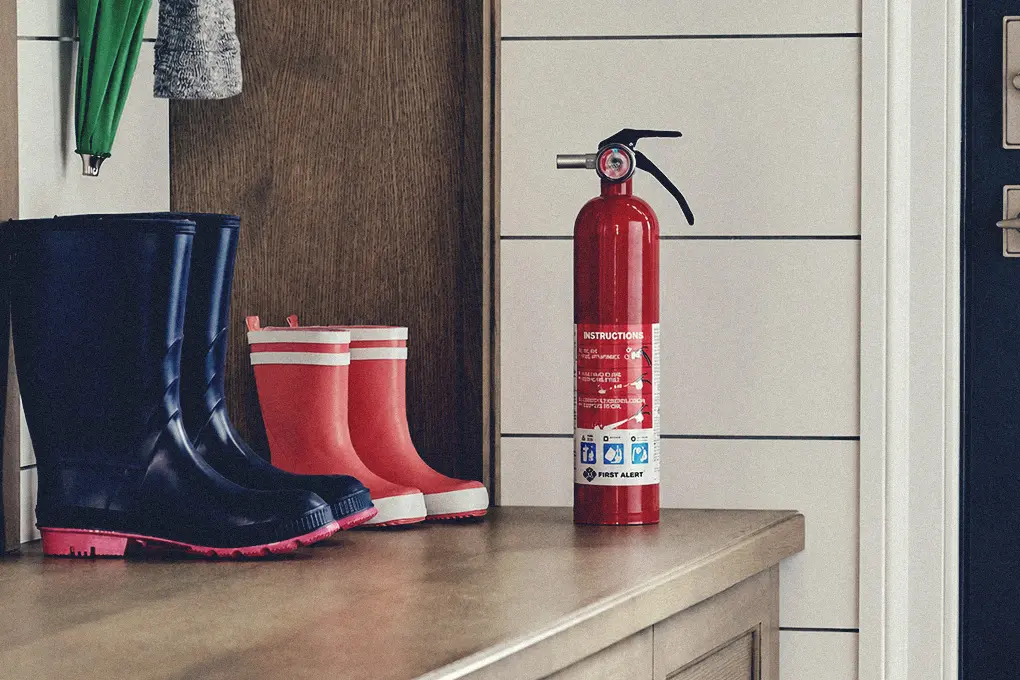

Quick Answer: First Alert HOME1-4 rechargeable home fire extinguishers are UL-rated 1-A:10-B:C, cover kitchen grease, electrical, and ordinary fires, cost $45-60 per unit, and last 10-12 years with proper maintenance.
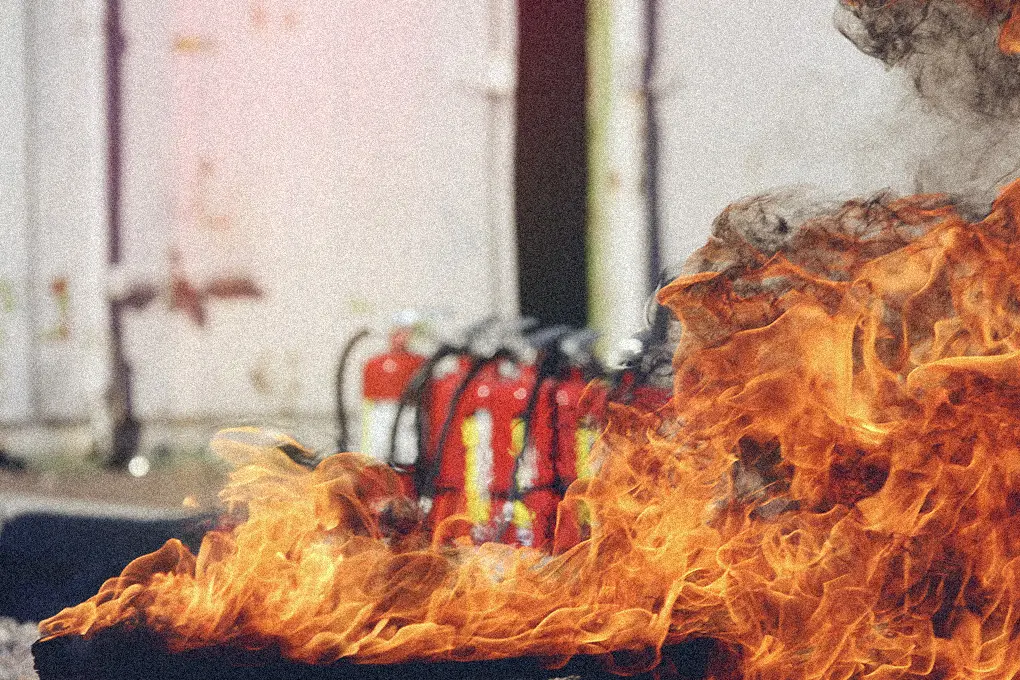
Cooking causes an average of 158,400 home fires per year in the United States, making it the single leading cause of residential fires according to NFPA research. A well-placed fire extinguisher gives you roughly 8-10 seconds to stop a small fire before it spreads beyond control – after that window, evacuation is the only option.
First Alert has manufactured home safety products since 1958 and dominates the residential fire extinguisher market at major retailers. Their HOME1-4 rechargeable model earns attention from fire safety inspectors for practical reasons: it covers all three common residential fire types, carries a clean recall record, and ships in a 4-pack built for whole-home placement.
This review covers what the HOME1-4 ratings mean in practice, how it compares to Kidde, and where each unit belongs in your home.
Table of Contents
- Key Takeaways
- First Alert HOME1-4 Rechargeable Home Fire Extinguisher: Best for Multi-Room Coverage
- First Alert Fire Extinguisher Safety Ratings and UL Certification, Explained
- First Alert vs. Kidde: Which Home Fire Extinguisher Wins?
- Where to Keep a First Alert Fire Extinguisher at Home
- Building Your Home Fire Safety Plan Today
- Frequently Asked Questions
- Sources
Key Takeaways
- The First Alert HOME1-4 is UL-rated 1-A:10-B:C, making it effective against wood, paper, kitchen grease, and electrical fires in a single multipurpose unit.
- Rechargeable units can be professionally serviced for $15-25 after discharge – more cost-effective over time than replacing disposable extinguishers.
- The 4-pack format covers kitchen, garage, bedroom hallway, and a fourth location, meeting NFPA-recommended placement for a standard home.
- First Alert carries no active fire extinguisher recalls as of 2026, giving it a cleaner safety record compared to Kidde’s multiple CPSC recall history.
- Stock every room that matters with the First Alert HOME1-4 4-Pack at Batten – UL-listed, rechargeable, and ready for whole-home coverage.
First Alert HOME1-4 Rechargeable Home Fire Extinguisher: Best for Multi-Room Coverage
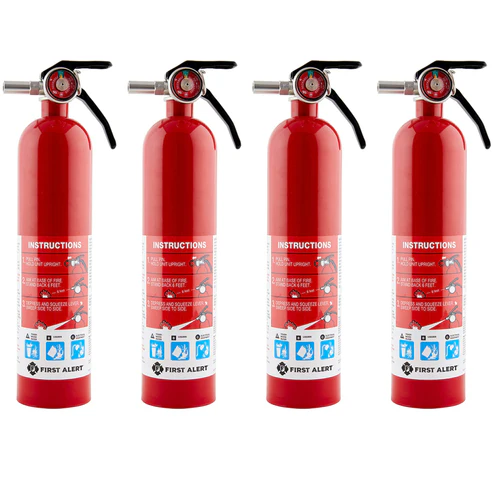
The HOME1-4 is First Alert’s most widely purchased rechargeable home unit. It handles the fire types most likely to start in a residential setting – ordinary combustibles, flammable liquids, and electrical equipment – with a single ABC dry chemical agent. The 4-pack format is the main draw: most households leave critical rooms unprotected when buying a single kitchen extinguisher.
A NIST report on portable fire extinguisher use found that over 90% of residential fire extinguishers are not being inspected at the required 30-day intervals – making the HOME1-4’s visible pressure gauge a genuinely useful feature for at-a-glance readiness checks.
First Alert HOME1-4 at a Glance
- Price: ~$45-60 per unit (4-Pack at Batten, as of June 2026)
- UL Rating: 1-A:10-B:C
- Fire Classes: A (wood, paper, cloth), B (grease, flammable liquids), C (electrical)
- Agent: Monoammonium phosphate dry chemical
- Discharge Time: ~8-10 seconds
- Weight: 4 lbs
- Recharge: Yes – at licensed fire equipment dealers
- Best For: Kitchens, garages, bedroom hallways, and living spaces
Pros and Cons of the First Alert HOME1-4
Pros:
- UL 1-A:10-B:C covers all three common residential fire classes in one unit
- Rechargeable design reduces long-term cost compared to disposable alternatives
- Pressure gauge gives clear visual ready/not-ready confirmation
- Wall mount bracket included with every unit
- 4-Pack delivers whole-home coverage in a single order
Cons:
- Dry chemical residue is corrosive – cleanup after discharge is labor-intensive
- 8-10 second discharge window demands practice before an actual emergency
- Not rated for Class K fires (commercial cooking oils or deep fryers)
- Professional recharge requires a licensed fire equipment dealer, not a DIY process

First Alert Fire Extinguisher Safety Ratings and UL Certification, Explained
The UL fire extinguisher testing and certification process confirms independent third-party performance testing against ANSI/UL 711 standards. According to UL Solutions, full-scale flammable liquid and wood fire tests determine each extinguisher’s fire-extinguishing potential before it receives the UL Mark. The HOME1-4’s 1-A:10-B:C rating breaks down into three distinct components:
| Rating Component | What It Means | Real-World Application |
| 1-A | Fights fires equivalent to 1.25 gallons of water | Sofa fire, paper stack, curtain fire |
| 10-B | Covers 10 sq. ft. of flammable liquid fire | Stovetop grease fire, solvent spill |
| C | Safe on energized electrical equipment | Appliance short circuit, wiring fire |
The NFPA 10 standard for portable fire extinguishers covers selection, installation, inspection, maintenance, and testing requirements for all portable units. The HOME1-4 meets NFPA 10’s minimum requirements for garage placement and covers the three fire classes most common in residential settings.
Pair your extinguishers with properly installed smoke and carbon monoxide detectors – fire safety professionals consistently cite detection plus suppression as the baseline layered approach for residential protection.

First Alert vs. Kidde: Which Home Fire Extinguisher Wins?
First Alert and Kidde occupy the same shelf space at most home improvement retailers and sit within a similar price range. The differences become meaningful when you look past the packaging:
| Feature | First Alert HOME1-4 | Kidde Pro 210 |
| UL Rating | 1-A:10-B:C | 2-A:10-B:C |
| Type | Rechargeable | Rechargeable |
| Agent | ABC dry chemical | ABC dry chemical |
| Discharge Time | ~8-10 seconds | ~8-10 seconds |
| Pressure Gauge | Yes | Yes |
| Price Per Unit | ~$45-60 | ~$40-55 |
| Active Recalls | None (2026) | Multiple CPSC recalls, 2009-2022 |
| Best For | Multi-room home coverage | Higher ordinary combustible capacity |
Kidde’s Pro 210 carries a higher 2-A rating against ordinary combustibles, giving it slightly more firefighting capacity for wood and paper fires. First Alert’s advantage is a clean safety record – Kidde faced a major Consumer Product Safety Commission recall in 2018 affecting millions of units, where extinguishers failed to discharge and nozzles detached with enough force to cause injuries. One fatality was reported. That recall included units originally recalled in 2009 and 2015.
For families building out their entire First Alert home safety setup, see how the brand stacks up on detection devices in the X-Sense vs. First Alert smoke detector comparison.

Where to Keep a First Alert Fire Extinguisher at Home
Placement is as important as the extinguisher itself. Per OSHA’s portable fire extinguisher standard 1910.157, the maximum travel distance to reach a Class A extinguisher should stay at or under 75 feet. The NFPA’s home structure fires research shows that electrical distribution and lighting equipment is the leading cause of bedroom and living room fires – reinforcing the case for coverage beyond just the kitchen.
Mount extinguishers in these five locations:
- Kitchen: Within 10 feet of the stove, near a room exit – never above the stove, which blocks access during a stovetop fire
- Garage: Near the garage door for a clear exit path, away from fuel and vehicles
- Bedroom Hallway: At shoulder height on the wall, reachable during nighttime emergencies without searching
- Basement or Utility Room: Near the electrical panel or water heater, where electrical fires often originate
- Each Floor of Multi-Story Homes: Travel distance to any extinguisher should stay under 75 feet per OSHA guidelines
The HOME1-4’s 4-Pack covers all five locations without multiple separate purchases. Apartment and high-rise residents should review fire safety guidelines for apartments and high-rises before mounting anything – lease terms and building codes vary by property.
For fire-related items to include in a broader home readiness plan, an emergency kit checklist for natural disasters is a practical next step alongside extinguisher placement.
Building Your Home Fire Safety Plan Today
First Alert HOME1-4 rechargeable fire extinguishers are a practical, UL-rated choice for families covering multiple rooms at once. The 1-A:10-B:C rating handles the three most common residential fire types. The rechargeable design cuts long-term replacement costs. And the 4-Pack format closes the coverage gap most households leave when buying a single kitchen unit.
A study of 276 participants by Worcester Polytechnic Institute and Eastern Kentucky University found that even minimal training significantly improved people’s ability to use a fire extinguisher correctly. Buying extinguishers counts for little if no one in the household has practiced the PASS technique (Pull, Aim, Squeeze, Sweep) before an emergency. Run a dry drill with your family before a fire makes that knowledge urgent.
Order the First Alert HOME1-4 4-Pack from Batten, mount them this weekend, and combine them with working smoke detectors for a complete first line of defense. Fire preparedness has no good reason to stay on the to-do list.
Protect your home from the inside out – grab the First Alert HOME1-4 4-Pack at Batten and pair it with smoke detectors and a solid emergency plan for layered, room-by-room fire safety.
Frequently Asked Questions
Is the First Alert Fire Extinguisher Good for Home Use?
Yes. First Alert home fire extinguishers are UL-listed, cover Class A, B, and C fires, and carry no active recalls as of 2026. The HOME1-4 rechargeable model receives strong marks from residential fire safety inspectors for kitchen, garage, hallway, and living space use in standard homes.
How Long Does a First Alert Fire Extinguisher Last?
A First Alert rechargeable fire extinguisher lasts 10-12 years with proper care. Monthly visual checks, annual professional inspections, and a 6-year internal service are required per NFPA 10. After 12 years, the unit requires hydrostatic pressure testing or full replacement – pressure vessel integrity degrades over time regardless of visible condition.
What Does the First Alert Fire Extinguisher Rating 1-A:10-B:C Mean?
The 1-A rating means the unit fights ordinary combustible fires equal to 1.25 gallons of water capacity. The 10-B covers 10 square feet of flammable liquid fire. The C rating confirms safe use on energized electrical equipment without shock risk to the person operating the extinguisher.
Can You Recharge a First Alert Rechargeable Fire Extinguisher?
Yes. First Alert rechargeable models like the HOME1-4 can be professionally recharged after discharge at licensed fire equipment dealers. Recharging costs around $15-25 per unit. Disposable First Alert models cannot be recharged and must be replaced after use or when the pressure gauge drops below the green zone.
First Alert vs. Kidde: Which Home Fire Extinguisher Is Better?
First Alert’s clean recall history through 2026 gives it a clear edge over Kidde, which faced a major CPSC recall in 2018 affecting millions of units for failure-to-discharge defects linked to one fatality. Kidde’s Pro 210 carries a higher 2-A ordinary combustible rating. For families prioritizing reliable multi-unit coverage, First Alert HOME1-4 is the stronger pick.
Where Should I Keep a First Alert Fire Extinguisher in My Kitchen?
Mount it within 10 feet of the stove, near a room exit, at shoulder height on the wall. Never mount a kitchen fire extinguisher above or beside the stove – a stovetop fire blocks access. An ABC-rated extinguisher handles grease fires, appliance electrical fires, and ordinary combustibles from a single unit.
How Do You Use a First Alert Fire Extinguisher?
Use the PASS technique: Pull the safety pin, Aim the nozzle at the fire base (not the flames), Squeeze the handle firmly, and Sweep side to side across the base until the fire is out or the unit empties. Stay near an exit at all times and never turn your back on a recently extinguished fire.
Sources
- “Home cooking fires,” National Fire Protection Association, 2023, https://www.nfpa.org/education-and-research/research/nfpa-research/fire-statistical-reports/home-cooking-fires
- “Home Structure Fires,” NFPA Research, 2026, https://www.nfpa.org/education-and-research/research/nfpa-research/fire-statistical-reports/home-structure-fires
- “NFPA 10: Standard for Portable Fire Extinguishers,” National Fire Protection Association, https://www.nfpa.org/codes-and-standards/nfpa-10-standard-development/10
- “Residential Fire Estimate Summaries,” U.S. Fire Administration (FEMA), 2024, https://www.usfa.fema.gov/statistics/residential-fires/index.html
- “Kidde Recalls Fire Extinguishers with Plastic Handles Due to Failure to Discharge and Nozzle Detachment: One Death Reported,” U.S. Consumer Product Safety Commission, 2018, https://www.cpsc.gov/Recalls/2018/Kidde-Recalls-Fire-Extinguishers-with-Plastic-Handles-Due-to-Failure-to-Discharge-and-Nozzle-Detachment-One-Death-Reported
- “Fire Extinguisher Testing and Certification,” UL Solutions, https://www.ul.com/services/fire-extinguisher-testing-and-certification
- “29 CFR 1910.157: Portable Fire Extinguishers,” Occupational Safety and Health Administration, https://www.osha.gov/laws-regs/regulations/standardnumber/1910/1910.157
- “Fire Safety Equipment,” American Red Cross, 2023, https://www.redcross.org/get-help/how-to-prepare-for-emergencies/types-of-emergencies/fire/fire-safety-equipment.html
- “The Use of Portable Fire Extinguishers in Nightclubs,” NIST Internal Report 7419, National Institute of Standards and Technology, https://nvlpubs.nist.gov/nistpubs/Legacy/IR/nistir7419.pdf
- “Effective Use of Portable Fire Extinguishers by Ordinary People,” Worcester Polytechnic Institute & Eastern Kentucky University / FEMA Life Safety Foundation, https://www.femalifesafety.org/wp-content/uploads/2021/02/Effective-Use-of-Portable-Fire-Extinguishers-by-Ordinary-People-%E2%80%93-WPI-EKU-Study.pdf