
Quick Answer: The safest place during martial law is your home with reinforced security, 30-day supplies, and a communication plan – unless authorities issue a mandatory evacuation order, in which case a rural safe house outside the affected zone is your best option.
Martial law in the United States is a rare, legally constrained event – not the open-ended military takeover depicted in films. Under the Posse Comitatus Act, 18 U.S.C. § 1385, federal troops cannot perform civilian law enforcement without Congressional authorization or specific constitutional exceptions. When martial law has been declared in U.S. history – during the Civil War, World War II internment zones, and localized events like the 1906 San Francisco earthquake response – it was geographically limited and time-bound.
That matters for your planning. Martial law typically means curfews, travel restrictions, and checkpoints – not house-to-house operations targeting prepared families. The real threats are supply disruption, freedom of movement constraints, and civil unrest in high-density areas. Prepare for those specific risks, and you dramatically reduce your exposure.
Understanding what martial law actually permits legally is just as important as understanding what supplies to stock. Both shape the decisions you’ll need to make quickly.
Table of Contents
- Key Takeaways
- Stay Home or Bug Out? What to Do During Martial Law
- Safest Place to Stay: Room-by-Room and Location Analysis
- Martial Law Emergency Supplies: What You Need at Home
- Home Security During Martial Law
- Your Rights and Travel Restrictions During Martial Law
- Building Your Bug-Out Plan for Martial Law
- Taking Action Before Martial Law Is Declared
- Frequently Asked Questions
- Sources
Key Takeaways
- The safest place during martial law is your home, secured and supplied, unless you receive an official mandatory evacuation order.
- Staying home avoids travel checkpoints, curfew violations, and exposure to street-level civil unrest during the initial 48-72 hours.
- Rural locations away from population centers carry lower exposure risk but require full self-sufficiency since emergency services become scarce.
- FEMA recommends a minimum 72-hour emergency supply kit; for martial law scenarios, build toward 30 days.
- Stock your home now with emergency food, water, and backup power from Batten’s preparedness collection before a crisis develops.
Stay Home or Bug Out? What to Do During Martial Law
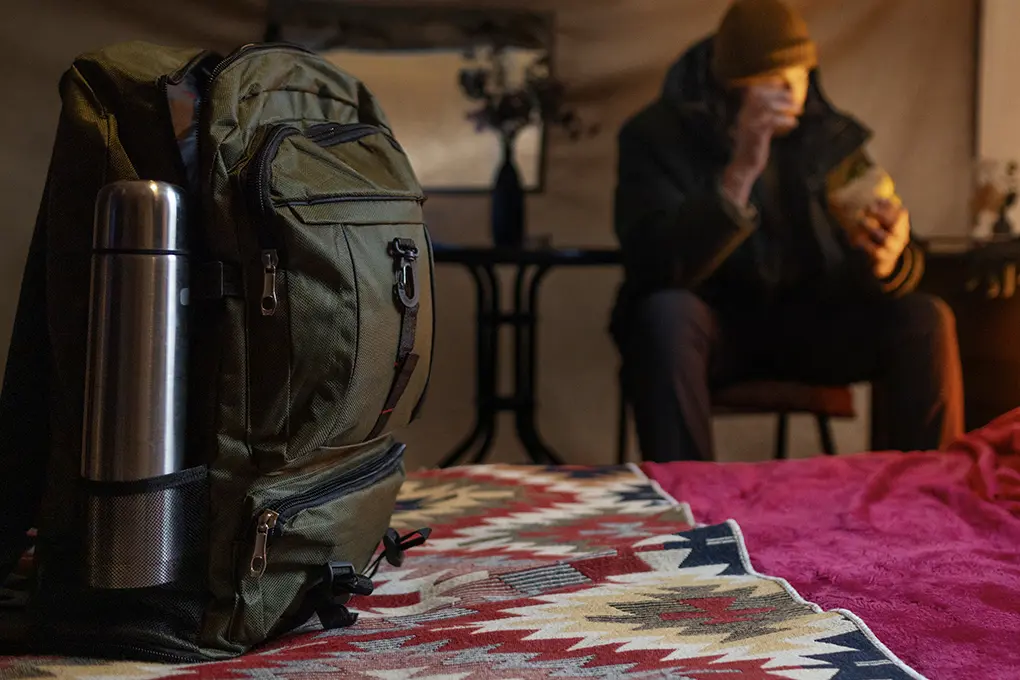
The first decision during martial law is whether to shelter in place or leave. Most families are safer staying home – particularly in the first 48-72 hours when roads face checkpoints, fuel runs short, and civil disorder peaks near highways and urban cores. Movement attracts attention. Preparation at home removes the need to move.
Shelter in place when:
- No mandatory evacuation order has been issued for your zone
- You have 14-30 days of food and water already on hand
- Your home has defensible security (reinforced doors, minimal window exposure)
- You are not in an active conflict zone or mandatory exclusion area
Bug out when:
- Authorities issue a mandatory evacuation order
- Your immediate area is the locus of military activity or sustained unrest
- Supply lines to your home are permanently severed
- You have a confirmed rural safe house with supplies already staged there
If bugging out, move early – before checkpoints fully establish. Pre-identify two exit routes from your area, favor secondary roads over interstate highways, and keep your go-bag with 72-hour essentials ready to deploy in under 10 minutes. Fuel your vehicles before any crisis develops, since gas stations empty within hours of a declared emergency.
Safest Place to Stay: Room-by-Room and Location Analysis
So, where in your house do you stay during martial law?
Safest Room in Your House During Martial Law
Not all rooms are equal when civil disorder reaches your neighborhood. For sheltering in place:
- Interior Rooms: No exterior walls mean no window exposure. A central hallway, bathroom, or interior bedroom reduces risk from debris and street-level events.
- Ground Floor (Urban): Easier to exit quickly. Avoid upper floors where you may be trapped above street-level activity.
- Basement (Suburban/Rural): Best structural protection, temperature stability, and supply concealment. Ideal if your home has one.
- Master Bedroom with En Suite: If supplies and communication gear are pre-staged here, a single reinforced room becomes your operational hub for extended sheltering.
Rural vs. Urban Safety During Martial Law
Location shapes your risk profile more than almost any other variable.
| Factor | Urban/Suburban | Rural/Remote |
| Exposure to Civil Unrest | High – population density accelerates disorder | Low – distance limits spread |
| Checkpoint Risk | High – major roads controlled first | Lower – secondary roads less monitored |
| Supply Chain Access | Initially better, collapses fast under demand | Limited but stable if pre-stocked |
| Emergency Services | Present but overwhelmed | Scarce; self-reliance required |
| Visibility/Target Risk | Higher – neighbors, density | Lower – natural concealment |
| Best Strategy | Shelter in place with 30-day supplies | Bug-out destination or full-time residence |
Rural locations – particularly those with well water, alternative energy, and stored food – represent the lowest-risk environment during extended martial law.

Martial Law Emergency Supplies: What You Need at Home
This is where preparation separates families who weather the crisis from those who don’t. Martial law disrupts supply chains within 24-72 hours. Grocery shelves empty. ATMs run dry. Fuel disappears. Having supplies staged at home before an event is the single highest-leverage action you can take.
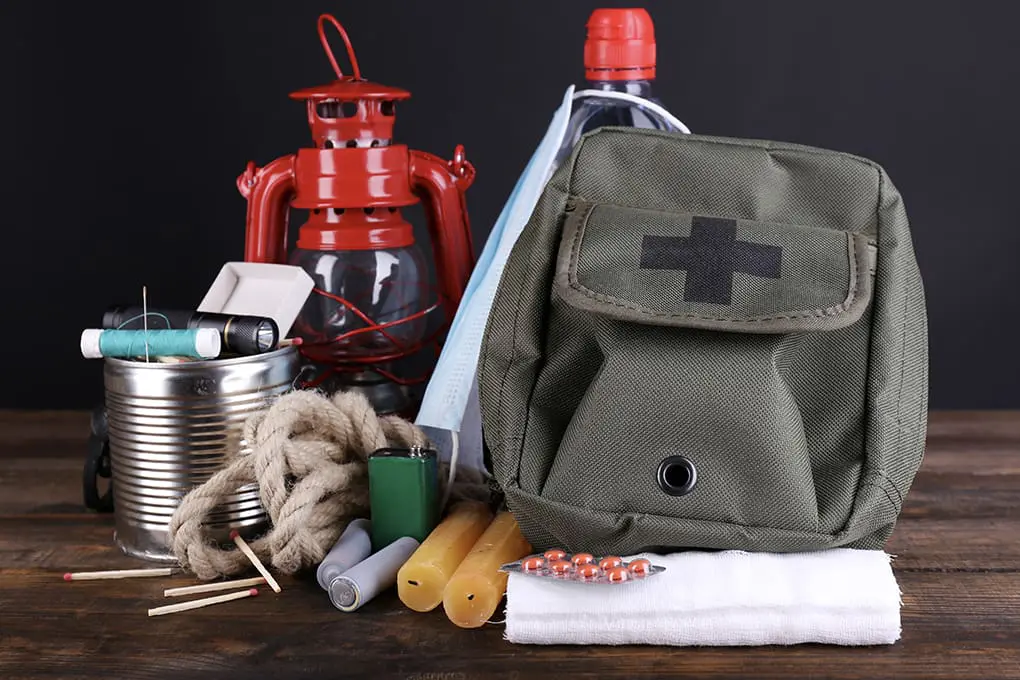
30-Day Home Supply Checklist:
- Water: 1 gallon per person per day minimum. 30 gallons per person for a 30-day supply. Use stackable 5-gallon water containers with food-grade seals – they store flat and won’t stress apartment floors.
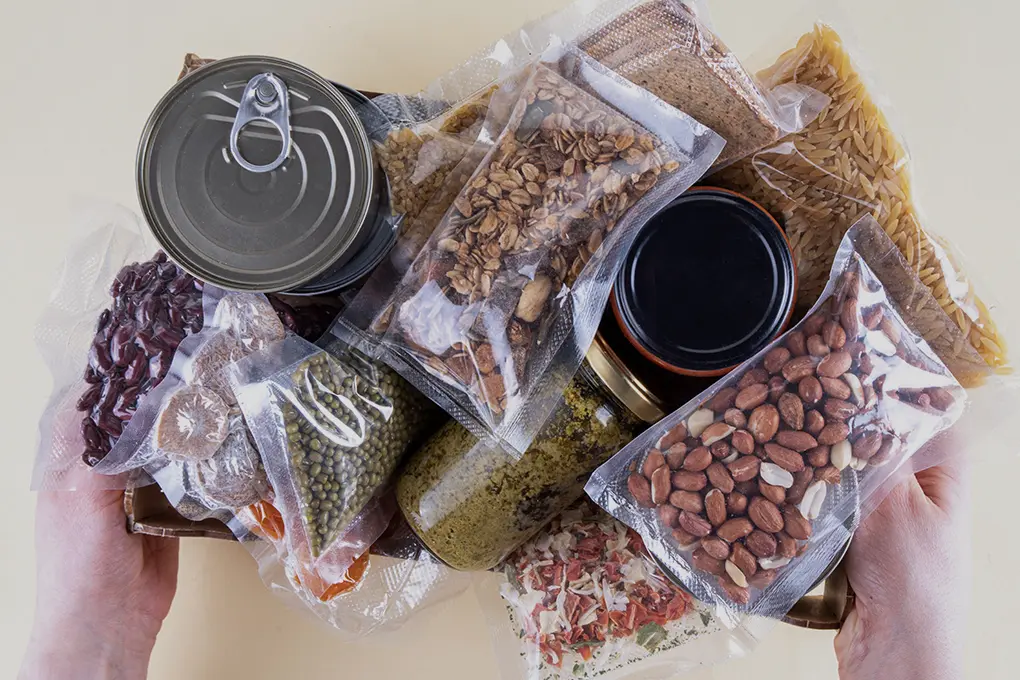
- Food: Freeze-dried or canned with 2,000+ calories per person daily. Prioritize meals your family will actually eat under stress. Flavor fatigue is real after 72 hours of emergency rations.
- Backup Power: A portable power station runs communication devices, medical equipment, and lighting without the fuel storage risks of generators.
- First Aid: Trauma-level kit including tourniquet, wound packing gauze, and splints. Emergency services may be inaccessible for days.
- Cash: ATMs and card systems fail during infrastructure disruption. Keep small bills on hand – $100-$300 in mixed denominations.
- Documents: Copies of ID, insurance, property records, and medical records in a waterproof, fireproof bag stored with your supplies.
- Communication: Battery or hand-crank emergency radio for official alerts. A Kaito KA500 receives NOAA weather and AM/FM emergency broadcasts without cell service.

Home Security During Martial Law
A prepared home that signals wealth or vulnerability becomes a target. Security hardening is about deterrence and delay – buying time and reducing appeal.
Core Home Security Measures:
- Reinforce Entry Points: Door frame reinforcement kits resist forced entry far better than deadbolts alone. Security film on ground-floor windows slows glass break-ins considerably.
- Reduce Visibility: Blackout curtains prevent interior light from signaling occupation at night. Cover food and supply storage from windows visible from the street or neighboring properties.
- Establish Watch Schedules: If multiple adults are present, rotate overnight watch periods. Fatigue is a security vulnerability as much as a physical one.
- Maintain Low Profile: Avoid running a visible generator or displaying gear outdoors. Generator noise signals resources; supplies left outside signal opportunity.
- Family Communication Plan: Designate a meeting point outside the home and an out-of-area contact.

Your Rights and Travel Restrictions During Martial Law
Understanding what martial law legally permits prevents panicked decisions that create real legal risk. The Congressional Research Service’s analysis of the Posse Comitatus Act and civilian law enforcement confirms that military authority over civilians in the U.S. faces significant constitutional constraints even during declared emergencies.
The Supreme Court’s ruling in Ex parte Milligan, 71 U.S. 2 (1866) established that civilian courts must remain open when operable, limiting military tribunal authority over civilians. Rights are constrained during martial law – not eliminated.
Practically speaking, expect:
| Restriction | Likely Under Martial Law | Your Response |
| Curfew (e.g., 8PM-6AM) | Yes – most common first measure | Stay home; document any exemption needs in writing |
| Travel Checkpoints | Yes – major roads, bridges, entry points | Carry government-issued ID; have a legitimate destination if traveling |
| Business Closures | Yes – non-essential services first | Pre-stock before any crisis develops |
| Communication Restrictions | Possible – social media, some broadcast | Battery radio for official alerts; encrypted apps for family contact |
| Mandatory Evacuation | Zone-specific, not universal | Comply immediately – this is the condition to bug out |
| Suspension of Courts | No – legally challenged, historically reversed | Document any rights violations for later legal remedy |
The ACLU maintains current guidance specifically on rights in encounters with law enforcement and military troops, updated for current conditions. Knowing these rights before a crisis is considerably more useful than trying to recall them during a stressful checkpoint encounter.

Building Your Bug-Out Plan for Martial Law
If sheltering in place fails, your bug-out plan needs to be pre-built – not improvised during a crisis.
Your bug-out destination should be:
- At least 50 miles from major population centers
- Stocked with at least 30 days of supplies pre-positioned before any crisis
- Accessible by two separate routes that avoid interstate highways
- Familiar to all family members – practice the drive before you need it
Pre-position fuel, food, and water at your destination if possible. Depending on a supply run after departure is the most common bug-out planning failure.
For emergency supplies across all scenarios – home sheltering and bug-out alike – browse Batten’s full emergency preparedness store to build your kit before you need it.
Taking Action Before Martial Law Is Declared
The families who fare best during any civil emergency – martial law, extended blackout, natural disaster – are those who prepared before the event. Supply runs are impossible once restrictions begin. Fuel lines form within hours. Preparation is a pre-event activity, not a crisis response.
Start with a 72-hour kit. Build to 30 days. Establish a family communication plan with out-of-area contacts and designated meeting points. Identify your bug-out destination and drive the route. Then practice – walk through the plan with every member of your household at least once before you need it.
The preparation gap is always widest in the days immediately after an event is declared. The families on the right side of that gap are the ones who acted before the news broke.
Protect your family before the crisis arrives. Explore Batten’s emergency preparedness collection for tested gear, 30-day food storage, backup power, and communication tools built for real emergency scenarios.
Frequently Asked Questions
What Is Martial Law and When Can It Be Declared?
Martial law is the temporary imposition of military authority over civilian government during extreme emergencies. In the U.S., it requires presidential or gubernatorial action and faces significant constitutional limits. Federal declarations are historically rare and geographically constrained – typically affecting specific cities or regions rather than the entire country.
Can You Leave Your House During Martial Law?
You can leave your house during martial law unless a mandatory curfew or evacuation order is in effect for your zone. Expect checkpoints on major roads. Carry government-issued ID, avoid traveling at night, and comply with all lawful orders from authorities to reduce legal risk and personal safety exposure during the event.
What Are the Safest States or Cities During Martial Law?
Low-density rural states with dispersed populations – Wyoming, Montana, Idaho, Vermont – present lower civil unrest risk. No location is categorically immune, but distance from major metropolitan areas, self-sufficient infrastructure (well water, agricultural land), and strong community cohesion are the strongest predictors of stability during a martial law event.
What Should Go in a Bug-Out Bag for Martial Law?
A martial law bug-out bag should include 2 liters of water minimum, a 3-day calorie supply, first aid kit, copies of ID and documents, cash in small bills, battery radio, phone charger, change of clothing, and a printed map of your bug-out route. Keep total weight under 35 pounds for mobility.
How Much Food and Water Should I Store for Martial Law?
Store a minimum of 30 days of food and water per person. FEMA’s emergency supply guidelines start at 72 hours, but supply chain disruption during civil emergencies routinely extends well beyond that. One gallon of water per person per day and 2,000+ calories of shelf-stable food per person daily is the practical planning baseline.
What Are My Civil Liberties During Martial Law?
Constitutional rights are not fully suspended under martial law. The Supreme Court confirmed in Ex parte Milligan (1866) that civilian courts retain authority when operational. You retain rights against unreasonable search and seizure, the right to remain silent, and the right to legal counsel. Document any interactions with authorities carefully.
Is It Safe to Travel During Martial Law Curfews?
Traveling during curfew hours is both legally risky and physically dangerous. Checkpoints operate with heightened alert during curfew, and being stopped without a documented legitimate reason – medical emergency, evacuation order compliance – creates unnecessary legal exposure. Stay home during curfew hours unless you have a compelling, documentable reason to travel.
Sources
- “18 U.S. Code § 1385 – Use of Army, Navy, Marine Corps, Air Force, and Space Force as Posse Comitatus,” Cornell Law School Legal Information Institute, https://www.law.cornell.edu/uscode/text/18/1385
- Ex parte Milligan, 71 U.S. 2 (1866), Justia U.S. Supreme Court Center, https://supreme.justia.com/cases/federal/us/71/2/
- “Build a Kit,” FEMA / Ready.gov, https://www.ready.gov/kit
- “The Posse Comitatus Act and Related Matters: The Use of the Military to Execute Civilian Law,” Congressional Research Service, Report R42659, https://crsreports.congress.gov/product/pdf/R/R42659
- “Know Your Rights: Encountering Law Enforcement and Military Troops,” American Civil Liberties Union, https://www.aclu.org/know-your-rights/encountering-law-enforcement-and-military-troops
- “National Emergency Powers,” Congressional Research Service, Report RL98-505, https://crsreports.congress.gov/product/pdf/RL/98-505